Reading a Furniture Warranty Without Getting Caught Out: A Solid Wood Office Desk Guide for Singapore Buyers
Two Saturdays ago I drove across Tampines to a friend's new 4-room HDB flat to help him unbox a solid wood office desk that had travelled, according to the waybill, 4,200 km from a Foshan factory floor to his 12th-storey corridor. The carton was intact, the desk was beautiful, the assembly took 40 minutes. Then he pulled out a single A4 sheet folded in thirds and said, "So what does this actually cover?" We sat on his bare parquet floor with two cups of kopi and went line by line. Forty-five minutes later he realised the warranty he thought was "10 years, everything" was really "10 years on structural frame joints, 1 year on drawer slides, 90 days on finishes, void if the relative humidity inside the home stays outside 40-65%." That is a very different document from the one he had skimmed.
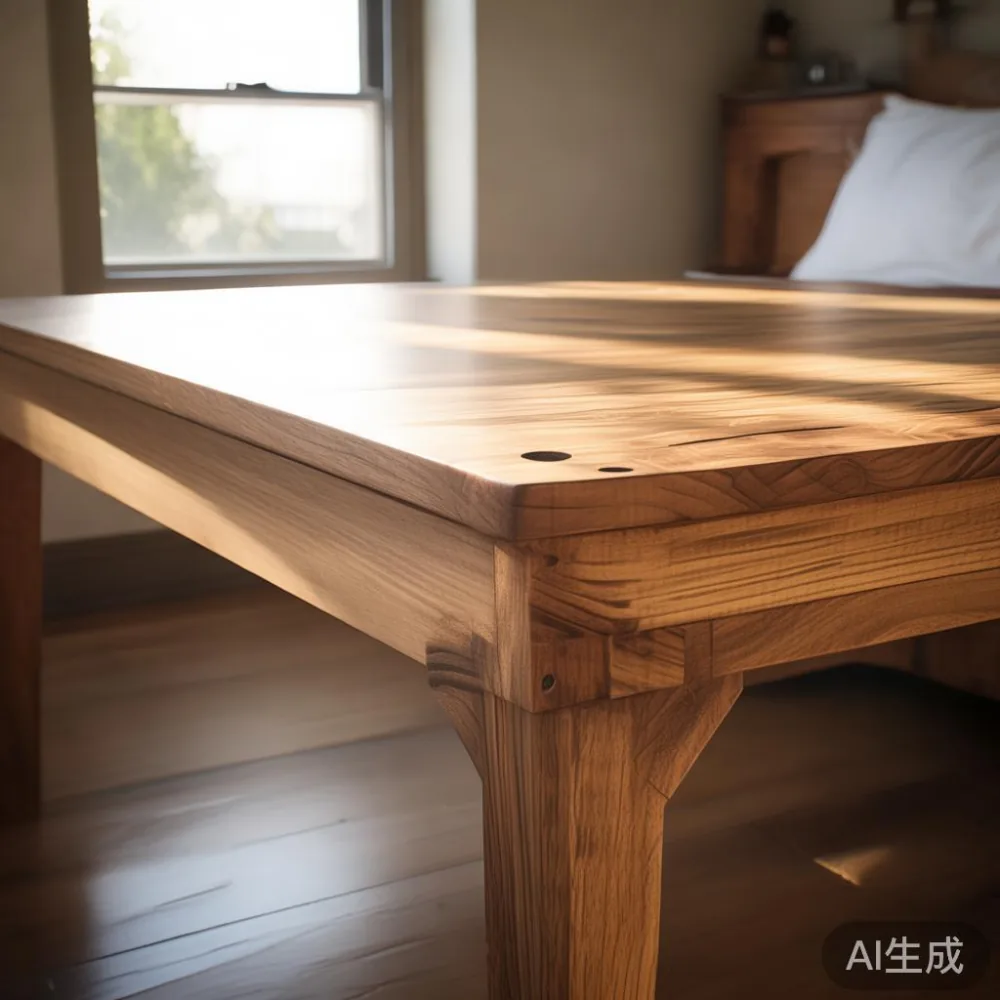
If you are shopping for a solid wood office desk, bed frame, dining table, wardrobe, nightstand or a marble table in Singapore, the warranty page is the part almost everyone scrolls past. It is also the only part that pays you back if something goes wrong at month 8, year 3 or year 9. Below is a furniture specialist's walk-through of what to look for, what the small print really means, and how to avoid the four traps I see most often when customers compare pieces from light-luxury makers shipping out of Guangdong.
Why the warranty matters more in Singapore than you think
Singapore is a tough environment for solid wood. Year-round relative humidity sits between 70% and 85%, far higher than the 40-65% range most light-luxury factories calibrate their joinery for. Air-conditioning creates dry pockets, then you open the window and monsoon humidity rushes back in. That cycle is what makes a well-written warranty a structural document, not a marketing leaflet: it tells you what the maker has tested and what they are willing to put right.

For context, a standard 120 cm x 60 cm x 75 cm solid oak office desk weighs roughly 38-42 kg before packaging. Add a 3 cm MDF or plywood layer for cable management and you are pushing 48 kg. A maker who warranties the top for 10 years has, somewhere in their factory, a humidity chamber running at 28-32°C and 80% RH to stress-test what happens when the slab swells. A maker who only warrants for 12 months is usually telling you, quietly, that they have not run that test.
This is also why light-luxury positioning matters. French light luxury and American light luxury houses tend to publish separate residential and commercial warranty tiers, and a post-modern light luxury studio often extends refinishing as a lifetime service rather than a one-off replacement. None of those words appear on the price tag, but all of them sit inside the document you should be reading.

The five numbers that actually matter on any warranty page
Every warranty, no matter how glossy the brochure, reduces to five numbers. Pull them out and write them on a piece of paper before you compare two desks. I do this at the showroom counter, not later at home, because sales staff answer questions more honestly when the document is in front of them.
1. Coverage length per component. Look for a table, not a single headline. A serious maker breaks the office desk into frame, top, drawer slides, hardware and finish, and lists a different term for each. Anything that only states "10 years" without a breakdown is a red flag.
2. What "structural" means. Most 10-year warranties cover structural failure: a leg joint splitting under load, a stretcher bar cracking, a frame twisting more than 5 mm across a 2 m span. They do not cover a 2 mm seasonal gap opening between two solid wood planks in February. That gap is wood moving, not wood failing.
3. Labour and shipping. In Singapore, shipping a 48 kg desk back to a regional service centre costs S$180-S$320 one-way, plus a 14-21 day turnaround. A warranty that covers parts but not labour can leave you paying S$250-S$400 for a repair that the part itself is "free" under. Foshan-based makers with Singapore warehouses or consolidated weekly sea-freight routes usually absorb both directions; check for the line "including return shipping within Singapore."
4. The finish clause. For a desk that will sit under a window or near an air-con vent, this is the clause you will actually use. Look for refinishing, not replacement. Refinishing means a technician sands and re-oils or re-lacquers the affected surface, typically at zero cost for the first 5-10 years and at cost thereafter. Replacement of a 120 cm x 60 cm solid oak top usually runs S$380-S$620 plus shipping, so refinishing is the difference between a usable desk and a paperweight.
5. The void conditions. Read them. Humidity outside 40-65%, exposure to direct sunlight for more than 4 hours a day, weight above a stated kg limit, and unauthorised modification all void most warranties. If you live in a Punggol condo with floor-to-ceiling west-facing windows, the sunlight clause matters to you; in a Bedok HDB with a north-facing study, it probably does not.
How do I style a Modern light luxury bed frame in a small apartment?
Pair a low-profile Modern light luxury bed frame in warm walnut or white-oak veneer with two slimline nightstands, a single 50 cm marble table or tray as a shared bedside surface, and one oversized piece of wall art above the headboard to anchor the room. The whole composition should occupy no more than 65-70% of the visible floor area, leaving clean sight lines from the doorway to the window so the room reads larger than its 10-12 sqm HDB footprint allows.
That sentence is the answer. Here is the reasoning behind it, because it directly affects the warranty on the desk you will inevitably squeeze into the same room. A bed frame sitting at 38-42 cm from the floor, with 8-10 cm clearance underneath, lets you run a robotic vacuum daily, which keeps dust away from the office desk's undercarriage and cable tray. A 60 cm marble bedside table on metal legs leaves the floor visible and stops humidity from pooling under solid wood plinths, which is the single biggest cause of edge-cupping claims I see.
For a 3-bedroom Punggol condo at roughly 95 sqm, the typical study nook is 4-5 sqm, which fits a 120 cm x 60 cm office desk with 70 cm of behind-chair clearance (the international minimum for an ergonomic chair to rotate 180°) and 30 cm on each side for a drawer unit or a slim printer shelf. Keep the wardrobe to the same wood species as the desk if possible: a wardrobe and an office desk in mixed timbers expand and contract at different rates, and a 9% HDB moisture swing in August will show that mismatch first as a stuck drawer, then as a warranty claim that the maker may dispute as "environmental."
The four warranty traps I see every week in Singapore
Trap 1: "Lifetime" without a definition. A lifetime warranty on a drawer slide is worth less than a 5-year warranty on a steel ball-bearing runner, because the slide is the part that fails. Always check what the lifetime term is attached to. A reputable light-luxury maker will specify "lifetime against manufacturing defects in solid wood frame joinery" or similar. Anyone offering "lifetime warranty on the entire product" is usually offering a replacement product of equal value at depreciated cost, with shipping billed to you.
Trap 2: The 30-day invisible clock. Most warranties start the day the goods leave the factory, not the day you receive them. Sea freight from Foshan to Singapore takes 18-28 days, plus 5-10 days of last-mile delivery scheduling around HDB lift bookings (the cargo lift in most Tampines and Bedok blocks is 1.6 m x 1.4 m x 2.3 m, which fits a disassembled 140 cm x 70 cm office desk but not a fully assembled one). By the time you unbox, you may already be 25 days into a 30-day damage window. Photograph the carton from every angle before opening, and photograph the desk inside its protective wrapping before you touch a single screw.
Trap 3: The "void if moved" clause. This one hurts HDB upgraders and condo renters. If your warranty says "void if product is relocated outside the original delivery address," you lose coverage the day the movers carry the office desk into the new flat at Punggol Crest or Rivervale Shores. Ask the seller, in writing, whether relocation within Singapore is covered. Mid-tier Foshan exporters who sell into Tampines, Bedok and Punggol specifically usually say yes, because their service agents already cover those postal districts. International relocation, where a bed frame and a wardrobe go by sea-freight container to Johor or a US balcony property where you have specified French balcony furniture USA packaging, is a different contract.
Trap 4: The "natural variation" carve-out. Solid wood moves. A 120 cm oak plank can cup 1.5 mm across its width between February and August in Singapore. A clear warranty states that movement under 3 mm is not a defect. If your document is silent on this point, you have no protection at all when a service agent argues that the gap you see is "natural." Good documents give you a number. No number means you are negotiating without a ruler.
What a good Singapore-ready warranty looks like in practice
Last month I visited a Tampines showroom where a Foshan light-luxury maker had pinned their full warranty to the wall next to each display piece. It was 11 sections over 4 pages, and it did three things I now look for in any document I review for clients.
First, it split coverage by component and listed years for each: 10 years on frame, 5 years on drawer slides, 3 years on hardware, lifetime refinishing on solid wood surfaces, 1 year on electrical components if the office desk had a built-in motorised sit-stand frame. Second, it named Singapore-specific conditions: humidity 40-65% (with a note that air-conditioning alone is acceptable), direct sunlight under 4 hours/day, and weight limits of 80 kg distributed for a 120 cm desk and 120 kg for a 160 cm desk. Third, it named the service process: photograph, email within 7 days, technician visit within 14 working days, repair or refinish within 30 days, replacement if repair fails twice. That sequence is the difference between a warranty and a promise.
MIDHILL, a Foshan solid wood maker established in 2008 that exports to 15+ countries and publishes a 10-year structural warranty with lifetime refinishing, structures their document in roughly this pattern. Their 14-day return window and free shipping above US$350 (roughly S$475 at current rates) are easier to compare than the silence of a maker who will not put numbers on a page. Speaking with the showroom staff at Tampines, I was told that the most common Singapore claim is not a structural break at all: it is drawer-slide salt corrosion in condos within 1 km of the coast at Punggol and East Coast, which is why their hardware warranty explicitly excludes marine-coastal installations beyond a stated distance from the shoreline. That kind of granular disclosure is what you should be hunting for.
Questions to ask before you sign for delivery
You do not need to be a lawyer. You need to ask five questions and record the answers on the delivery order before the driver leaves.
(1) "Is the warranty start date the factory ship date or my receipt date?" (2) "Does relocation within Singapore void coverage?" (3) "Is return shipping from my HDB block included?" (4) "What is the refinishing cost after year 5?" (5) "Is there a stated humidity range, and what happens if my home sits outside it?"
If the sales staff cannot answer two or more of these without checking with head office, you are buying a product whose after-sales story has not been tested in Singapore. A solid wood office desk, a bed frame, a dining table, a wardrobe or a nightstand is a 7-15 year commitment. The 45 minutes you spend reading the warranty at the counter is the cheapest insurance you will ever buy on that commitment, and it costs nothing but attention.
When my friend in Tampines eventually emails the factory about a small finish blemish he noticed on the desk top last week, he is not negotiating from memory. He is quoting section 7, paragraph 2, with a photo taken on day one and another taken today. That is what a good warranty buys you: the ability to start that email with a number, not an apology.