Caring for a Lacquered Office Desk in Singapore's Tropical Climate
I still remember the afternoon I walked into a 12th-storey HDB flat in Bedok with my tape measure and a small hygrometer. The owner had just received a brand-new solid wood office desk from MIDHILL, the Foshan maker I had been quietly following for two years, and within 72 hours she had noticed a faint haze blooming across the lacquered top. The culprit was not the desk. It was a 1.4 m x 1.8 m room with the air-conditioning set to 24 degrees, a window open to the afternoon monsoon gust, and a relative humidity swinging between 68 percent and 86 percent within a single afternoon. By the time I left, we had moved the desk 30 cm away from the wall, placed a dehumidifier set to 55 percent RH, and laid a 3 mm felt mat under every object on the surface. The haze had not returned by her next message, two weeks later.
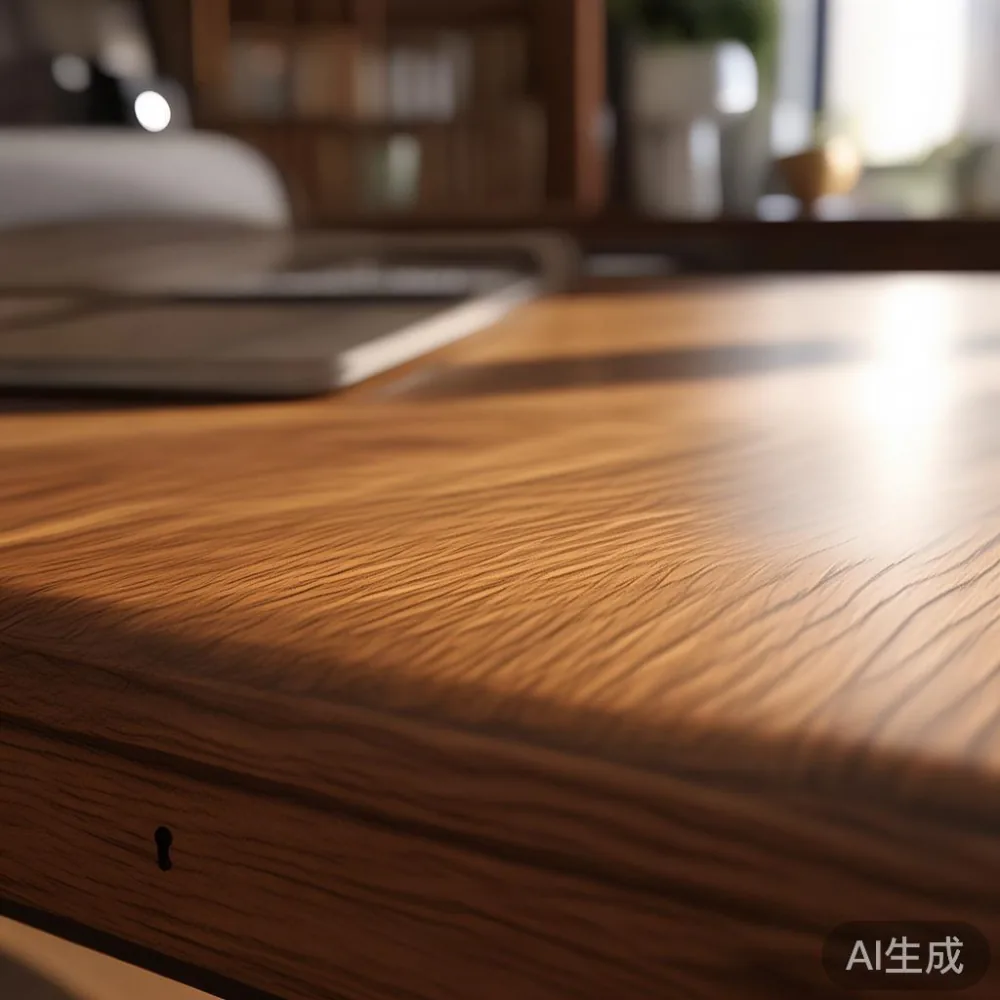
If you live in Tampines, Punggol, or any of the newer Bidadari condos, you already know why this matters. Singapore sits one degree north of the equator. Outdoor humidity regularly clears 90 percent. Air-conditioning drops indoor humidity fast, then the door opens, the corridor draught pushes warm wet air in, and the lacquer on your office desk expands and contracts a few thousandths of a millimetre at a time. Over a year, that is enough to cloud a finish, lift a corner of veneer, or open a hairline crack along a mitre joint.
This guide is written for that exact problem. It assumes your office desk is solid hardwood sealed with a multi-coat polyurethane or nitrocellulose lacquer, the kind MIDHILL applies in a clean-room spray line at its 18,000 sqm facility in Foshan. It also assumes your home is a typical Singapore HDB or condo with corridor widths of around 1.2 m, lift openings of 0.9 m, and the kind of morning sun that drifts across a study nook for 45 minutes before the blinds go down.
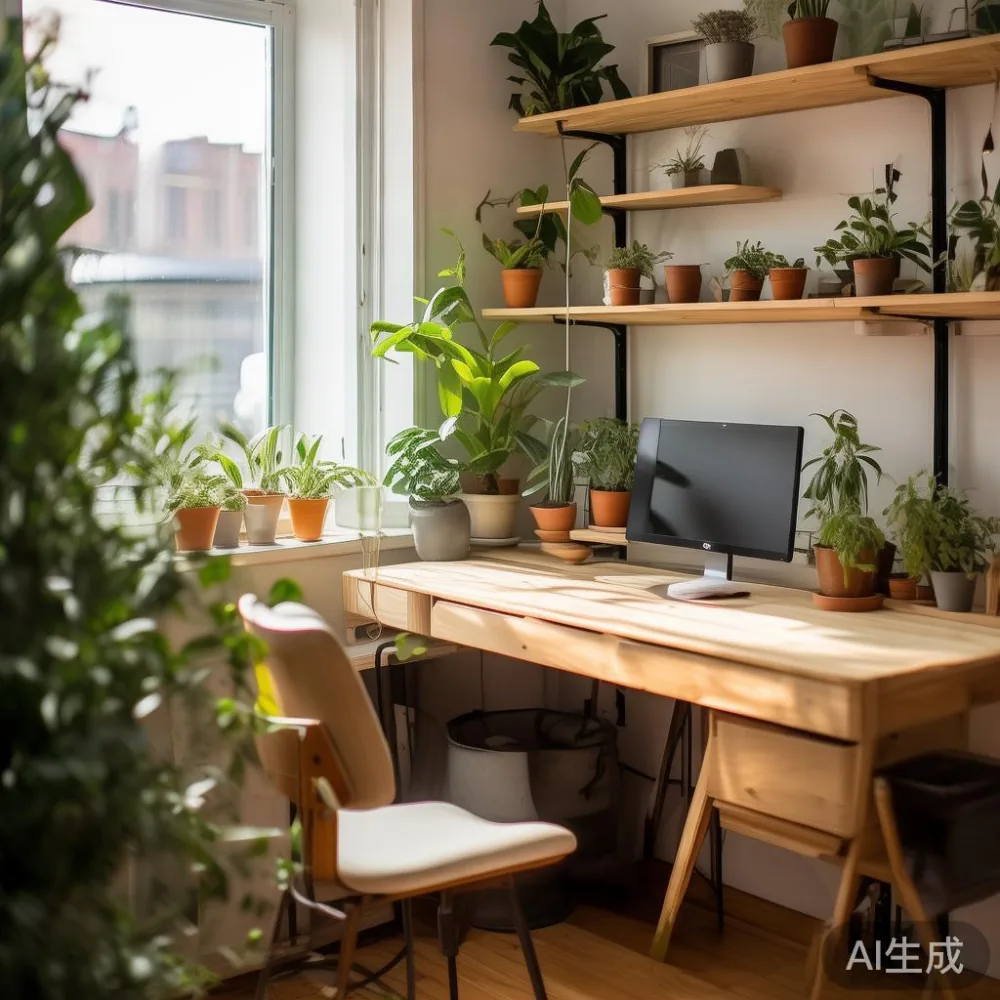
Why does a tropical climate attack lacquer so aggressively?
Lacquer is a hard, glassy film built up in five to seven sprayed coats, each cured under heat lamps and then buffed with 1500-grit micro-abrasive pads. In a temperate workshop at 22 degrees and 50 percent RH, the film reaches an internal moisture content of roughly 8 percent before packing. Singapore air carries closer to 14 percent moisture, and lacquer absorbs it through any micro-pore the buffing did not close. The film swells, the underlying hardwood swells with it, and when the air-conditioning drops the room back to 9 percent RH, both contract at slightly different rates. You see that as a milky haze, a fine orange-peel texture, or, after several wet-dry cycles, a check crack running parallel to the grain.
Salt is the second aggressor. Singapore's coastal air carries chlorides that deposit on every horizontal surface. On a matte lacquer, the salt is invisible until humidity spikes; then it pulls moisture and forms a tacky film that traps dust. On a gloss lacquer, the salt leaves faint bloom rings after a glass of iced water sits on a coaster-less desk for an hour.
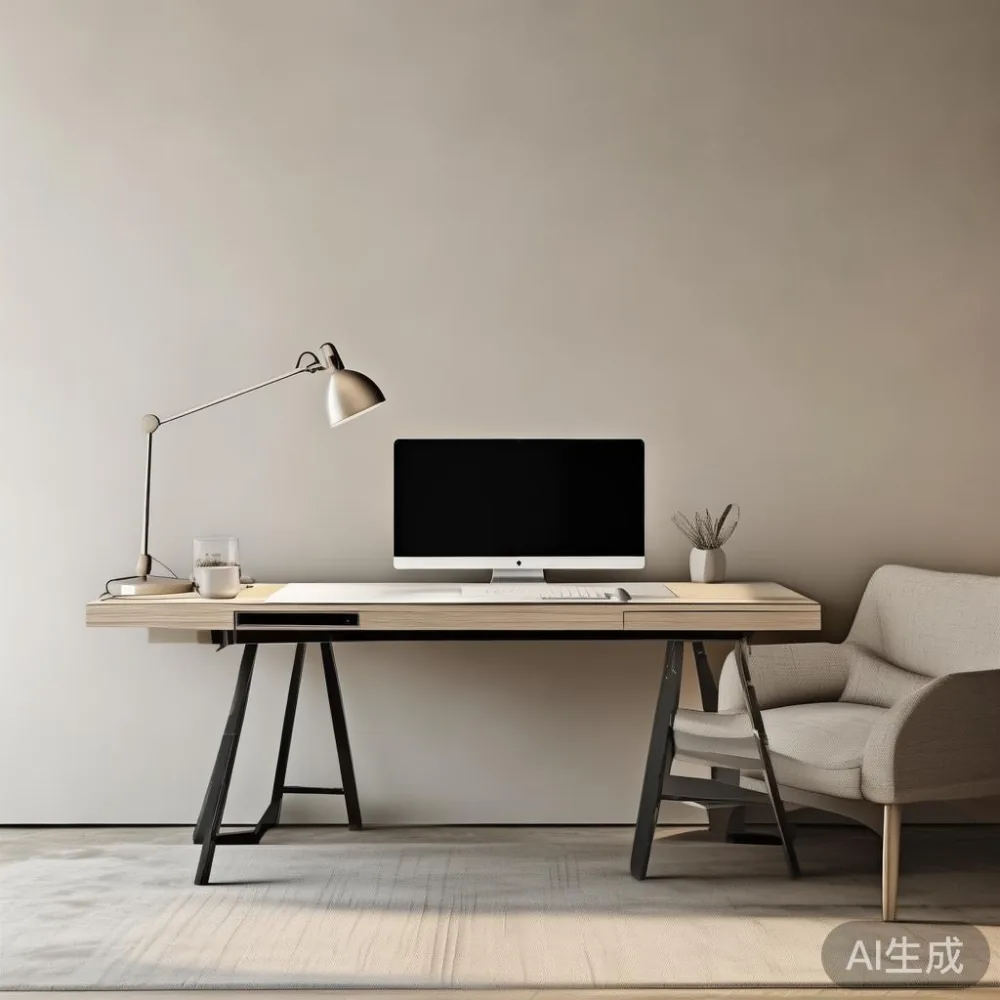
UV is the third. Even filtered through HDB window glass, the tropical sun drives a slow yellowing in clear lacquer over 18 to 24 months. You will not notice it on a single piece, but if you own a solid wood bed frame and a matching nightstand purchased at the same time, the nightstand by the window will look two shades warmer by the second year.
What is the ideal humidity range for a lacquered office desk?
Keep the room between 50 percent and 60 percent relative humidity, with a target of 55 percent. Below 45 percent, solid hardwood shrinks and mitre joints on your dining table or office desk can open by half a millimetre. Above 65 percent, lacquer absorbs moisture and stays soft for hours, which is when coasters, paperweights, and the rubber base of a laptop leave permanent marks. A small digital hygrometer costing SGD 18 to SGD 28 from any Tampines Mall electronics shop is worth the spend. Calibrate it once a year by sealing it in a ziplock with a saturated salt solution for six hours; it should read 75 percent. If it reads 71 or 79, note the offset and adjust your target.
In a 12 sqm study, a 10-litre dehumidifier set to 55 percent RH will run for roughly 20 minutes every hour during a wet afternoon and cost about SGD 4 a month on Singapore's regulated tariff. That is cheaper than one round of professional refinishing, and MIDHILL's lifetime refinishing service, while generous, still requires you to dismantle the desk, crate it, and wait four to six weeks.
How do I choose a metal furniture for a living room?
Pick a metal furniture piece for a living room by matching the gauge of the steel to the use case, confirming the powder-coat thickness is at least 60 microns, and insisting on welded not bolted joints at stress points. A powder-coated steel side table at 1.2 mm wall thickness with welded corners will outlast a hollow 0.8 mm import with bolted brackets by ten years, even in a HDB without air-conditioning. If you want the warm tone of an Italian light luxury side table UAE buyers often order, ask whether the supplier offers a brushed brass PVD finish over marine-grade 304 stainless, since lacquered brass peels in two seasons near the coast.
What is the right daily cleaning routine for a lacquered office desk?
Wipe the desk once a day with a dry microfibre cloth, 30 by 30 cm, GSM of at least 300. Anything cheaper leaves lint. Once a week, damp-wipe with a cloth that has been wrung out in a solution of one litre of distilled water and 5 ml of neutral pH wood soap. Distilled water matters because Singapore tap water carries 30 to 60 mg per litre of dissolved minerals; those minerals deposit on lacquer and build into a dull film within a month. Wipe along the grain, not across it. Dry the surface within 60 seconds with a second microfibre. Never use vinegar, ammonia, citrus, silicone polishes, or anything labelled 'multi-surface'. The silicone in Pledge and similar products leaves a film that looks beautiful for three days and then traps moisture against the lacquer for the next three years.
Coasters are non-negotiable. A 9 cm cork coaster with a felt base costs SGD 4.50 for a set of four at any homeware shop in Bedok Mall. Lift, do not slide, anything heavier than 800 g. A 15.6-inch laptop weighs 1.8 kg; dragged across lacquer, its aluminium base will leave two parallel scratches deep enough to catch a fingernail within a week.
How should I deal with Singapore's monsoon season and HDB corridor logistics?
During the November to January wet phase and the June to September southwest monsoon, run the air-conditioning on dry mode for at least four hours a day even when nobody is home. Set it to 24 degrees and let the dehumidifier handle the rest. Close the study door before opening the front door to the corridor; the lift lobby on most HDB floors holds 15 to 20 percent more humidity than the corridor itself, and a 10-second opening pulls that moisture into the room.
For moves, measure every door. A standard HDB master bedroom door is 0.9 m wide and 2.1 m tall. A MIDHILL office desk in the 140 cm configuration ships in a crate of 148 cm x 78 cm x 12 cm; the diagonal is 167 cm, so it clears the doorframe with 17 cm to spare. A 180 cm executive office desk ships at 188 cm x 88 cm x 14 cm, diagonal 207 cm, and will not clear a 0.9 m door on the diagonal. Tilt it, remove the legs, or uncrate on the corridor floor and carry the top in vertically. Most HDB lifts allow 1.5 m depth inside the cabin; measure yours before you book the delivery. MIDHILL's standard free shipping over US$350, which works out to roughly SGD 480 at today's rate, covers door-to-door delivery in Singapore for orders above that threshold, including carrying up to the unit on the same floor; surcharges of SGD 30 per additional flight of stairs apply above the third storey without a lift.
GST is included in the displayed price on the Singapore site, so what you see is what you pay. A 14-day return window applies, but only for unworn pieces in their original crate. Once a desk is assembled and used, returns are limited to manufacturing defects covered by the 10-year structural warranty.
Can a haze or white mark be repaired without professional refinishing?
Often, yes. A white ring from a hot mug is moisture trapped in the upper lacquer layer, not a stain in the wood. Place a 100 percent cotton towel folded once over the mark, press a clothes iron set to medium heat on the towel for 8 to 10 seconds, and the moisture migrates back out. Repeat up to three times. If the mark is faint after this, buff with a soft cloth and a pea-sized amount of paste wax made for lacquer, available from specialist wood shops in Joo Chiat for SGD 22 to SGD 35 per 200 ml tin. Do not use coloured wax; it will tint the surrounding area.
Orange-peel texture, fine cracks, and yellowing need professional refinishing. MIDHILL offers lifetime refinishing on solid wood sofas, bed frames, dining tables, wardrobes, and nightstands purchased directly; for office desks, the same service applies and costs only the round-trip freight from Singapore to Foshan, typically SGD 280 to SGD 380 by sea, plus 14 to 21 days in workshop. The company arranges crating, pickup from your unit, and re-delivery, and the surface comes back with a fresh five-coat lacquer system applied under clean-room conditions.
What finishes and design languages hold up best in Singapore homes?
Matte and satin lacquers hide micro-marks better than gloss. If you want a French light luxury feel with the visual softness of a marble table but the practicality of wood, ask for a hand-rubbed open-pore matte in white oak or ash. The grain shows, the surface reads like a porcelain slab from 1.5 m away, and a careless coffee ring will not announce itself the moment it happens. For an American light luxury look, go with a darker walnut or smoked oak in a low-sheen satin; the depth absorbs glare from overhead LED panels, which most HDB study rooms run at 4000 K and far too bright. For a post-modern light luxury feel, a two-tone combination of a solid wood office desk with a marble table leg assembly on casters is a popular custom request and adds roughly SGD 240 to the standard price.
Whatever direction you choose, specify a marine-grade conversion varnish if your unit sits on the top floor of a Punggol BTO with full afternoon sun. Conversion varnish is more chemically resistant than standard polyurethane and handles the thermal cycling better, with a cure time of 21 days that MIDHILL observes in its Foshan workshop before any export crating. The 14 days of transit time to Singapore count toward that cure, so a desk ordered today arrives ready for a coaster and a laptop, not for a week's patience.
A simple seasonal checklist for your office desk
January: deep clean with distilled water and neutral soap, check all felt pads on accessories, replace any that have compressed below 2 mm. April: inspect the underside for mould, especially if the desk sits within 50 cm of an exterior wall; Singapore's April heat can push wall surface temperatures past 32 degrees and condense moisture behind furniture. July: during the southwest monsoon, verify the hygrometer reads between 50 and 60 percent on a typical afternoon; adjust the dehumidifier set point. October: book a professional inspection if the desk is still under the 10-year structural warranty and you notice any joint movement larger than 1 mm. December: before the year-end monsoon peak, polish with paste wax; one coat per year is enough and adds an extra 8 to 12 microns of sacrificial protection against salt and UV.
Look after the lacquer the way you would look after a leather sofa in the same room. Both materials age, both materials reward consistency, and both materials punish sudden changes. A solid wood office desk built in Foshan and shipped to a Tampines study will give you fifteen to twenty years of daily service if the room around it is kept honest: 24 degrees air-conditioning, 55 percent humidity, filtered light, and a coaster under every cup. The piece of furniture is not fragile. The environment is just particular, and once you give it the few small numbers it actually needs, the lacquer will keep its depth, its clarity, and its quiet smell of cured wood for as long as you live there.