Understanding Solid Wood Office Desk Prices in Singapore
Walk into a Tampines HDB showroom on a Saturday afternoon and you'll see two four-seater dining tables sitting 12 metres apart. One is priced at S$1,290. The other is S$4,650. They both have six chairs. They both claim to be solid wood. So why the 3.6x gap? I asked the same question last month when I visited two factory outlets in Foshan with a colleague who specs office fit-outs for co-working brands. By the end of the trip I had a working answer, and it had very little to do with the wood itself.
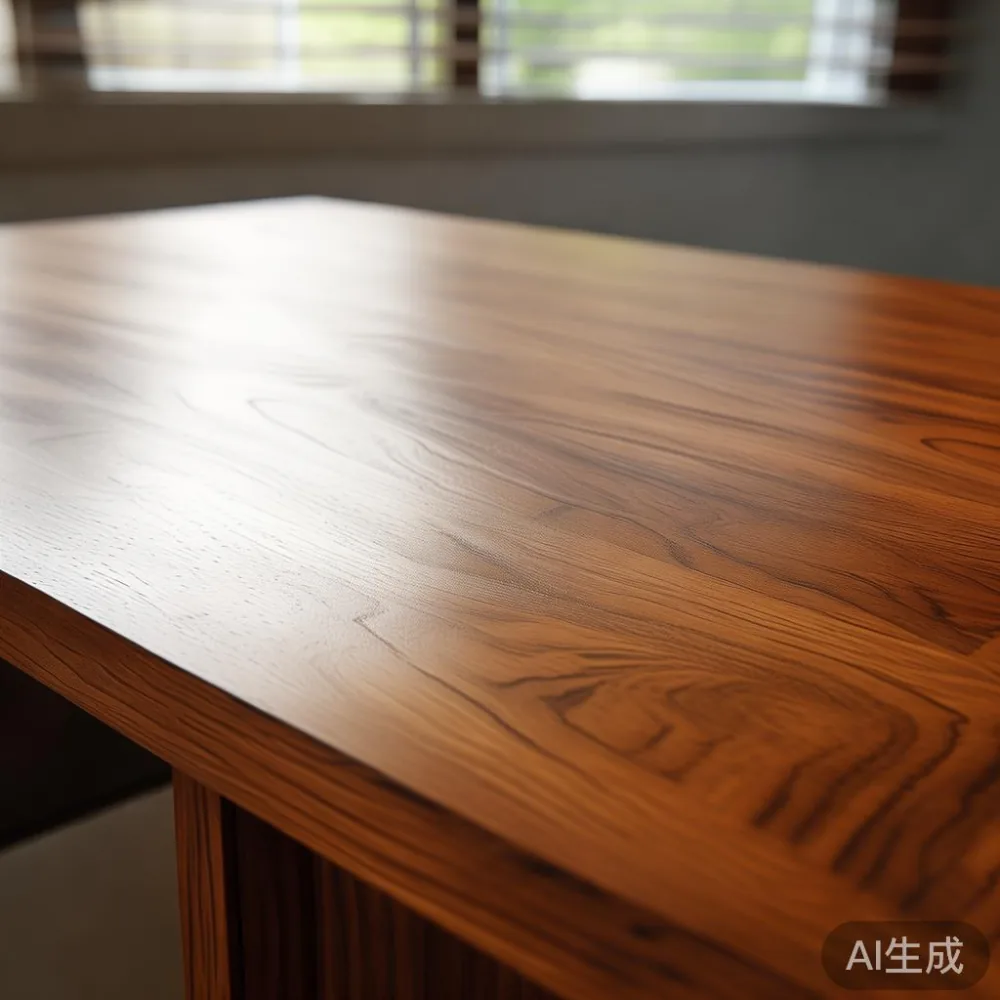
This article breaks down the real price drivers behind solid wood sofa, bed frame, dining table, wardrobe, nightstand, and yes, office desk pieces you see in Singapore. I'll also flag where light-luxury positioning actually adds value, and where you're paying for things that don't survive a 1.2-metre lift door on the 14th floor of a Punggol Waterway Heights block.
Wood species: where the price gap quietly starts
Species is the first number on the factory spec sheet. Rubberwood (often called Malaysian oak) is the budget workhorse: a 1.8-metre dining table top in rubberwood adds roughly S$400–S$600 to a factory's material cost. White oak, the same panel, adds around S$1,150–S$1,600. Walnut sits higher, and ash sits between them. Each step up also changes weight: rubberwood averages 620 kg/m³, white oak around 755 kg/m³. Heavier wood means a heavier shipment, and that hits the freight quote.
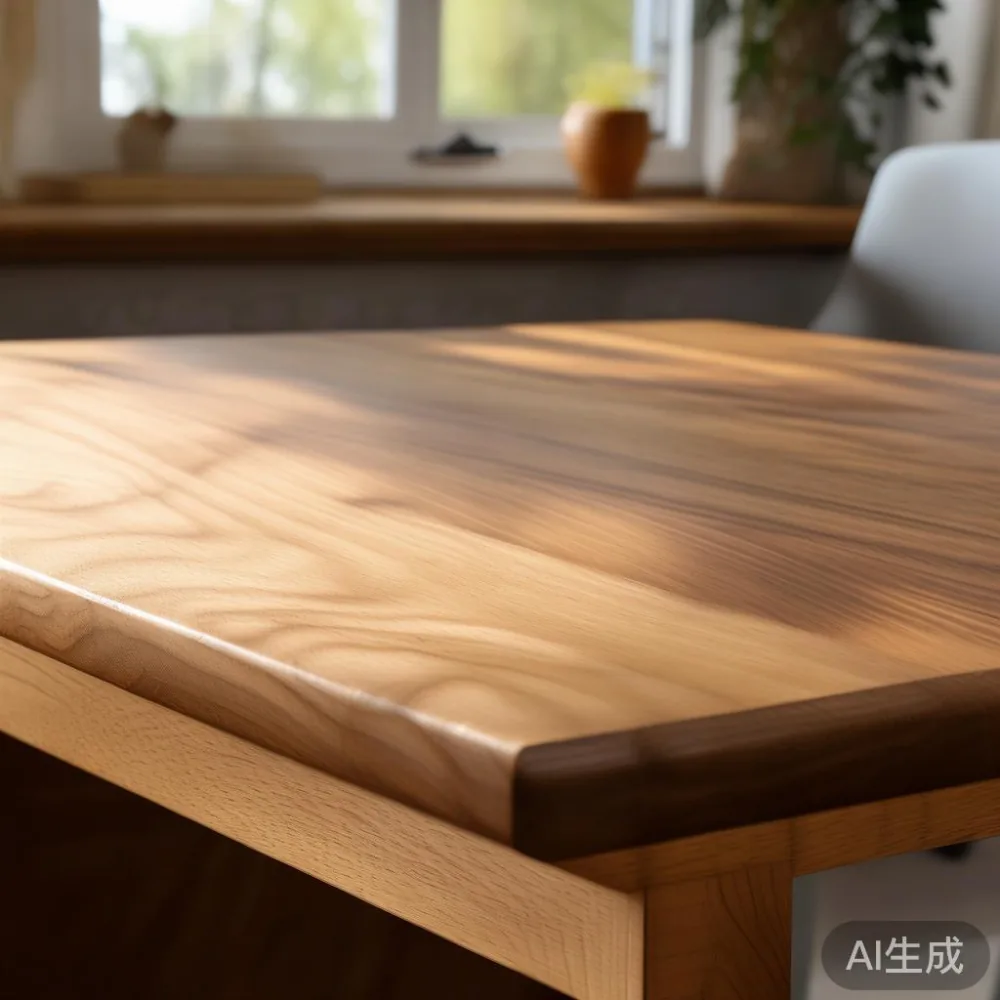
For a Singapore customer on the 9th floor of a Bedok Reservoir HDB, that weight matters in a different way. A solid wood bed frame in white oak can weigh 78 kg. Rubberwood in the same design lands around 54 kg. Two movers, one narrow corridor, one lift that maxes out at 1,600 kg, and suddenly the 24 kg difference is the reason your contractor quietly added S$80 for extra hands.
My colleague, who sources office desk units for a 40-desk floor in Tanjong Pagar, learned this the hard way. He ordered ash tops to match a cream oak coastal style brief the client had pinned on Pinterest. The tops came in 12 cm thick rather than the 4 cm veneer-on-MDF version he usually specifies. Total shipment was 600 kg heavier. Sea freight from Shenzhen to Singapore went from S$1,950 to S$2,840, and the GST 9% on the higher declared value added another S$80.
How much of the price is actually craftsmanship?
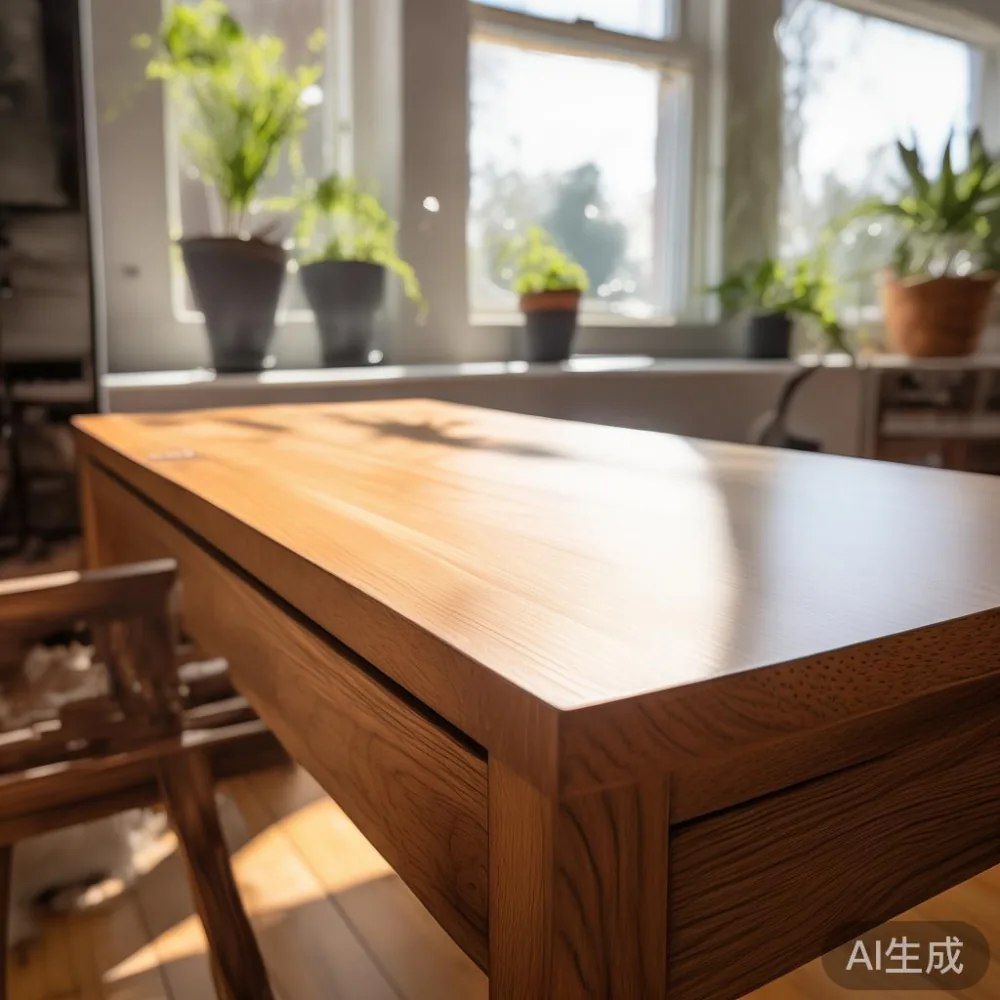
Here's a rough split from what I saw on the Foshan factory floor. For a S$3,200 dining table exported to Singapore, the material cost ran about 28%, the labour about 22%, factory overhead about 14%, packaging about 4%, and the remaining 32% covered sea freight, Singapore GST, last-mile delivery, and the retailer's margin. So roughly two-thirds of what you pay is not the wood itself. It's the chain that gets the wood to your corridor.
Craftsmanship shows up in joinery. A solid wood wardrobe with traditional mortise-and-tenon joinery takes about 7.4 hours of carpentry per unit at the Foshan workshops I toured. A flat-pack wardrobe with dowels and cam locks takes 2.1 hours. The labour saving on the flat-pack is roughly S$180, and you see that saving on the price tag. The downside: a flat-pack unit has a 6-year average service life before joints loosen, while the mortise-and-tenon piece routinely lasts 18–22 years. MIDHILL's 10-year structural warranty is built around that longer service life, and the lifetime refinishing offer only makes sense if the underlying joinery is solid to begin with.
What role does finishing actually play in the final price?
Finishing is the part customers underestimate the most. A basic NC (nitrocellulose) lacquer adds about S$60 to a dining table and gives a 3–5 year lifespan before it starts clouding. A conversion varnish finish adds around S$240 and gives 10–15 years before any visible wear. Hardwax oil, the favourite for European oak pieces, adds about S$190 and needs re-oiling every 2–3 years.
This is also where light-luxury positioning shows up. French light luxury and American light luxury are not just colours or silhouettes — they are finish recipes. French light luxury usually pairs a wire-brushed surface with a low-sheen matte topcoat that costs around S$310 per dining table to apply. American light luxury leans toward a slightly warmer honey tint with a satin conversion varnish, around S$260 per table. Post-modern light luxury adds a contrasting marble table accent, which is a different cost line entirely because the marble is sourced and cut separately.
I watched a finishing line at a Foshan factory coat 22 dining table tops in 9 hours. Each pass through the spray booth adds S$14. A four-coat finish is S$56 per table more than a single-coat one, but it is also the difference between a piece looking good in the showroom and looking good six years later in a Tampines flat with afternoon sun on the dining wall.
Does size and weight really change what I pay for delivery in Singapore?
Yes, more than the headline free-shipping threshold suggests. Sea freight from Guangdong to Singapore is priced by CBM (cubic metre), and an office desk in solid wood runs about 0.48 CBM unpacked. A solid wood dining table for six runs around 1.1 CBM. A king-size solid wood bed frame runs about 1.4 CBM. Multiply that by current LCL rates of roughly S$310–S$420 per CBM from Shenzhen to Singapore, and a single dining table is carrying around S$340 of pure ocean transit on its own.
Then there is the last 12 kilometres from the Jurong warehouse to your door. A standard delivery to a HDB on the 7th floor is around S$85 with a two-man crew. Lift access at most HDB blocks in Punggol, Sengkang, and Woodlands is tight: 1.1 m wide doors, 2.0 m deep cabs. A solid wood office desk that fits a Tampines walk-up fine will not fit a Bedok HDB with a 0.9 m lift door without partial disassembly, which adds S$45 on-site. Some retailers quietly absorb this; most add it as a stair-climb fee above the second storey.
Free shipping thresholds matter here. MIDHILL's free shipping over US$350 (about S$470) covers most single dining tables and office desks, but a full four-piece bedroom set — bed frame, two nightstands, wardrobe, dressing table — will often clear US$1,800 (S$2,420), and that triggers different insurance and a different handling category on the Singapore side.
Is Post-modern loveseat furniture worth it?
Post-modern loveseat furniture is worth it if you want a compact statement seat with a longer service life than fast-furniture alternatives, because the lighter joinery and lower profile let you use better wood on a smaller footprint without paying the full sofa price. A two-seater loveseat in solid wood frame with a post-modern silhouette typically lands between S$300–S$400 cheaper than a three-seater sofa in the same range, while still using the same mortise-and-tenon construction and the same conversion varnish finish.
For Singapore homes, that value equation works particularly well. A standard HDB living room in Punggol or Yishun gives you around 3.2 m of usable sofa wall. A 1.8-metre loveseat leaves you 1.4 m for a side console, and the whole arrangement fits through a 1.1-metre corridor without tilting. A full three-seater sofa often needs a 2.1-metre corridor or a furniture hoist for the final 3 metres, and that is where post-modern loveseat designs earn their keep. You get the same wood quality and the same finish as the larger pieces, in a footprint that respects a Singaporean corridor.
If you are kitting out a home office corner rather than a living room, the same logic applies to a compact office desk. A 120 cm × 60 cm office desk in solid ash with a post-modern curved apron is roughly S$180 more than the equivalent rectangular model, but it photographs better behind a laptop and it survives a 4-year-old child's homework sessions without the corner joints loosening.
Why does "light luxury" usually mean a 18–35% price uplift?
Light luxury, across all three of its main expressions, adds three concrete things to a piece: better finish recipes, more design hours on the silhouette, and tighter tolerances on visible joinery. Each one has a measurable cost.
Design hours: a standard dining table takes about 4.1 hours of CNC programming and sample making. A light-luxury piece with a sculpted apron or chamfered edge takes 7.8 hours. At S$28/hour of programming labour in Foshan, that's roughly S$104 per table. Tolerance work: standard pieces are sanded to a 0.4 mm tolerance; light-luxury pieces are sanded to 0.15 mm, which adds about 1.3 hours of hand-sanding per piece, or S$36. Finish: the matte topcoat or satin conversion varnish discussed earlier adds S$260–S$310. Add it up and you are looking at S$400–S$450 of extra work, or 18–35% on a S$1,800–S$2,500 dining table. That is roughly where the light-luxury uplift lives.
What you do not get for that uplift is exotic wood. Light luxury is specifically designed to work with oak, ash, and walnut rather than rosewood or burls. That is part of why it travels well to Singapore: the woods clear customs without the CITES paperwork that a Burmese teak dining table would trigger, and the kiln-dry schedules are well understood by quality-controlled factories.
How does Singapore's GST and warranty landscape change the value?
Singapore charges 9% GST on imported furniture, with a customs duty waiver on most wood furniture from China under the ASEAN-China Free Trade Area. So the landed cost of a S$3,000 dining table in Singapore is the FOB price plus sea freight plus insurance plus 9% GST, with no separate duty line. That means the GST on a S$3,000 table is around S$243, which is paid up front before the piece even enters the Jurong warehouse. Retailers who absorb GST into the listed price give you 9% more value than those who add it at checkout.
Warranty terms are the other big differentiator. A 1-year warranty on a solid wood piece is in effect a packaging-and-defect warranty; it does not cover the joint that may loosen in year 4 or the finish that may cloud in year 6. A 10-year structural warranty, which MIDHILL offers, covers the actual joinery and load-bearing components. Combined with lifetime refinishing, the total cost of ownership over 18 years looks very different from the same piece under a 1-year warranty. Refinishing once in year 8 at an external workshop in Singapore would cost around S$420 for a dining table; lifetime refinishing folds that into the original purchase.
What should I actually compare when I see two similar pieces?
When two pieces look the same in your Tampines or Punggol home, four numbers tell you almost everything: actual wood species (not "oak finish" or "oak colour"), thickness of the main structural panels in millimetres, weight of the heaviest single component in kilograms, and finish type. A dining table with a 28 mm top, white oak throughout, weighing 42 kg for the top alone, finished in satin conversion varnish will outlast and out-age a 18 mm rubberwood-veneer-on-MDF piece at half the price. The first one just costs more to freight and lift, which is why a 3.6x retail gap is not necessarily a 3.6x quality gap.
Also worth comparing: the return policy length (14 days is the practical minimum for spotting finish defects that only show under daylight), the assembly requirement (some solid wood office desks arrive fully assembled at 38 kg, which fits a HDB lift; others arrive flat-packed and need 45 minutes of assembly on your corridor floor), and the freight insurance (a replacement of a S$3,000 dining table costs the freight company roughly S$120 to insure; some retailers pass that on, some absorb it).
So what is a fair price for solid wood furniture in Singapore?
For a 1.8-metre dining table in white oak with a satin conversion varnish, expect a landed Singapore price of around S$2,800–S$3,800 with free shipping and 9% GST included. For a queen-size solid wood bed frame in ash, S$1,900–S$2,600 is realistic. For a 140 cm office desk in solid oak, S$1,400–S$2,000 is the working band. Anything 40% below these numbers is almost certainly using rubberwood with an oak veneer, and anything 60% above is either adding marble table accents, premium brand markup, or both. Use them, then check the four numbers in the section above, and you'll spend your next S$3,000 with your eyes open.