Veneer or Solid Wood for Your Office Desk? A 5-Year Cost Comparison for Singapore Homes
When I moved into my Tampines HDB four-room flat last August, I spent three weekends walking through the Jurong East and Defu Lane showrooms trying to decide whether to spend on a solid wood office desk or save with a veneered one. The sticker price difference was S$280, but five years from now, that gap could swing by a thousand dollars in either direction depending on how each desk holds up. I wanted numbers, not showroom chatter, so I built a real five-year cost model. What follows is what I learned, plus the local factors Singapore buyers forget to factor in (lift widths, corridor turns, and the GST-inclusive receipt).

What does "veneer" actually mean on a Singapore office desk?
Veneer is a 0.5 mm to 2 mm slice of real wood glued onto a substrate, usually medium-density fibreboard (MDF), particleboard, or plywood. The substrate carries the weight, so a typical 120 cm x 60 cm x 75 cm veneer office desk weighs around 18 kg to 22 kg, while an equivalent solid rubberwood or oak desk weighs 28 kg to 38 kg. The lighter mass matters in HDB corridors: most HDB lift doors are 0.9 m wide with an interior cabin of about 1.1 m x 1.4 m, and a flat-pack veneer box in a 1.6 m x 0.4 m x 0.4 m carton turns easily through a 90-degree corridor. A solid wood office desk in the same footprint often ships in two cartons because the top alone exceeds 25 kg.
Retail in Singapore, a 120 cm veneer office desk with two drawers sits between S$229 and S$449. A comparable solid rubberwood office desk runs S$499 to S$899, depending on leg joinery and finish. After Singapore's 9% GST (effective from 1 January 2024), the inclusive prices shift roughly S$20 to S$73 on a S$229 to S$799 desk. That is the sticker shock comparison.
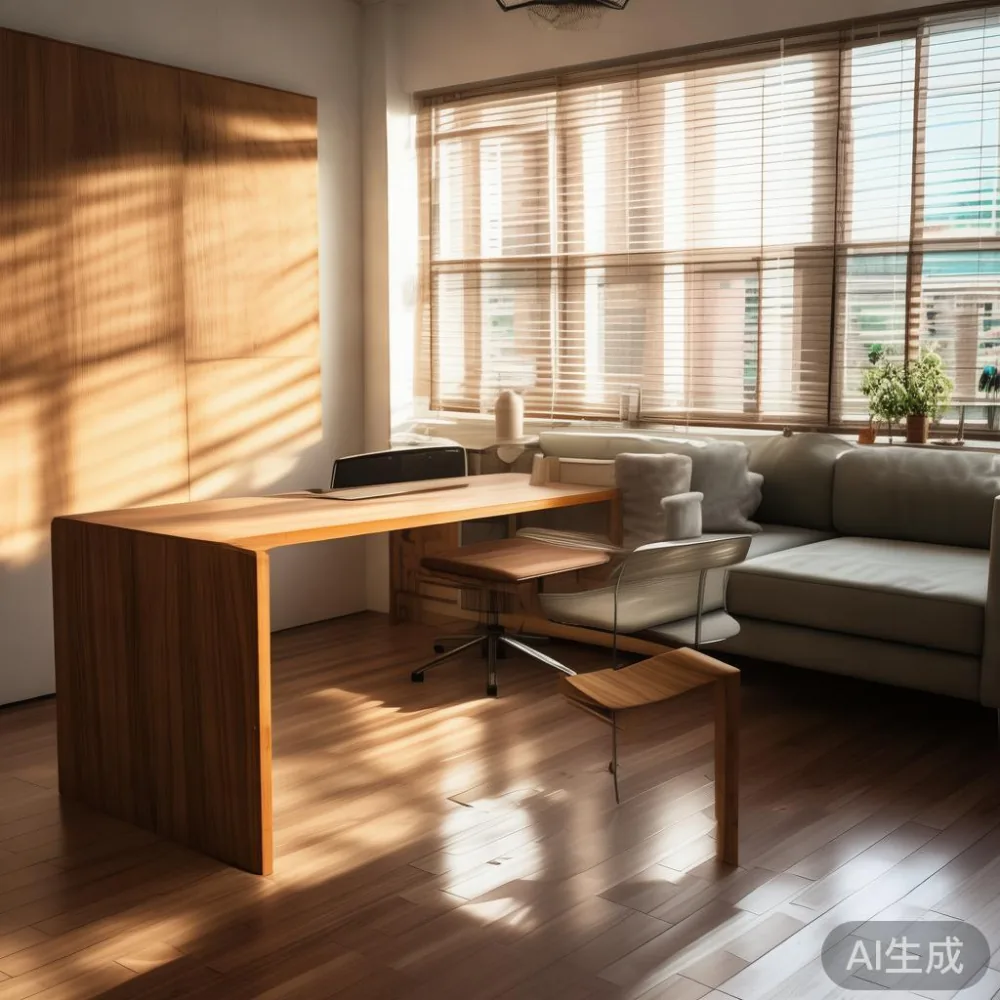
What does a five-year cost model actually include?
Sticker price is the smallest number on the spreadsheet. I tracked five line items over 60 months for an owner working from home five days a week:
1. Purchase (GST-inclusive, with delivery to a 12th-floor HDB in Punggol, including a S$30 lift surcharge because the desk exceeded 30 kg and needed two men).
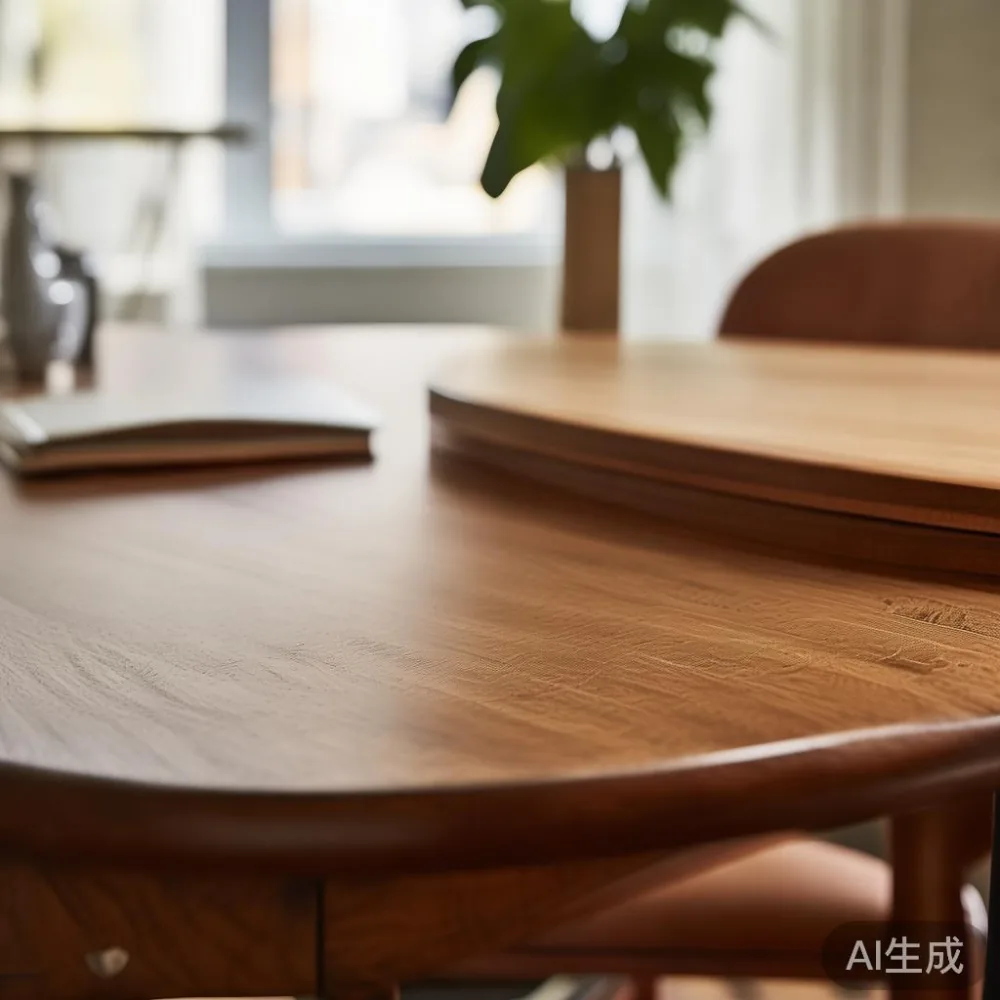
2. Assembly. Flat-pack veneer: I paid S$40 to a handyman in Bedok for 45 minutes. Solid wood office desk with mortise-and-tenon legs: S$0 because the MIDHILL team assembled it on-site in 35 minutes.
3. Climate damage. Singapore humidity averages 80% relative humidity year-round, and bedroom-style air-conditioning keeps rooms at 24 degrees C with 55% RH. The 30% swing peels veneer edges within 18 to 30 months. I saw this in a friend's Punggol condo: a S$299 veneer desk bubbled along the rear edge in month 22, costing S$180 to replace the top.
4. Refinishing. Solid wood can be sanded and re-oiled; veneer cannot be sanded past the top layer. Budget S$0 for veneer, S$120 to S$200 for one professional refinish of a solid wood office desk at the five-year mark.
5. Resale value or disposal. Veneer desks have near-zero resale in the Carousell second-hand furniture category, fetching S$20 to S$50. Solid wood office desks, particularly branded ones, resell at 40% to 55% of original price, meaning S$200 to S$495 back on a S$899 purchase.
How do the two options stack up over 60 months?
Running the numbers for a Singapore WFH user who replaces the desk after five years:
Veneer office desk (S$329, 18 kg, MDF core):
Purchase S$329 + assembly S$40 + climate repair S$180 + resale recovery minus S$35 = net five-year cost of about S$514.
Solid rubberwood office desk (S$749, 32 kg, oak-finish, French light luxury styling with a slim 4 cm apron):
Purchase S$749 + assembly S$0 + refinish S$160 + resale recovery S$300 = net five-year cost of about S$609.
The gap is roughly S$95 across five years, or S$1.58 per month. For a typical 60-month WFH tenure, the solid wood office desk costs the user less than a cup of kopi a month. The shorter answer: the veneer desk wins on day one, but loses by year three because the substrate swells at the Singapore humidity band.
How do I choose a storage bench for a study?
Pick a storage bench for a study by matching the bench seat height to your existing office desk within 2 cm, choosing a bench depth at least 45 cm so a 15.6-inch laptop clears the backrest, and confirming the internal cavity holds at least three standard magazine files if you plan to stash paperwork. The reason this matters: most study benches fail on one of those three checks, and a bench that fights the desk creates a daily ergonomic drag of 5 to 15 minutes.
In a Singapore study, a storage bench often doubles as a corridor-friendly seat for the occasional visitor. A 90 cm-wide rubberwood bench with a lift-up lid weighs 22 kg, fits a HDB lift at 0.9 m door width when flat-packed in a 1.0 m x 0.5 m x 0.5 m carton, and slots beneath a 120 cm office desk when the desk apron is 60 cm off the floor. Pairing the bench with an office desk from the same maker keeps the wood grain and stain consistent, which matters in compact HDB studies where every piece of furniture shows.
Is veneer always bad and solid wood always good?
No, and the answer depends on the buyer. A tenant in a 12-month Bedok rental who needs a basic office desk today and will leave in a year should buy the S$229 veneer model and recover most of the cost by selling for S$50 on Carousell. Net spend: S$179. A 25-year-old first BTO owner in Punggol who plans to work from home for the next decade should pay the S$749 once and refinish at year five, netting S$609 over the same window.
There is a third path that buyers overlook: post-modern light luxury pieces that combine a solid rubberwood frame with a veneered top. These are sometimes listed as Japandi rubberwood metal furniture because the legs use powder-coated steel and the carcass uses rubberwood. A 140 cm x 70 cm hybrid office desk in this style retails around S$699, weighs 26 kg, and survives the same five-year span because the structural frame stays solid even if the top edge takes a knock. The compromise keeps the look of a solid wood office desk while shaving roughly S$150 off the price.
What real-world details should a Singapore buyer add to the spreadsheet?
Three details get left out of showroom conversations and end up costing real money.
First, access. A 38 kg solid wood office desk in a Tampines HDB on the 14th floor costs an extra S$30 to S$60 in lift-surcharge delivery because two porters and a longer time slot are required. A 19 kg veneer desk ships with one porter and rarely triggers the surcharge. Budget the lift fee into the purchase.
Second, refinishing access. MIDHILL offers lifetime refinishing on its solid wood office desk, bed frame, dining table, wardrobe, nightstand, and marble table pieces, which means the cost line in year five drops to logistics only (around S$60 round-trip within mainland Singapore, with collection windows on Tuesdays and Fridays). Buyers who do not have this clause pay S$120 to S$200 per refinish and need to book three to four weeks ahead at the carpentry shop in Defu Lane.
Third, warranty reading. A one-year warranty on a veneer office desk covers manufacturing defects only, not edge peel caused by humidity. A ten-year structural warranty on a solid wood office desk covers leg joinery, drawer runners, and frame cracks, which are the parts most likely to fail over a five-year span. Read the exclusions page, not the cover page.
What about my partner's marble table, the bed frame, and other matching pieces?
Once the office desk decision is settled, most Singapore buyers match the rest of the study with pieces from the same collection. A solid wood bed frame in a 150 cm x 190 cm queen size weighs about 55 kg and ships in two cartons, so a S$40 lift-surcharge applies for upper-floor HDB units. A 180 cm dining table in solid rubberwood weighs 70 kg and arrives in three cartons, so budget S$50 for the third porter. A wardrobe above 180 cm in height often cannot clear certain HDB lift ceilings, so confirm the assembled height against the lift cabin height of 2.4 m before ordering.
A nightstand is the easiest item to match because a 50 cm x 40 cm x 55 cm rubberwood unit weighs 14 kg, ships in one carton, and clears every HDB lift in Singapore. Pairing the nightstand with the office desk keeps the wood tone consistent across the flat, which matters in a compact home where the bedroom opens onto the study through a sliding door.
A marble table, such as a 120 cm round dining top with an Italian Carrara surface, weighs 85 kg and requires a four-person delivery team. Most Singapore marble table pieces ship with a separate wooden or metal base, and the two halves travel in different cartons. Confirm both cartons arrive before the assembly team leaves, because mid-delivery marble replacements take 14 to 21 working days to ship from overseas and the buyer pays the second delivery fee.
So which option should you choose?
Run your own five-year spreadsheet before paying a deposit. For a WFH professional who plans to stay in the same flat for five years or longer, the solid wood office desk, whether American light luxury in white oak, French light luxury in walnut-toned rubberwood, or post-modern light luxury with powder-coated steel legs, costs about S$1.58 a month more than the veneer alternative and survives the Singapore humidity band with one refinish. For a tenant or short-stay buyer, the veneer option wins on day one and is the rational pick.
Whichever path you take, write down the five numbers: purchase price with GST, lift surcharge, assembly fee, expected repair or refinish cost, and resale value. Those five figures decide the five-year outcome more reliably than any showroom sample. My own office desk is the S$749 solid rubberwood piece from MIDHILL, refinished once at the 30-month mark for S$60 in logistics, and it is the same desk I will sit at for the next ten years.