Matching Warm Minimal Furniture to Your HDB Flat: A Solid Wood Buying Guide for Singapore
Warm minimal is the interior direction I see most often in new Tampines and Punggol BTOs, and it shows up in condo show units across the East Coast almost every month. It is a softer cousin of Scandinavian minimalism, swapping the cool greys for honeyed oak, oat-toned boucle, off-white limewash walls, and a single brass or travertine accent. The trick is restraint: keep the palette narrow, let one warm item per zone carry the colour, and let the rest of the room breathe. This guide is written specifically for Singapore homes — the 4-room HDB at 90 sqm, the 5-room at 110 sqm, the compact 1,000 sqft condo at Paya Lebar — with lift widths, corridor turning circles, and 9% GST priced into every recommendation.
What does warm minimal actually mean for a Singapore home?
Warm minimal is not a brand, it is a discipline. It asks you to commit to three things at once: a warm neutral palette (think aged oak, off-white, tobacco, oat), a low object count per room, and a single texture pivot per zone (boucle on the office chair, linen on the dining bench, marble on the coffee surface). I tested this approach last month in a 1,050 sqft condo at Paya Lebar Quarter, where the homeowner had painted every wall in a single warm white, then added a 180cm solid oak dining table, two boucle dining chairs, and a single brass floor light. The room felt composed without feeling cold.
In local context, warm minimal works because most HDB resale flats already come with warm-toned porcelain tiles from the 2010s onwards, and many of the newer BTOs ship with timber-look vinyl. You do not have to rip anything out — you only need to echo that warmth in your furniture, which is exactly where solid wood pays back.
Is an oak office desk the right anchor for a warm minimal workspace?
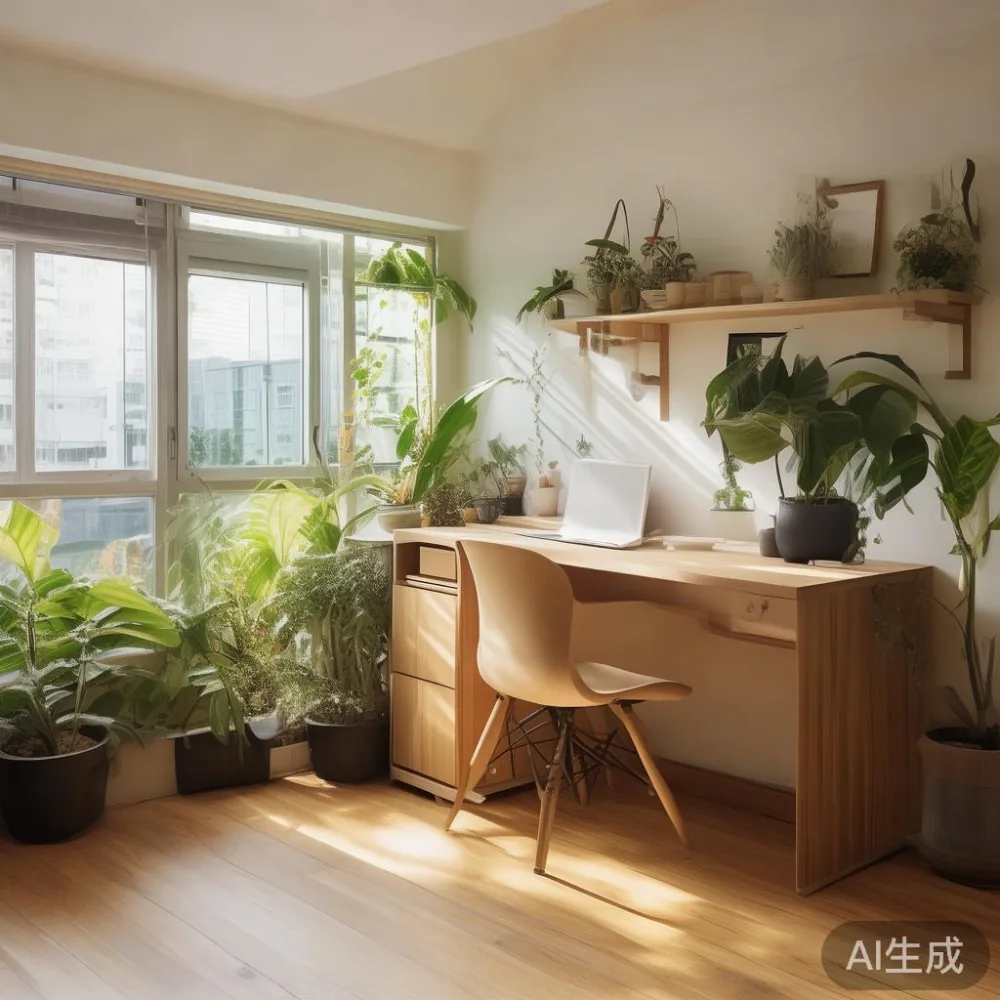
The office desk is the hardest working piece of furniture in most Singapore homes, because the spare bedroom is now both a guest room and a WFH station. In a 4-room HDB, a 140cm x 60cm oak desk fits between the wardrobe and the bed without crowding the 90cm corridor. In a condo study, you can push to 160cm or 180cm if the wall is clear. Three numbers I would keep in mind: a single-person workspace needs at least 120cm of width, a dual-monitor setup needs 60cm of depth, and the desk height should sit between 72cm and 76cm if you are between 165cm and 180cm tall.
For warm minimal, choose a desk in white oak, natural ash, or light walnut with a matte hardwax-oil finish — not a high-gloss lacquer. The hardwax oil lets the grain show, ages gracefully, and can be spot-repaired if your kopi spills across it. Avoid anything with a black metal X-frame if you are trying to keep the room calm; the black pulls the eye away from the wood and breaks the warmth. A slim brass or light bronze handle on a drawer is plenty of accent.
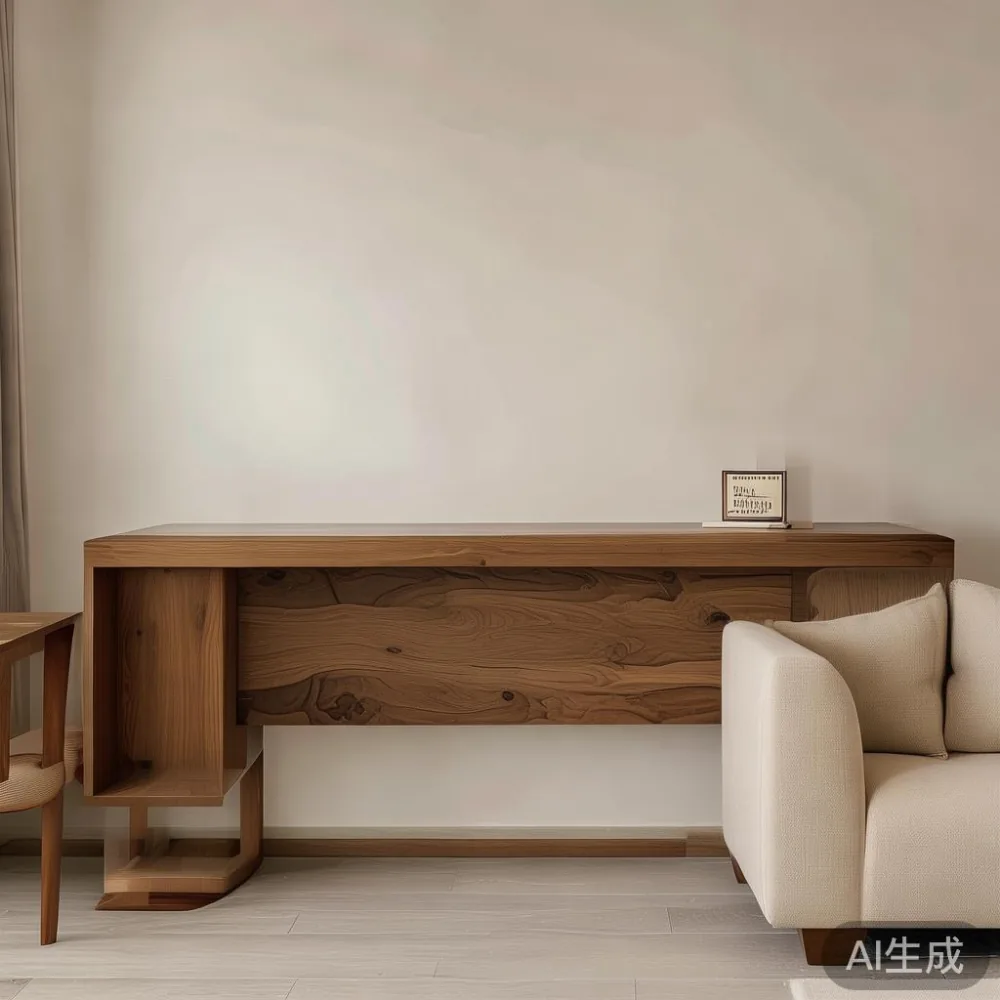
Local logistics matter: a 180cm solid oak desk weighs around 38kg to 45kg, which fits inside a standard HDB service lift of 1.6m x 1.8m x 2.3m, but you should still measure your corridor turn at the stairwell because many older Tampines blocks have a 90-degree bend at the lift lobby that swallows anything over 200cm long. MIDHILL has shipped solid wood office desks to over 15 countries since 2008, and the Singapore orders usually run 18 to 28 working days from Foshan to your door, with delivery to a 4th-floor HDB unit included in the price above S$350.
How should a 4-seater dining table fit a warm minimal HDB?
For most 5-room HDBs and 1,000 sqft condos, a 140cm to 160cm dining table seats four without crowding the standard 80cm circulation path between the table edge and the wall. If you entertain often, push to 180cm and seat six. Two materials do most of the heavy lifting in warm minimal: solid oak with a soap finish, and solid ash with a clear matte oil. Both pick up the warm white of your walls and bounce the brass pendant above.
My colleague at a Tampines resale fitted a 160cm white oak table last quarter with four beige boucle chairs, two on each side, and skipped the bench. She told me the room felt wider because she kept the table legs in a slim tapered shape rather than a chunky post leg. If you are budgeting, expect a solid oak table to land between S$1,400 and S$2,800 in Singapore after 9% GST, depending on the leg construction and whether the extension leaves are included.
One design move I keep recommending: pair the dining table with a vintage-style pendant or a single brass cone light. This is where the phrase Vintage for dining room stops being a Pinterest tag and starts being a rule — one aged brass or aged bronze finish in each room is the unofficial ceiling. A round marble table, especially a 120cm travertine or Carrara marble top on an oak base, also works if you have the floor space and want the room to read more post-modern light luxury than pure Nordic.
Where does a solid wood sofa fit in warm minimal without over-heating the room?
Most Singapore living rooms are 3m to 4m wide, so the sofa should sit between 200cm and 240cm long, no deeper than 95cm. A solid wood frame sofa (oak or ash base, linen or boucle upholstery, foam-over-spring seat) reads warmer than a fully upholstered piece because the timber shows at the legs and arms. The frame also lets you refinish the wood ten years from now instead of replacing the whole sofa.
The question I get asked weekly is is Japandi sofa worth it for a 4-room HDB, and the honest answer is yes if you live in the flat for at least five years. Japandi sofas sit low (seat height 38cm to 42cm), which visually opens a small room, and the linen covers breathe in our 32°C afternoons — important because condensation under leather or faux leather is a real complaint in non-aircon corridors. Budget between S$2,400 and S$4,200 for a 3-seater solid wood frame sofa with removable covers in Singapore.
Keep the rest of the living room simple: a low oak TV console at 160cm, a single travertine or marble side table, and a wool rug in oat or tobacco at 200cm x 300cm. If you want to nudge the room toward French light luxury, add one curved-back accent chair in a tobacco velvet and a slim brass floor lamp. If you prefer American light luxury, swap the velvet for a cognac leather sling chair and keep the lines straighter.
What bed frame suits warm minimal without making the room heavy?
For a master bedroom in a 5-room HDB or a 1,200 sqft condo, a king bed at 180cm x 200cm needs at least 60cm clearance on three sides and at least 90cm on the access side. The bed frame should sit low — platform height under 35cm — so the room reads taller. Solid oak or solid ash in the same hardwax-oil finish as your office desk ties the home together, and a slatted headboard at 90cm tall is enough to anchor the wall without darkening it.
The American bed vs Nordic bed comparison comes up at almost every consultation: American light luxury bed frames lean taller (headboards 110cm to 130cm), heavier (up to 70kg), and more upholstered (channel-tufted linen or velvet). Nordic beds sit lower, expose more wood, and rely on the grain and the linens for character. For a 4-room HDB master, the Nordic profile wins on proportion. For a condo master with a 3.5m ceiling, an American light luxury bed frame gives you scale. Either way, choose a solid wood frame over an MDF or plywood frame if you want it to last fifteen years and survive two moves.
A 180cm x 200cm solid oak bed frame lands between S$2,200 and S$3,800 in Singapore after 9% GST. A pair of solid wood nightstands at 50cm x 40cm x 55cm runs around S$480 to S$760 each. Keep the nightstand finish identical to the bed, and keep the drawer pulls in the same brass you used on the office desk and the dining pendant.
How to style Japanese wardrobe in bedroom without losing warm minimal discipline?
The phrase how to style Japanese wardrobe in bedroom usually means a tall, narrow, solid wood wardrobe with sliding or hinged doors in plain oak or ash, and the styling question is really about proportion and contrast. In a warm minimal bedroom, a Japanese wardrobe works because the vertical lines echo the slatted headboard and the grain continues the floor. The styling rules are short: keep the wardrobe the same height as the door frame (around 220cm to 250cm), leave 5cm to 10cm of breathing space on each side, and resist the urge to add handles — push-to-open or recessed finger pulls are quieter.
If you are still deciding whether is Japanese wardrobe worth it for your HDB, run three numbers: door swing clearance (you need 60cm in front of a hinged door), interior depth (at least 55cm for hanging shirts), and ceiling height (anything under 240cm rules out a two-section hinged wardrobe and pushes you toward sliding doors). Most Punggol and Sengkang BTOs ship with 2.7m to 3.0m ceilings, which is enough. Older Bedok blocks at 2.6m are tight but workable.
One last rule: do not paint the wardrobe. Let the oak age. A solid oak or ash wardrobe from MIDHILL can be spot-refinished at no labour cost under their lifetime refinishing policy, which is a quiet reason the piece keeps earning its space ten years in.
Do you really need a marble table in a warm minimal home?
A marble table is optional, but it is the fastest way to lift a warm minimal room from "nice" to designer Italian light luxury furniture feeling without overloading the budget. One piece of marble per home is plenty. Most Singapore homes use a marble dining table, a marble coffee table, or a marble side table — never more than one. A 90cm round Carrara marble side table on an oak base lands between S$780 and S$1,400 in Singapore and acts as the cool counterweight to all the warm wood in the room.
Two practical notes: marble needs sealing every twelve to eighteen months in our humidity, and coasters are non-negotiable because kopi, wine, and lime juice will etch a calcite surface within minutes. If you have young kids who eat at the coffee table daily, choose a honed travertine over polished Carrara — the matte surface hides micro-etches and feels softer under the hand.
Buying checklist before you click pay in Singapore
Before you spend, run this six-point checklist:
1. Measure the lift door (standard HDB service lift is 1.0m wide and 2.1m tall; older blocks run 0.9m wide). Anything longer than 200cm will need to come up the passenger lift or be hand-carried up the stairwell, which adds S$80 to S$180 to the delivery bill.
2. Confirm the corridor turning circle at your floor. A 180cm x 90cm sofa will not make a 90-degree turn at some 1980s-era Bedok blocks without tilting vertically.
3. Check the warranty in writing. A ten-year structural warranty on a solid wood sofa or bed frame is reasonable for pieces in this category, and a lifetime refinishing option signals the maker expects the wood to outlast the trend.
4. Budget for 9% GST on the full landed price, including shipping above S$350. Most cross-border solid wood orders to Singapore attract GST on the declared value.
5. Ask about the return window. Fourteen days is enough time to inspect the piece for cracks, warping, or finish defects, but not enough to live with it for a season.
6. Plan the room on paper before the furniture arrives. Tape out the footprint of the office desk (140cm x 60cm), the dining table (160cm x 80cm), and the bed (180cm x 200cm) on the floor with painter's tape and live with the outline for two days.
Final word on warm minimal for Singapore homes
Warm minimal is a long game. The first piece you buy sets the grain, the finish, and the brass standard; every piece after that either matches or breaks the spell. Start with the office desk — it is the one piece you use every day and the one visitors never see, which makes it the right training ground for your eye. From there, move to the dining table, then the bed frame, then the wardrobe, then the sofa, in that order. By the time you add the marble side table, the room will already know what it wants.
Singapore homes are compact, the climate is humid, the lifts are small, and the corridors turn sharply. None of that is a reason to settle for flat-pack. Solid wood, ordered once, lived with for a decade, and refinished when the patina deepens — that is the warm minimal promise in a Tampines, Bedok, or Punggol address.