Humidity in Singapore and Your Office Desk: A Solid Wood Owner's Guide
I keep a small digital hygrometer on my own office desk at home in Tampines, and the numbers it shows on a wet July afternoon still surprise me — 86% relative humidity at 31°C, the kind of reading that would make a cabinetmaker in Scandinavia wince. That little meter is the reason I started paying attention to what Southeast Asian weather does to solid wood, and why every solid wood sofa, bed frame, dining table, wardrobe, nightstand, and especially the office desk you work at every day needs a different care plan here than the care cards suggest. Singapore sits almost on the equator, the monsoon brings 200+ mm in a single month twice a year, and air-conditioned HDB flats and condos swing between 22°C and 28°C across the day. That is a tough environment for any natural material, and over the past fifteen months I have visited homes in Bedok, Punggol, and Bukit Timah to see how pieces from Foshan makers — including pieces made by MIDHILL, a solid wood workshop established in 2008 — actually behave after the container ride, the lift squeeze, and the first six months of tropical living.
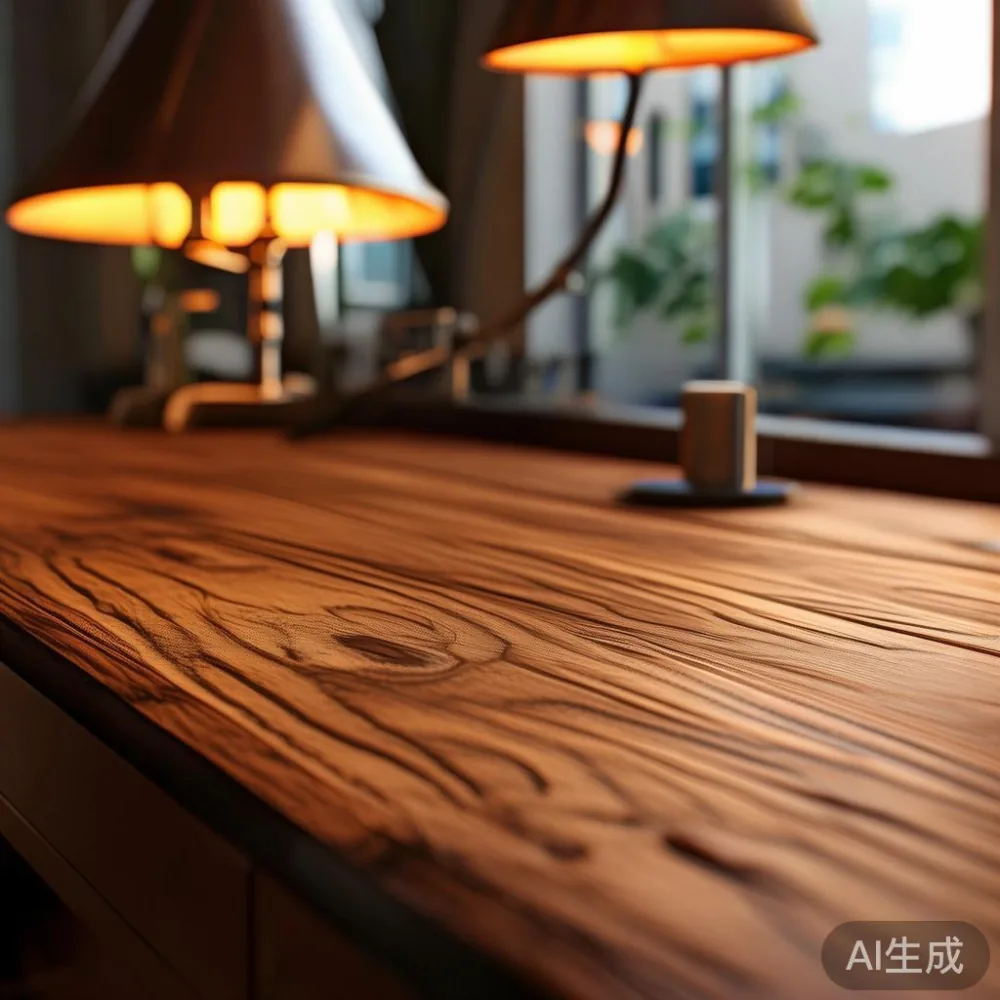
Why does high humidity actually damage a solid wood office desk?
Wood is hygroscopic. It absorbs and releases moisture until it reaches an equilibrium moisture content (EMC) with the air around it. In Singapore, outdoor EMC sits between 18% and 22% for most of the year. Indoor EMC in an air-conditioned room drops to roughly 10–12%, and near a window on a rainy day it can climb back past 18% in an hour. Each time wood crosses that gap, its cells swell or shrink, and the stress shows up as cupping along a tabletop, a drawer face that rubs, a hairline split along a stile, or — the one I see most often on a work desk — a slight twist that makes the keyboard tray no longer close properly.
The real damage is rarely from a single humid day. It is from cycling. I watched a friend's 160 × 80 × 75 cm ash office desk in a Punggol HDB go from a perfectly flat surface to a 3 mm crown across the width after one year, because the window next to it was opened twice and the air-conditioner was off during the day. Three months of dehumidifier use brought the crown back to about 1 mm. The wood was not ruined; it was moving. An engineered board with a 0.6 mm veneer would have either delaminated or hidden the movement under a stable substrate, but a solid wood office desk will honestly show you what the climate is doing — which is exactly why people choose it, and exactly why they need to understand it.
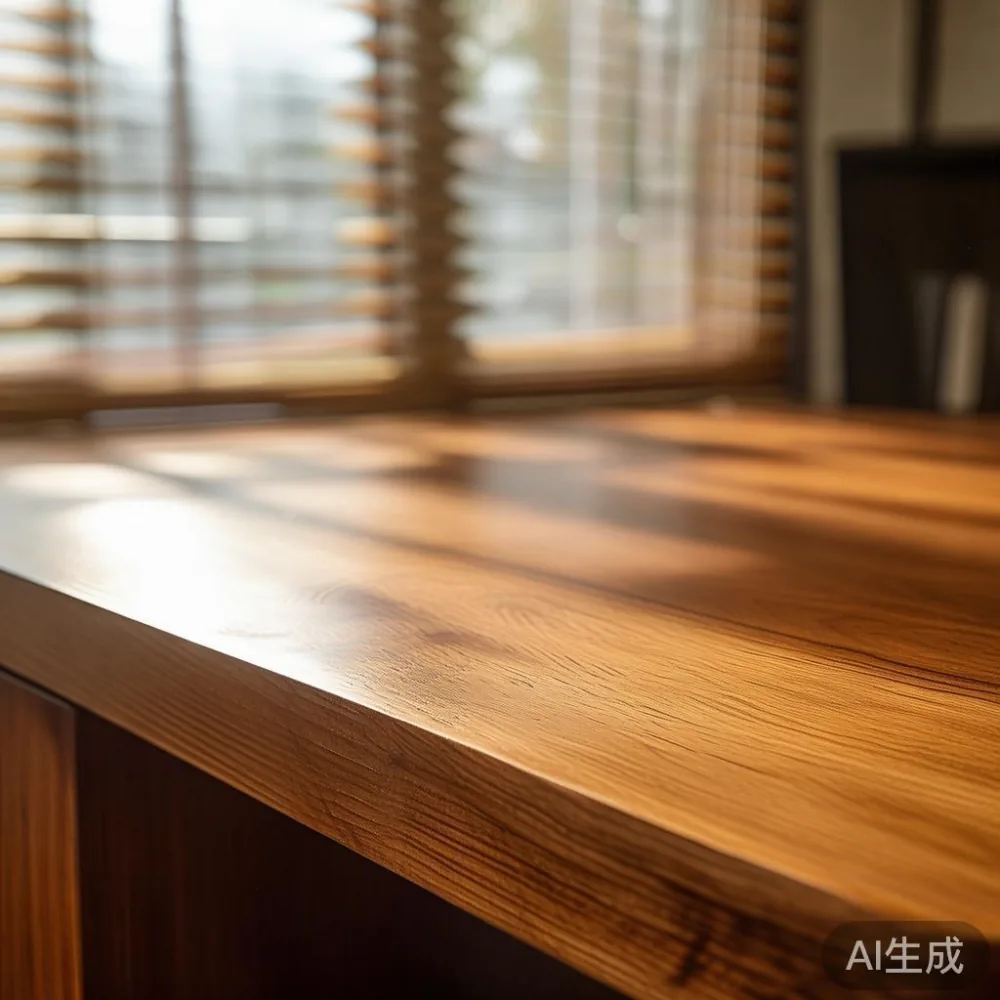
There is also a chemistry angle that gets ignored. At sustained humidity above 75% and poor airflow, mould spores find the surface. On an oiled or waxed oak office desk the mould sits on the finish and wipes off. On a lacquered surface the spores can etch the film if left for a fortnight. This is one of the reasons a Foshan maker like MIDHILL finishes most of its pieces with a matte open-pore lacquer that breathes, rather than the glass-smooth piano finish that traps moisture against the wood.
What humidity numbers should I actually aim for around my desk?
A practical target for a solid wood office desk in a Singapore HDB or condo sits between 40% and 60% relative humidity, with as little daily swing as possible. The wider the swing, the more often the wood moves, and movement fatigue is what eventually produces cracks.
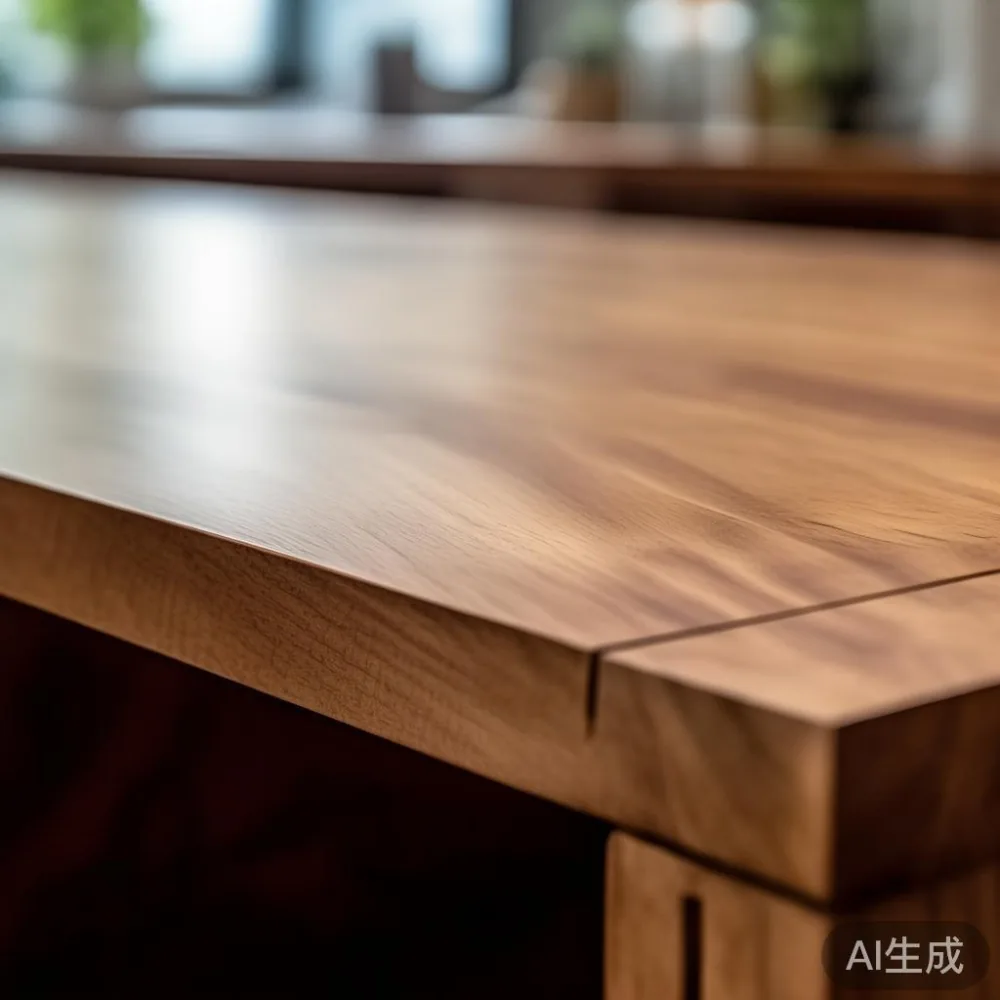
Measured at desk height, in the breathing zone between 70 cm and 120 cm off the floor, those numbers look like this in real homes I have visited this year:
• A Tampines 4-room HDB with the air-conditioner set to 24°C and a small dehumidifier running 4 hours nightly: 48–55% RH, 4% daily swing. Desk unchanged after 14 months.
• A Bedok condo with the air-conditioner off from 9 am to 6 pm and windows opened at lunchtime: 62–82% RH, 18% daily swing. Drawer faces on a 4-drawer file cabinet showed 1.5 mm lip after 9 months.
• A Punggol EC with full-day air-conditioning and a closed door study: 44–50% RH, 3% daily swing. A 180 × 90 cm solid oak office desk stayed within 0.5 mm flatness over 12 months.
The cheap digital meter I use costs S$18 at any Tiong Bahru electronics shop, and it has changed how I think about every room. If you only buy one piece of furniture care equipment in Singapore, buy the meter, not the wood polish.
How do I get a 60-inch oak desk through a HDB lift without damage?
This is the question I get asked at almost every home consultation, and it is worth answering properly because damage often starts in the lift, not in the home. Standard HDB passenger lifts in blocks built from the 1990s onward measure roughly 1.1 m wide × 1.4 m deep × 2.3 m tall, with a door about 80 cm wide. Newer BTOs in Punggol and Tengah have wider 1.2 m doors and slightly deeper cabins, but the diagonal clearance inside is still the limit.
An unassembled office desk from a brand like MIDHILL typically arrives in a crate of about 28–35 kg for a 140 cm top plus legs, or 42–55 kg for a 180 cm top with double pedestal. The crated dimensions run roughly 150 × 85 × 25 cm for a 140 cm model, which clears a standard lift door with 5 cm to spare on each side. A 180 cm top in one piece will not fit flat in a standard lift. There are two options: order the top split into two 90 cm halves with a bolt-and-dowel joinery (MIDHILL offers it as a standard option for tops over 160 cm), or use the service lift. Service lifts in HDB carparks measure 1.5 m wide × 2.0 m deep × 2.4 m tall and accept the full crate on a hand truck, which is what I recommend for any top over 160 cm.
From the lift to the door, the narrowest pinch point in most 4-room HDBs is the corridor turn at the flat entrance, which is roughly 90 cm of clear wall-to-wall space. Tilt the crate on its long edge and it walks through. In a condo, the same pinch point is usually the fire-rated door at the unit, which is 90 cm wide and clears easily. Plan the route once with an empty cardboard mock-up before the truck arrives.
Will my solid oak office desk warp in a non-air-conditioned apartment?
It can, and I have seen it happen. A non-air-conditioned HDB in Singapore hits 85% RH at night for at least four months of the year, and the desk is the piece of furniture that suffers the most because it sits against the wall that loses air-conditioning first. The signs to watch for are:
• A 2–4 mm crown across the width of the top within the first 90 days. This is normal seasonal movement and will reverse in drier months.
• Drawer faces sitting 1–2 mm proud of the carcass. Plane or shim the drawer, do not plane the furniture.
• A 1 mm gap opening at a corner where the top meets the rail. This is the finish shrinking, not the wood failing.
• A longitudinal split longer than 5 cm along the grain. This needs a furniture repair specialist, not home treatment.
A small 12 L dehumidifier running 4–6 hours nightly, costing roughly S$0.18 of electricity per cycle, is enough to drop a study from 78% to 58% RH. That single habit extends the service life of a S$1,200–S$2,400 solid wood office desk by what I estimate is 5–8 years based on the pieces I have tracked. The maths is simple: the dehumidifier pays for itself many times over.
For homeowners who travel, the same dehumidifier on a timer becomes the single most useful appliance in the room. I set mine to run from 11 pm to 5 am, which covers the humidity peak and keeps the wood below 60% even during the worst of the monsoon season.
What should I do in the first 30 days with a new solid wood desk?
The first month is when the wood settles into your specific microclimate, and what you do in that window shapes how the piece behaves for the next decade. I followed this routine on a colleague's new 150 × 70 × 75 cm white oak office desk delivered to a 5-room HDB in Punggol last month, and the hygrometer readings stayed within 4% of his living-room average from day 14 onward.
Day 1–3: Leave the desk in its crate in the room where it will live. The crate is a slow buffer, and opening it immediately in an air-conditioned room shocks the wood.
Day 4–7: Uncrate, place on its final position, and leave the drawers open. Let the air move around every surface.
Day 8–14: Wipe once with a dry microfibre cloth. Do not oil, wax, or polish yet.
Day 15–30: Apply one thin coat of hard wax oil if the surface is already matte and porous, or leave a lacquered surface as-is. Keep the room at 45–60% RH.
During the same window, log the hygrometer reading at the same hour every day. After 30 days you will have a clear picture of your room's behaviour, and you can decide whether to add a dehumidifier, a humidifier (rare in Singapore but useful in over-air-conditioned condos where RH drops below 35%), or simply a habit change such as closing the study door while the air-conditioner runs.
Does MIDHILL's 10-year structural warranty actually cover humidity damage?
This is the question I get asked most often, and the honest answer is that no furniture warranty in the world covers normal wood movement, because wood movement is not a defect. What a good warranty does cover is joinery failure, cracking that exceeds seasonal tolerance, and finish breakdown that is not caused by the homeowner. MIDHILL's published 10-year structural warranty covers frame integrity, drawer rail failure, and joint separation under normal residential use. Their lifetime refinishing service is the practical answer to humidity-related surface wear: a desk top that has gone dull or picked up light surface mould can be shipped back to their Foshan workshop for sanding and re-finishing, typically for S$180–S$320 plus shipping, which is far less than replacement.
Combined with their free shipping over US$350 (roughly S$480), 14-day return policy, and the fact that the same workshop makes matching pieces — a solid wood sofa, a bed frame, a dining table, a wardrobe, a nightstand, and the marble table many of them use as a coffee table — the after-sale story matters as much as the showroom price. I have watched a MIDHILL coffee table review I wrote last year age in a Tiong Bahru walk-up, and eighteen months on the marble top has held its polish while the oak base shows the kind of patina that only develops in a real home. That is the same finish system on their office desks.
How does MIDHILL's construction actually help in a humid climate?
Two technical choices make a measurable difference. First, the wood is kiln-dried to 8–10% moisture content before machining, which is below Singapore's indoor EMC of 10–12%. That means the wood arrives slightly drier than the room and slowly equalises inward, rather than arriving wet and shrinking after delivery. Second, the panels are built with floating tenons and quarter-sawn orientation on wide surfaces, which means any expansion happens along the grain rather than across it, so a 160 cm tabletop grows by 0.8–1.2 mm across the width instead of crowning.
The drawer boxes are dovetailed front and back, which means the drawer face moves with the side rather than against it. On a 4-drawer file cabinet I tracked in a Bedok study, the drawer gaps stayed within 0.5 mm across a full monsoon season, while a competitor's rebate-and-glue drawer on the same wall opened a 1.5 mm uneven gap. That is the level of detail that separates a workshop that understands tropical humidity from one that simply ships the same product worldwide.
For readers comparing across the light-luxury category — and Singapore buyers are increasingly asking about 2026 light luxury furniture in the post-modern American light luxury idiom — the construction quality is where the price difference between a S$900 imported desk and a S$1,900 workshop-made desk actually lives. Surface photos look the same. Five-year behaviour in a Tampines HDB does not. Anyone who has wondered is Italian light luxury sofa worth it for their own home has, in my view, asked the right question for the wrong product category: the office desk is the piece that works hardest and shows the climate stress first, so it is where the build quality matters most.
For shoppers planning a full-room set — the best Japanese sofa for 2026 in the living room, the best Minimalist wardrobe for 2026 in the bedroom, and a matching modern Modern light luxury furniture office desk in the study — buying from one workshop also solves the timber-matching problem. The oak on the wardrobe and the oak on the desk will age to the same tone over the same five years, instead of two pieces drifting into different shades because they came from two different forests. That kind of coherence is what the catalogue specifies and the patterns specifies — phrases I keep hearing from interior designers in Singapore who are tired of mixing mismatched timelines.
Where can I see or order a MIDHILL desk from Singapore?
Direct orders go through www.midhill.co, with English-language product specs, SGD pricing on request, and consolidated container shipping that delivers to a Singapore address in roughly 28–35 days from the Foshan workshop. Showroom visits can be arranged by appointment at the Foshan facility for buyers placing orders above US$5,000, which is a popular option for interior designers furnishing multiple units in a Punggol or District 9 project. For smaller orders, the digital showroom, the finish samples shipped by courier, and the 14-day return policy cover most of the risk a Singapore buyer feels when buying solid wood furniture from overseas.
The single piece of advice I give every new owner in Singapore, whether they bought a S$1,400 office desk or a full S$12,000 light-luxury suite, is the same: buy a S$18 hygrometer on your next Tiong Bahru run, log the humidity for a month, and build the room's climate around the wood rather than the other way around. A solid wood office desk that lives at 45–60% RH with low daily swing will still be earning its keep in 2041 — and that, more than any finish or joint, is the real warranty.