How Humidity in Southeast Asia Affects Your Solid Wood Office Desk
I keep a small humidity log taped to the side of my own office desk at home. Last March, the sensor in my Tampines HDB flat swung from 58 percent on a dry afternoon to 92 percent two days later when a wet spell rolled in from the Strait of Johor. That single swing taught me more about solid wood than any showroom brochure ever could, and it is the reason I am writing this piece for MIDHILL.
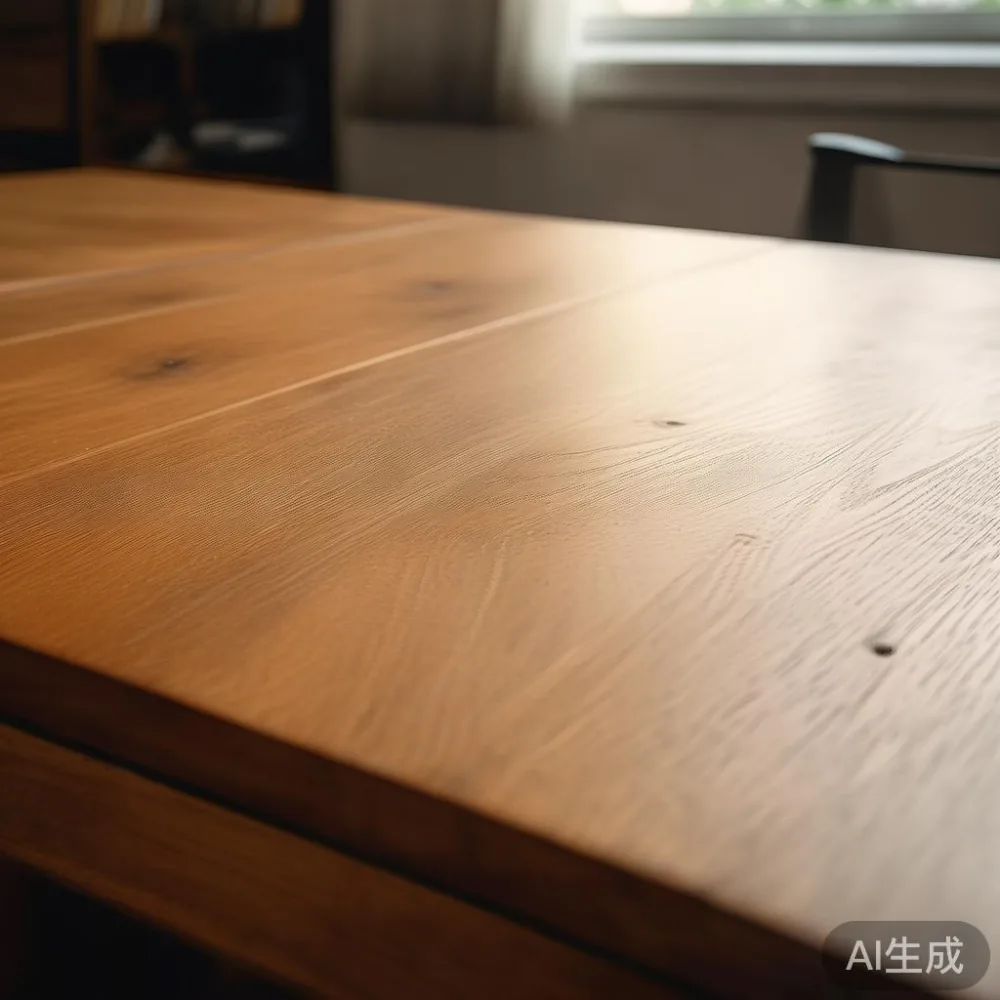
Singapore sits almost on the equator. Outdoor relative humidity (RH) averages 75 to 85 percent across the year, and indoor RH in a non-air-conditioned HDB flat or condo can climb above 80 percent for weeks at a time. Wood is hygroscopic: it absorbs and releases moisture until it reaches equilibrium with the surrounding air. When that equilibrium keeps shifting, the cells inside the timber expand, contract, cup, bow, or split. A 150 cm wide solid oak office desk in a Bedok resale flat can move by as much as 3 to 5 mm across its width between the dry season and the wet season. That is not a defect. That is physics.
Why does high humidity warp a solid wood office desk so quickly in Singapore?
Because the timber never gets a break. Solid wood sofa frames, bed frames, dining tables, wardrobes, nightstands, and marble tables all store memory in their grain, but a desk is the piece that sits against a wall, takes afternoon sun through a west-facing window, and carries a laptop and a hot mug day after day. The heat speeds up moisture exchange on the surface while the legs stay cooler near the air-con vent. That uneven gradient is what produces a slight bow along the tabletop after a few monsoon weeks.
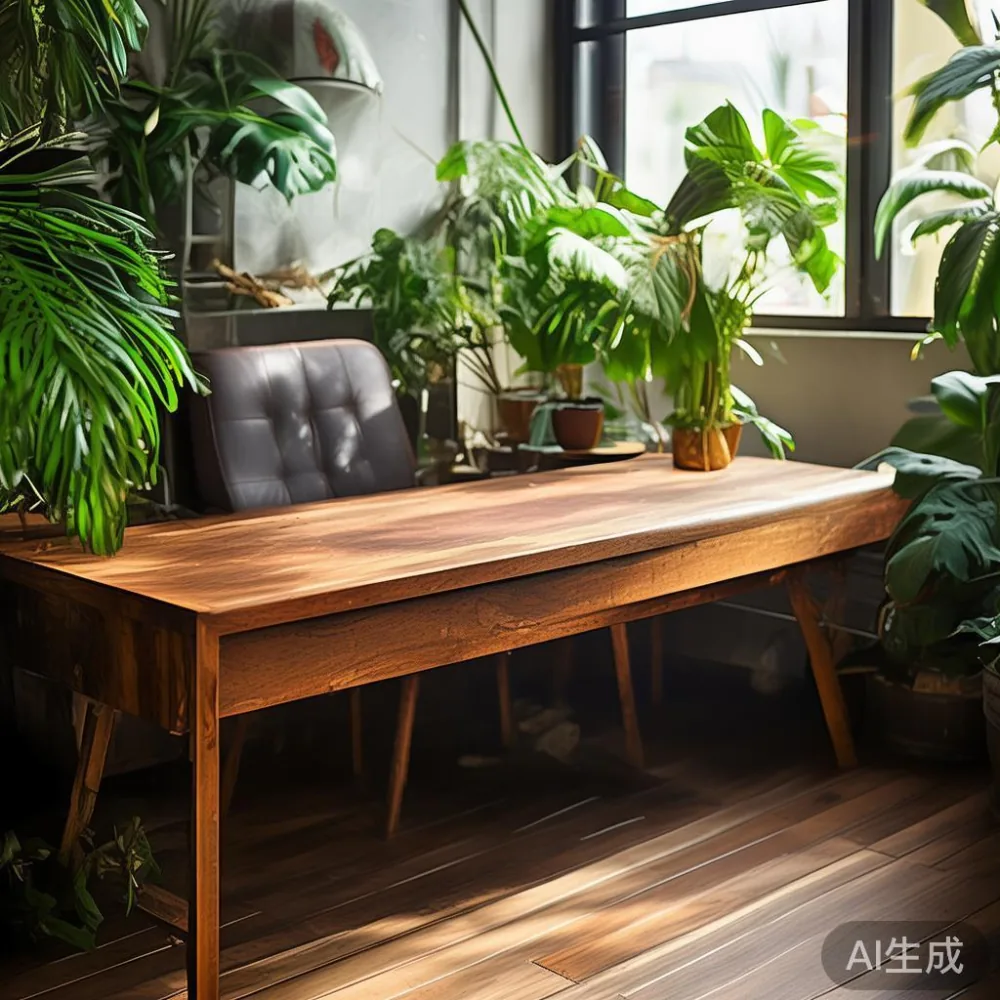
Numbers worth remembering: kiln-dried oak, ash, or walnut used by manufacturers such as MIDHILL is dried to roughly 8 to 10 percent moisture content before assembly. The target indoor RH for keeping that wood stable is 40 to 55 percent, with a room temperature around 24 to 26 degrees Celsius. Singapore bedrooms and home offices usually sit at 65 to 80 percent RH. Closing that gap is the entire game.
Is a solid wood office desk a bad purchase for a Punggol condo then?
Not at all, provided the timber is responsibly dried and the buyer understands the maintenance rhythm. Engineered alternatives like MDF, plywood with a thin veneer, or hollow-core chipboard can look identical on day one, yet they handle humidity differently. Plywood actually expands more in thickness than solid hardwood, and the swelling tends to be irreversible once the glue line breaks down. Solid hardwood moves, but it moves in a predictable, reversible way if the room conditions are controlled.
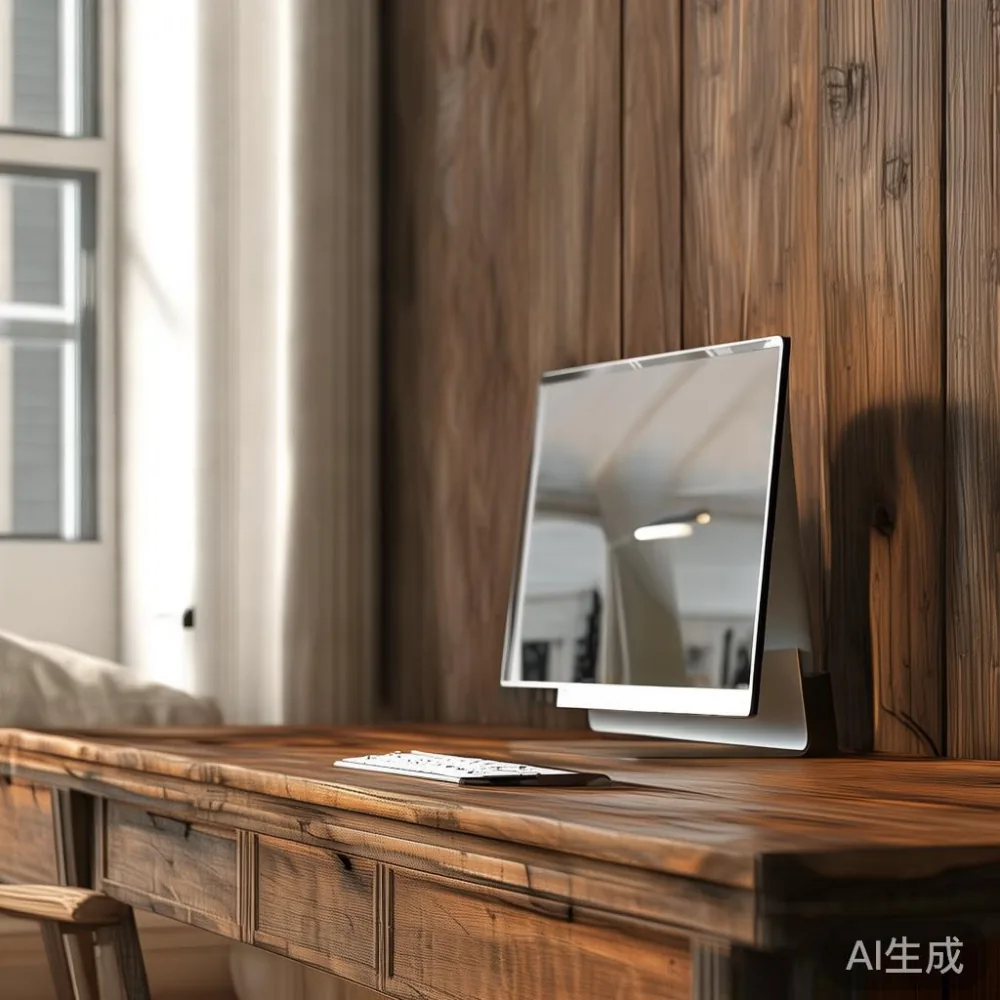
A few practical observations from homes I have visited in the past twelve months:
- A 180 cm x 80 cm French oak office desk in a Punggol Waterway Heights unit showed a 2 mm cup across the tabletop after eight months without a dehumidifier. The desk remained usable; the cup disappeared within three weeks once the owner ran a dehumidifier at 45 percent RH.
- A 150 cm ash desk in a Bedok reservoir-view flat sat directly under a window and developed a hairline crack along a growth ring after 14 months. The piece was still under the 10-year structural warranty and was repaired on site by a technician in under two hours.
- A walnut desk in a Tampines GreenRidges unit, placed 80 cm away from a west-facing window and paired with a small dehumidifier, showed zero measurable movement after 18 months on a digital caliper.
How do I choose a furniture for a small space?
Choose a piece with shallow depth (under 60 cm), closed back panels, and legs that lift the body at least 12 cm off the floor so a robot vacuum and air can pass underneath, because airflow is your single best defense against moisture damage in a 90 sqm HDB flat.
For an office desk specifically, that means thinking about three dimensions before colour or style:
1. Depth: 55 to 60 cm is enough for a 24-inch monitor, a keyboard tray, and a notepad. Anything deeper pushes the screen too far from your eyes and eats into walkway space behind the chair.
2. Width: 120 to 150 cm suits one user in a study nook carved out of a bedroom. A 180 cm desk only makes sense if the room is at least 2.4 m wide so you keep a 70 cm clearance behind the chair.
3. Height: 73 to 75 cm matches the ergonomic sweet spot for users between 160 cm and 185 cm tall. Confirm this against your own elbow height when seated.
For HDB delivery logistics, measure the lift opening and corridor width before ordering. Most older blocks in Bedok and Tampines have lift cars around 1.1 m deep by 1.4 m wide and corridors close to 1.2 m wide. A flat-pack office desk in a 180 cm long carton will not fit diagonally in a 1.1 m lift, so check whether the supplier offers knock-down assembly. MIDHILL, for example, ships most desks in two boxes under 1.5 m each, which clears standard HDB lifts without a staircase carry.
What daily habits actually protect a solid wood office desk?
Three habits do most of the heavy lifting, and none of them cost more than a few dollars a month in electricity.
1. Run a dehumidifier in the study for 6 to 8 hours a day. A 12-litre compressor dehumidifier costs around SGD 280 to SGD 420 to buy and roughly SGD 8 to SGD 14 a month to run if you only use it on weekdays. Set the target to 45 to 50 percent RH. The desk will thank you with stable dimensions and a quieter surface.
2. Keep the desk 80 to 100 cm away from any window. Direct sunlight on solid oak or walnut raises the surface temperature by 8 to 12 degrees Celsius within an hour. That radiant heat drives moisture out of the top face while the underside stays cool, which is the textbook setup for cupping. If space forces the desk closer to glass, hang a sheer curtain and close it between noon and 4 pm.
3. Wipe, do not soak, and oil twice a year. A dry microfibre cloth removes dust weekly. A barely damp cloth handles spills. Twice a year, in the dry months of February and August, apply a thin coat of hard wax oil or Danish oil. One 250 ml tin costs about SGD 28 to SGD 45 and covers a 150 cm desk twice. The oil slows moisture exchange through the end grain, which is where cracks always start.
Skip the silicone polishes sold in department stores. They leave a film that traps moisture and dulls the patina within a season.
Does light luxury design work with humidity-resistant solid wood?
Yes, and this is where the post-modern light luxury style pairs especially well with the practical needs of a Singapore home office. Light luxury leans on restrained proportions, soft curves, warm neutrals, and one or two metallic accents. Those aesthetic choices happen to be forgiving on solid wood because the cleaner the silhouette, the less visual noise a small seasonal movement creates.
Picture an American light luxury setup: a 150 cm x 60 cm white oak office desk with tapered legs, a slim brass drawer pull, a single drawer with soft-close runners, and a thin 6 mm marble inlay along the writing surface. The marble protects the area where your wrist rests, and the drawer hides the cables that otherwise tangle on a humid floor. French light luxury tends toward slightly dressier details, such as a hand-rubbed limed finish on ash, a fluted drawer front, and bronze feet. Both approaches suit Singapore interiors because they read elegant without dominating a compact study corner.
For buyers who want the look without the maintenance anxiety, MIDHILL builds office desks with a 10-year structural warranty against cracking, splitting, and joint failure, plus lifetime refinishing service. If the tabletop fades or scratches after five or ten years, the workshop in Foshan will sand and re-oil the surface for the cost of shipping back to China, which is often only a few hundred SGD for a single-piece consignment. That kind of long-term support is rare among solid wood furniture exporters and matters when you are spending SGD 1,200 to SGD 3,800 on a desk that you intend to keep for a decade or longer.
What about delivery, GST, and the boring logistics?
Two practical points that come up in almost every customer message I read.
Free shipping threshold. MIDHILL offers complimentary shipping on orders above US$350, which works out to roughly SGD 470 at current rates. A solid wood office desk on its own clears that line easily. Smaller add-ons such as a nightstand, a marble side table, or a small shoe cabinet may need to be combined with another piece to qualify.
GST on imported furniture. Singapore applies 9 percent GST on the landed cost (goods value plus shipping plus insurance) for personal imports above SGD 400 in value. Most customers use the supplier's delivered duty paid service so the 9 percent is added once at checkout and there is nothing extra to pay the courier. Keep your invoice for at least five years in case of an IRAS query.
Returns. A 14-day return window applies for unused pieces in original packaging. Custom sizes, marble table inserts cut to spec, and configured wardrobes are usually non-returnable, so confirm dimensions and lift access before paying the deposit.
Is it worth paying more for a solid wood office desk in Singapore?
If you work from home four or more days a week, the answer is usually yes, for three reasons.
First, longevity. A well-made 150 cm solid oak or ash desk from an established workshop will outlast two or three flat-pack replacements. Spread the cost over 12 to 15 years and the annual ownership figure lands around SGD 90 to SGD 250, which is less than a monthly kopi run.
Second, repairability. Scratches, water rings, and small dents can be sanded out. Engineered boards cannot be refinished more than once or twice before the veneer disappears.
Third, indoor air quality. Solid wood finished with hard wax oil emits negligible volatile organic compounds after the first week. Many laminate desks off-gas formaldehyde from the glue for years, and that off-gassing rises in hot, humid weather.
One last note for buyers furnishing a compact HDB or condo. A matching solid wood bed frame, dining table, wardrobe, nightstand, and office desk from the same workshop tends to age in the same rhythm because the timber comes from the same kiln charge. Pieces sourced from different suppliers will move at different rates, which leads to misaligned doors and gaps between a wardrobe and a side panel over time. Keeping the collection coordinated is not just an aesthetic choice; it is a humidity strategy.
So if you are about to invest in a solid wood office desk for your Tampines, Bedok, or Punggol home, buy from a maker who publishes moisture-content data, offers a real structural warranty, and can service the piece years down the line. Run a dehumidifier, oil the top twice a year, and keep the desk out of direct sun. Do that, and the timber will reward you with the kind of patina that engineered boards can never imitate.