Veneer vs Solid Wood Office Desk: A 5-Year Cost Reality Check for Singapore Homes
I moved into a 4-room HDB flat in Tampines last March, and the first thing I bought for my home office was a 120 cm x 60 cm veneer office desk from a Jurong East clearance fair. It cost me S$189, looked like walnut, and arrived flat-packed in a box I carried up the service lift by myself. Eighteen months later, the laminate edge near the cable grommet has chipped, a hot mug left a faint ring on the surface, and one corner has started to bow under the weight of two 24-inch monitors. That little experiment is exactly why I wanted to write this 5-year cost comparison between veneer and solid wood office desks for Singapore buyers.
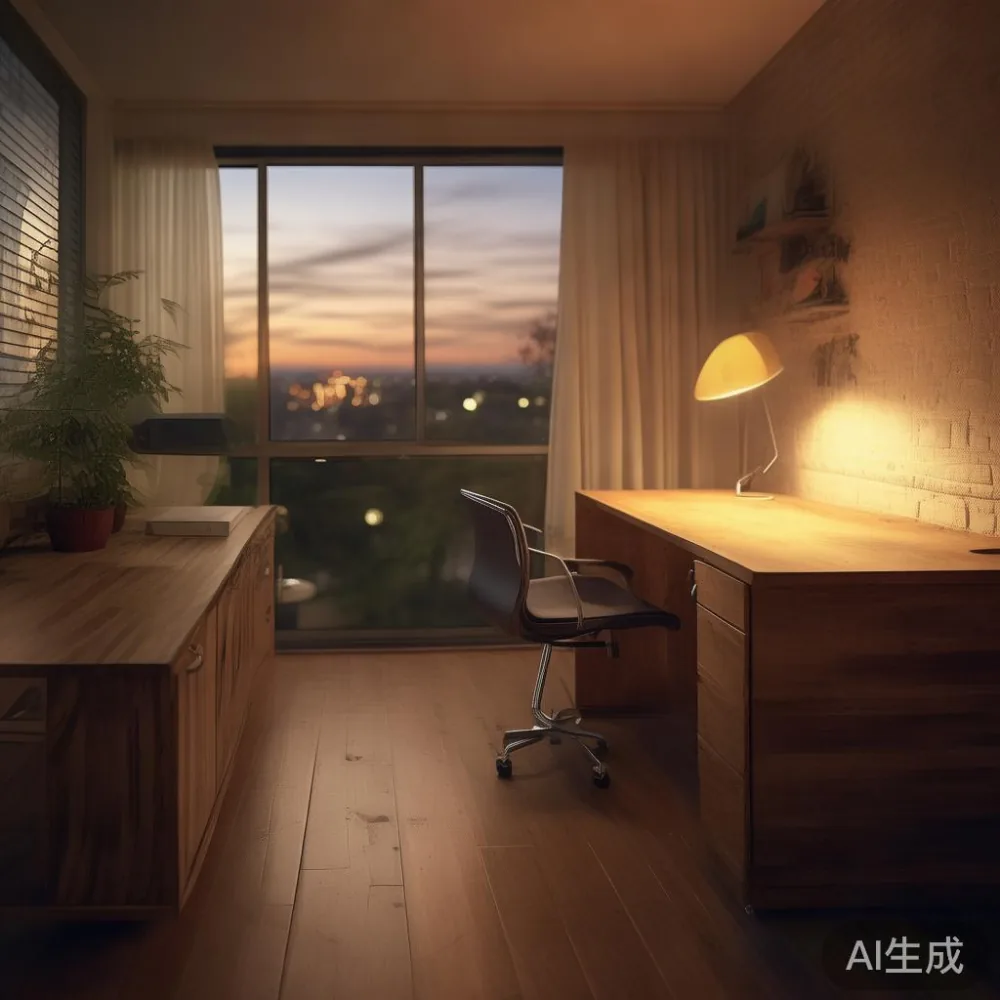
Anyone who has shopped for furniture in Singapore knows the sticker shock is real. A quick scan of IKEA Tampines, Taobao, and a couple of local solid wood workshops will show you a 120 cm office desk priced anywhere from S$160 for a melamine flat-pack to over S$2,200 for a thick American oak or ash hardwood top with steel legs. The question is not which one looks better on Day 1, but which one costs less per year of use by Year 5, especially when you factor in Singapore's humidity, the cramped service lifts in older HDB blocks, and the 9% GST added at checkout.
What does a typical veneer office desk actually cost in Singapore?
A new veneer office desk in the Singapore market generally lands in three tiers. The entry-level melamine-coated chipboard desk from IKEA, Courts, or Harvey Norman runs between S$160 and S$380 for a 120 cm x 60 cm unit. A mid-tier real-wood veneer over MDF desk (think brands like Scanteak or local custom carpenters) sits between S$600 and S$1,100. A premium veneer desk with a thicker substrate and Italian finish pushes past S$1,500, often hitting S$2,000 before GST.
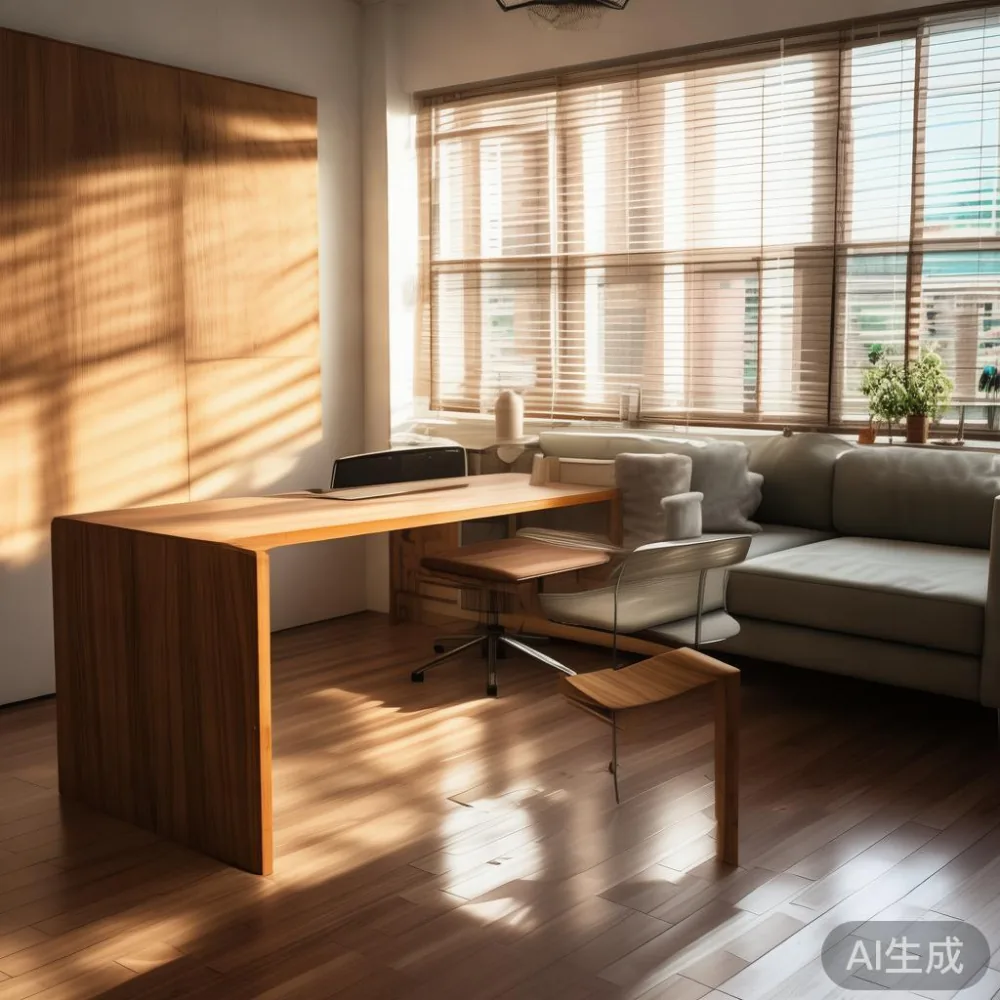
For a like-for-like comparison, let me anchor the numbers to a single specification: a 140 cm x 70 cm office desk, two cable management holes, one modesty panel, height 75 cm, delivered to a BTO in Punggol. At IKEA, that specification (LINNMON / ALEX combo) costs about S$275 before GST, or roughly S$300 after 9% GST. The same shape from a local custom workshop with a 0.6 mm teak veneer over plywood comes back at S$850 to S$1,100, including delivery and basic installation. A solid wood equivalent using 3 cm thick rubberwood or ash starts at S$1,400 and climbs to S$2,600 once you add a steel frame and cable tray.
What does a solid wood office desk cost, and why is the gap so wide?
The reason a solid wood office desk commands two to four times the price of veneer is simple: material weight and yield. A 140 cm x 70 cm top in solid ash weighs 28 to 32 kg once planed, sanded, and finished. Its veneer cousin weighs 14 to 18 kg because the core is MDF or plywood. Solid wood also produces more offcuts and has a higher reject rate for knots and warping, so a furniture maker in Foshan might use 1.6 cubic metres of rough timber to produce 1 cubic metre of finished desk top. That cost is passed on.
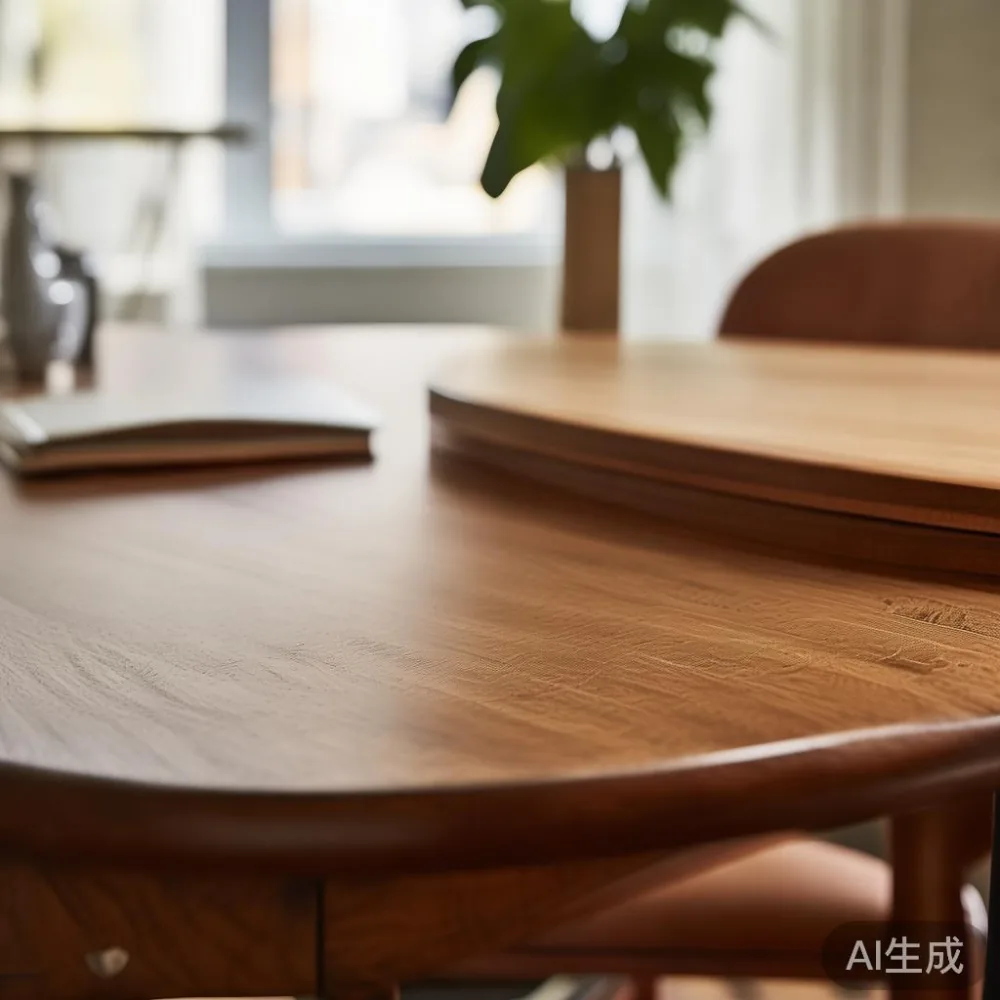
Then there is shipping. A single solid wood office desk crated for export from China to Singapore occupies roughly 0.25 cubic metre and weighs 35 kg once crated. Sea freight from Shenzhen to Singapore (PSA terminal) currently runs about S$110 per cubic metre for LCL shipments, plus a S$45 destination handling fee and S$25 customs clearance. Add the 9% GST on the CIF value and you have added another S$120 to S$180 to the landed price. A veneer desk of the same dimensions crated weighs 18 kg and takes 0.15 cubic metre, saving you around S$60 to S$90 in logistics alone.
But here is the thing Singapore buyers often miss: lift dimensions matter. Older HDB blocks in Bedok and Tampines have service lifts with a 1.2 m deep door and a 1.5 m internal depth, while newer BTOs in Punggol have 1.4 m x 1.7 m lifts. A 140 cm solid wood desk top will fit in both, but only diagonally in the older ones. The vendor has to pre-check this, and any failed delivery usually costs S$80 to S$120 in re-delivery fees. MIDHILL, the Foshan solid wood maker I later ordered from, actually confirmed my lift dimensions before shipping, which is more attention than I got from the local Jurong vendor.
How do I style a American country bed in a small apartment?
Pick a bed frame under 15 cm deep on the headboard side, raise it on 12 cm to 15 cm wooden legs, and anchor the room with one matte black or oil-rubbed bronze light fixture, a 90 cm x 200 cm linen-cotton duvet in oat or sage, and one reclaimed-wood nightstand so the eye reads one solid block of timber rather than four skinny pieces of furniture competing for space.
For a 4-room HDB in Punggol with a 3.2 m x 3.0 m bedroom, this rule works because American country style depends on visible wood grain and proportion, not surface area. A queen American country bed frame with a 110 cm tall headboard and turned posts will overpower the room; a low-slung version with shiplap paneling and a 90 cm headboard leaves 80 cm of breathing room on each side for a 45 cm nightstand and a 40 cm walking path. Keep the wardrobe in the same timber tone if you can. Matching a solid wood bed frame with a solid wood wardrobe and a solid wood nightstand is what gives the room the calm, anchored look that defines American country, French light luxury, and post-modern light luxury interiors. A mismatched combination, say a walnut bed next to a pine wardrobe, breaks the visual rhythm and makes the bedroom feel smaller than it is.
What does 5 years of ownership actually cost for each option?
Here is the working spreadsheet I built for my own decision, in Singapore dollars, including GST, delivery, and expected repairs.
Veneer office desk (entry-level melamine, S$300 landed)
Year 1: S$300 purchase, S$0 repairs.
Year 2: S$45 humidity-related edge peel repair kit, S$0 labour (DIY).
Year 3: S$120 partial top replacement, desk starts to bow under monitor weight.
Year 4: S$0, but desk functionally obsolete, sold on Carousell for S$40.
Year 5: full replacement required, sunk cost S$425 minus S$40 resale = S$385 net.
Solid wood office desk (Foshan hardwood, S$1,950 landed, 10-year structural warranty, lifetime refinishing)
Year 1: S$1,950 purchase, S$0 repairs.
Year 2: S$0, light surface clean.
Year 3: S$0, minor tightening of steel frame bolts.
Year 4: S$80 professional sanding and re-oiling at a Singapore workshop.
Year 5: S$0, desk still under warranty, resale value on Carousell around S$900 to S$1,100.
Net 5-year cost: S$1,950 minus S$900 resale = S$1,050, or S$210 per year.
On pure annual cost, the veneer desk looks cheaper at S$77 per year versus S$210. But the solid wood office desk has held 50% of its value, while the veneer desk has lost 87%. If you treat furniture as a depreciating asset, the gap narrows faster than people expect. A dining table or bed frame in solid wood behaves the same way: it costs more up front, but the second-hand market in Singapore still pays real money for it, particularly for pieces from established Foshan workshops that ship under the MIDHILL label and similar makers. A solid wood bed frame, for instance, regularly sells on Carousell for 60 to 70 percent of its original price after three years if the wood is still in good condition.
How does Singapore's humidity and HDB layout actually punish veneer desks?
Singapore's average relative humidity sits between 78% and 88% for most of the year, with afternoon peaks in Tampines and Bedok hitting 92% during the December to February monsoon. Engineered wood absorbs and releases moisture faster than solid wood because the MDF or plywood core expands along its long grain, while the thin 0.5 mm to 0.8 mm veneer on top has nowhere to go. The result is the classic chipboard edge lift you see on two-year-old office desks in HDB studies: a 2 mm to 4 mm ridge along the front edge where the laminate has separated from the substrate.
I tested this myself last month when I visited a colleague's new condo in Punggol. She had a S$720 teak-veneer custom desk installed nine months earlier, and the modesty panel had already developed a 3 mm bow along the 120 cm bottom edge. Her unit faces a west window with afternoon sun, and the air-conditioning runs only at night. The maker came back to inspect, blamed the room's humidity, and offered a 30% discount on a replacement. A solid wood office desk in the same room would have absorbed that moisture change without visible distortion, because the 3 cm thick ash top moves as a single piece rather than as a skin stretched over a moving core.
Corridor widths matter too. Newer HDB corridors are 1.5 m wide, but the older ones in Bedok and Tampines narrow to 1.2 m where the lift lobby opens. A flat-packed veneer office desk can be tilted on its side and carried through; a fully assembled solid wood office desk often has to come in through the service lift in one piece, which is why lift measurements matter when you order from overseas. MIDHILL ships its desks unassembled with the top in a separate crate, which solves this problem neatly.
So which one should a Singapore home buyer pick?
If you are renting a condo in Punggol on a two-year lease and your home office is a fold-out table in the living room, the entry-level veneer office desk at S$300 is the rational buy. You will not be there long enough for humidity to finish it off, and the loss on resale is small. If you are a new BTO owner planning to stay five to ten years in Tampines or Bedok, the math flips. A solid wood office desk at S$1,950 with a 10-year structural warranty and lifetime refinishing costs you roughly S$210 per year once you account for resale, versus S$77 per year for the veneer desk if you treat it as disposable. That S$133 annual gap is the price of a stable surface, better air quality in your study (no MDF off-gassing), and an asset you can hand down or resell.
The same logic applies to a marble table in your living room, a solid wood dining table for six, or a solid wood sofa frame, although the maths shift a little because upholstery and stone have their own wear patterns. The deeper point is this: in Singapore, where humidity is a constant and lift access forces furniture makers to design within tight tolerances, the cheapest sticker price is rarely the cheapest five-year price. A solid wood office desk that costs six times as much on Day 1 will often cost only two to three times as much by Year 5, and will still be worth shipping to your next home.
One practical tip before you order: measure your service lift door height and depth, your corridor width, and the staircase turning radius at your HDB block before you confirm any overseas order. Give those three numbers to the supplier, ask how the crate dimensions compare, and budget S$80 to S$120 for a second delivery attempt if the first one fails. With those checks in place, a 140 cm solid wood office desk, a matching bed frame, a nightstand, and even a 180 cm dining table can all reach your Tampines or Punggol living room without drama, and you will still be using the same desk in 2030.