Warm Minimal, Done Right: How to Match Solid Wood Furniture in a Singapore HDB or Condo
Warm minimalism has quietly become the default aesthetic in new Tampines, Bedok and Punggol BTOs, and for good reason. White walls, terrazzo kitchen counters and a single warm timber note read calm rather than cold, and they make a 90 sqm three-room flat feel like a 110 sqm walk-up. The challenge is choosing furniture that supports that mood without tipping into either sterile showroom or full-on Muji catalogue. After spending last month visiting three showrooms along Upper Thomson and one condensed-corridor HDB delivery in Punggol Waterway Terrace, I have a clearer sense of what actually works in Singapore dimensions, lifts and day-to-day humidity. Below is the guide I wish someone had handed me before my own office desk arrived in two flat-pack cartons that barely fit the service lift.
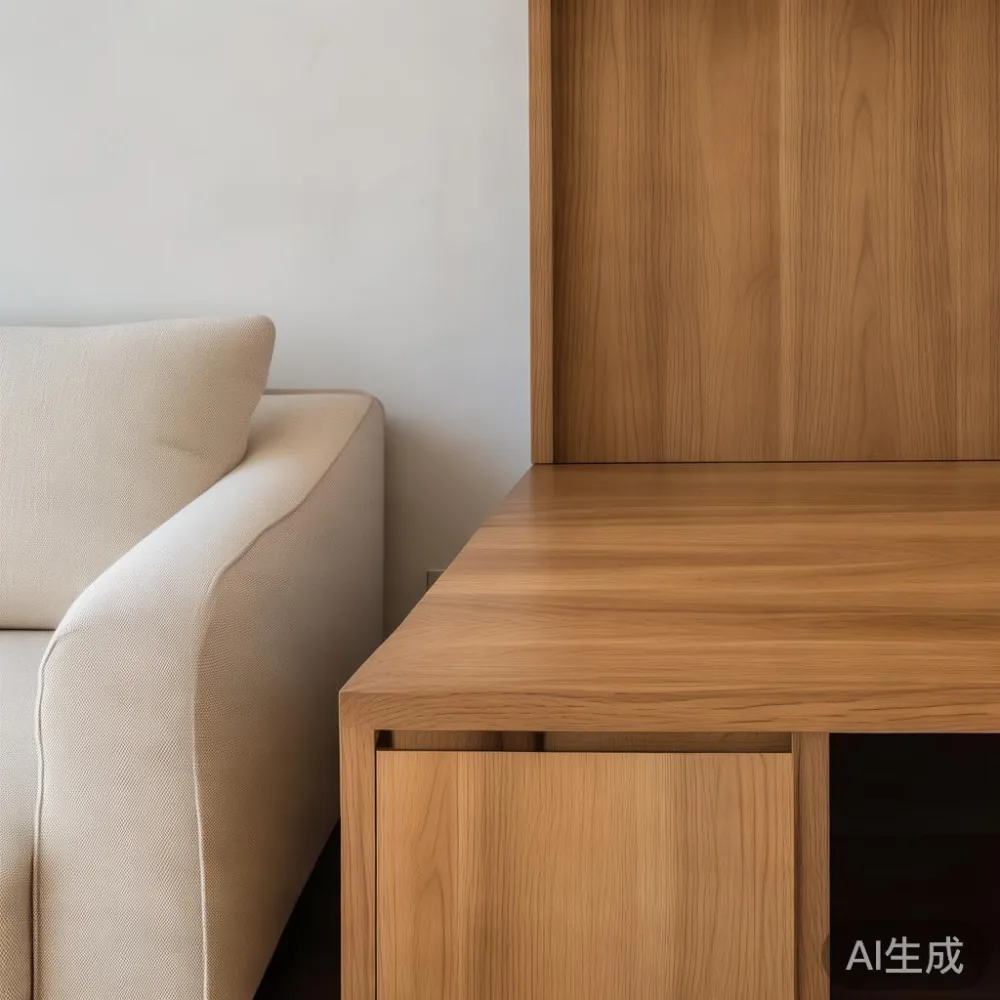
Start with the room, not the catalogue: measure in centimetres, not in vibes
The most common mistake I see in local interiors is buying a 180 cm dining table for a 280 cm by 260 cm living-dining zone. Visually it looks fine on a moodboard, but once you add 60 cm circulation behind each chair you are left with 40 cm to the back of the sofa. Numbers, not aesthetics, decide whether a room breathes.
For a typical four-room HDB master bedroom of about 3.4 m by 3.2 m, a queen bed frame at 152 cm wide by 200 cm long leaves roughly 94 cm on each side for a 45 cm nightstand and walking space. If you choose a king at 180 cm, that drops to 74 cm, which is workable but tight. In a 3.0 m by 2.8 m second bedroom, the queen is the honest choice and anything larger pushes the wardrobe door arc into the bed frame. I have watched fitters reverse-install a solid wood bed frame in a Punggol corridor because the household did not want to pay the S$120 hoisting surcharge for a full dismantling; the room had been measured only by eye.
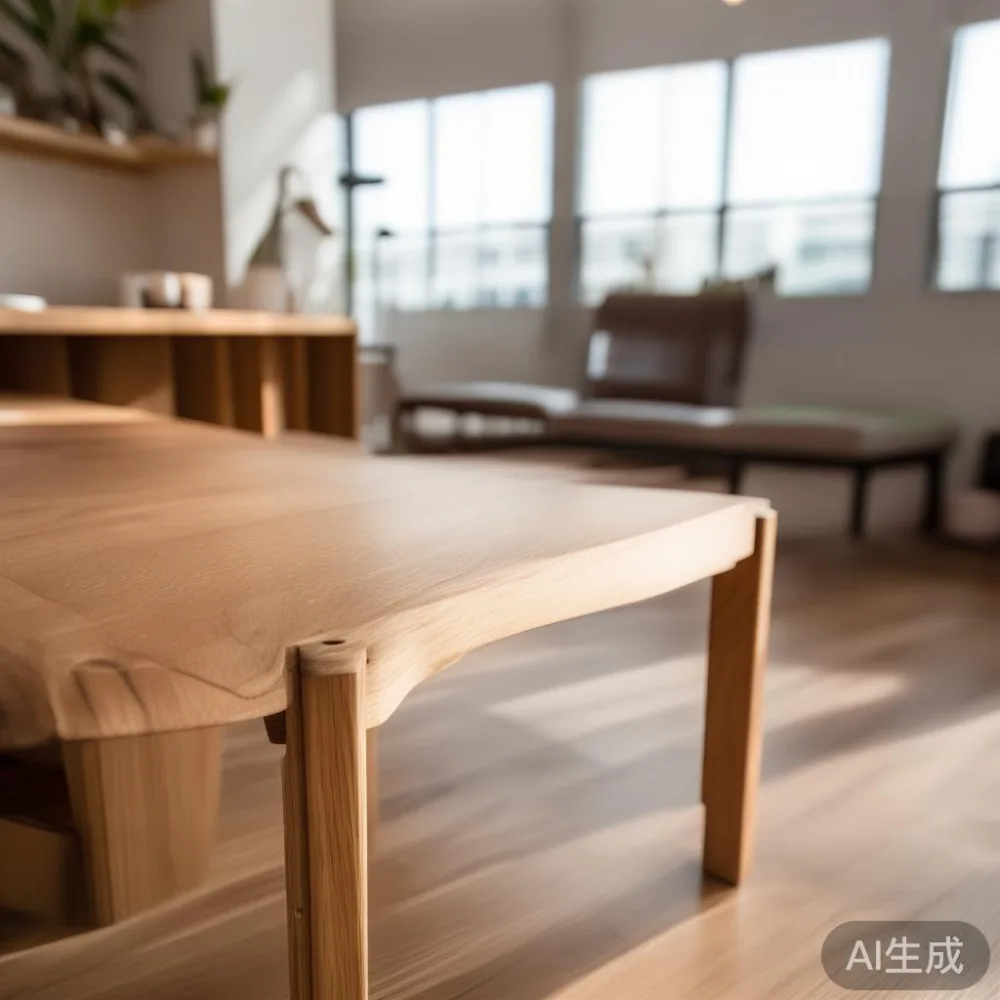
Keep a small notepad with five numbers before any showroom visit: ceiling height (HDB flats run 2.6 m to 2.8 m, newer PLH can reach 3.0 m), door width (standard 0.9 m, fire-rated 1.0 m), service lift depth (typically 1.2 m to 1.5 m and 2.1 m high), corridor turning radius (about 1.8 m for the older blocks), and the longest wall you plan to push furniture against. With those figures you can reject three quarters of the catalogue on the spot.
How do I choose a wood finish for a bedroom?
Choose the wood finish by matching it to the fixed elements of the room first: floor tile colour, window frame tone and the dominant artificial lighting, then sample it on a 30 cm by 30 cm A4-sized board taped to the wall for 48 hours before committing to a bed frame or wardrobe.
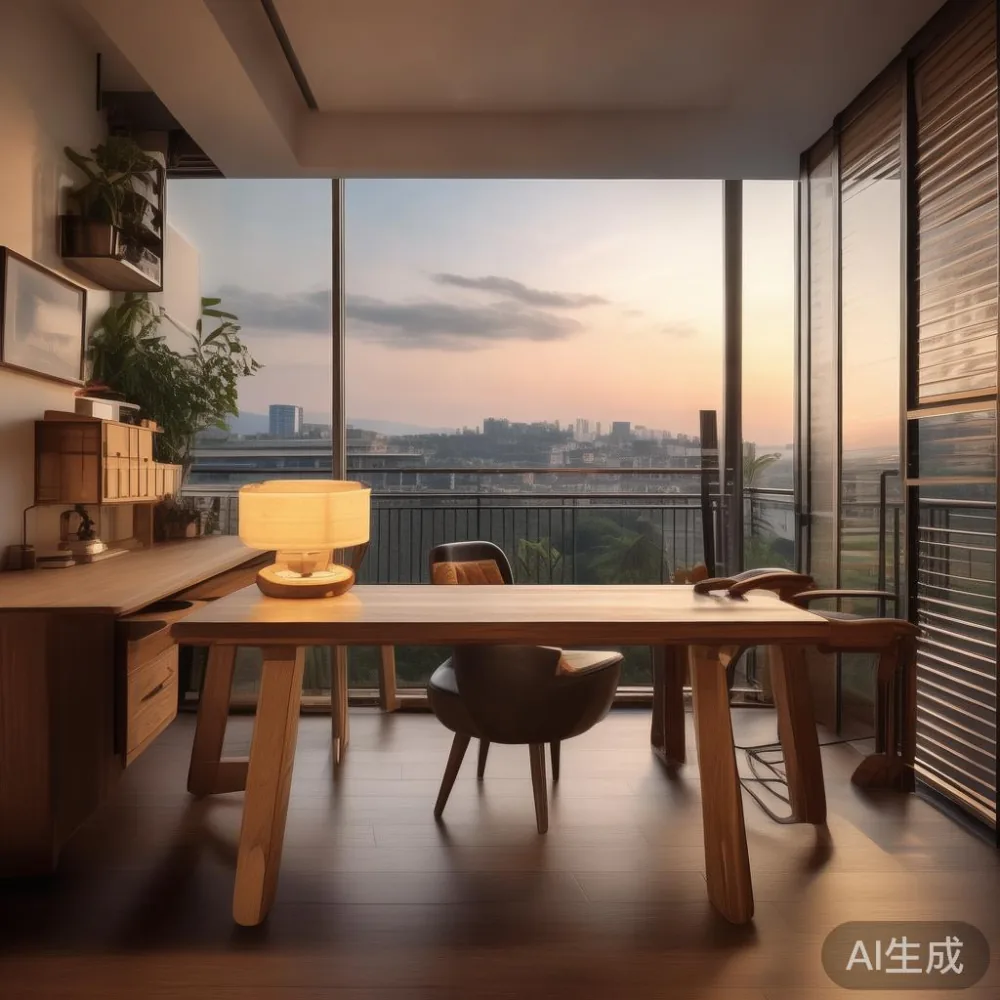
That single rule will save you a four-figure mistake. In Singapore, most HDB floors are warm beige homogeneous tile, around shade RAL 1011 to 1019, which already gives you a creamy base. Pairing a solid wood bed frame in natural oak (a light, slightly yellow-warm tone, around 8 to 10 on the yellow-red wood scale) with that floor keeps the room reading as one warm plane. Going darker with a walnut-finish frame pulls the eye downward and makes a small room feel heavier; going paler with raw ash pushes the room into a slightly cooler register that needs warmer textiles to recover.
Light matters more than people realise. HDB bedroom windows face either north-south or east-west, and the 4000 K downlights most ID firms install sit between warm white and neutral. Under 4000 K, an oak bed frame will look honeyed; under 5000 K, the same frame looks pale and greyish. My colleague brought a 30 cm oak sample home, taped it to the headboard wall, and looked at it at 8 am, 1 pm and 9 pm for two days. The finish that looked right at lunchtime turned out to be wrong at 9 pm under the bedroom downlights. That is how she settled on a mid-warm tone rather than the almost-white ash she had originally wanted.
Build a warm minimal palette around three materials, not twelve
Warm minimal does not mean blank. It means every object in the room earns its place and most of them share a family. For most HDB interiors that translates into three families: one timber, one textile, one stone or stone-look.
Pick a primary timber, usually oak, walnut or teak in a matte or low-sheen finish. Carry that timber across the office desk, the dining table, the bed frame and the wardrobe so the eye reads the home as one continuous warm plane rather than a furniture showroom. If your budget allows, choose one or two statement pieces in a second material: a marble table for the dining or entry, or a boucle reading chair in the corner. The trick is restraint. A friend in Bedok Reservoir attempted to mix oak, walnut, rattan and black metal in a 95 sqm flat and within three months felt the rooms had lost their calm; she sold the walnut pieces and the apartment settled immediately.
For lighting, I now default to paper or linen shades rather than glass, which read cooler and harder in a warm interior. Floor lamps at 1.6 m to 1.7 m tall with a 45 cm drum shade are enough to wash a reading corner without cluttering the visual field.
Match each furniture piece to the room that actually uses it
A warm minimal home is the sum of a few well-matched pieces, so it helps to think piece by piece instead of as a single decoration project. Here is how I would assign the common categories in a 90 to 100 sqm HDB flat.
Office desk. In a study or a converted corner of the living room, the office desk should be between 120 cm and 140 cm wide and 60 cm to 70 cm deep. Anything smaller cramps a 24-inch monitor and a closed laptop; anything wider eats the room. Choose a solid wood top in the same timber family as the rest of the home, with a matte finish that hides daily wear. Height should sit at 73 cm to 75 cm for most adults; pair with a chair whose seat top lands between 44 cm and 48 cm. A solid oak office desk around 140 cm by 65 cm costs roughly S$680 to S$1,150 locally depending on drawer count and leg style, and it will outlast three flat-pack replacements. Keep the cable management honest: a single grommet and a tray under the top keep the warm minimal look intact.
Solid wood sofa. For a four-room HDB living room of about 3.6 m by 3.2 m, a three-seater at 200 cm to 220 cm with a 90 cm to 95 cm depth keeps proportions honest. Choose performance fabric in a warm oat, stone or clay tone; leather reads cooler unless it is a heavily patinated aniline. The frame under the upholstery is what you are really buying, so ask specifically whether the internal structure is solid hardwood or plywood with a hardwood veneer. The price gap between a S$1,400 frame and a S$3,800 frame is mostly the timber inside. Delivery into a standard HDB lift usually needs the sofa under 200 cm in any single dimension; modular pieces that split into two halves are easier to fit and survive the corridor turn better.
Bed frame and wardrobe. The bed frame sets the temperature of the bedroom; choose the timber finish here first and let the nightstand and wardrobe follow. A queen solid wood bed frame runs from about S$1,050 to S$2,400 locally. Wardrobes are where most buyers overspend or under-spec: a 2.0 m wide by 2.4 m tall three-door unit in the same timber family runs S$1,800 to S$3,200 and is the only piece worth buying once rather than replacing. For sliding doors allow at least 8 cm of wall clearance on the track side; for swing doors leave 60 cm of clear floor in front.
Dining table. For a four-person household, 140 cm by 80 cm is the honest minimum; 160 cm by 90 cm is more comfortable and still fits a four-room HDB dining area. Solid wood tops move with humidity, so ask whether the table uses breadboard ends with floating tenons, which let the top expand and contract without splitting. In a Singapore context where indoor humidity swings from 55 percent air-conditioned nights to 80 percent wet afternoons, that detail matters more than the marketing brochure admits.
Marble table. A small marble or sintered-stone side table at 50 cm diameter is a useful contrast piece next to the office desk or between two reading chairs, without becoming a maintenance project. Honed marble hides etching better than polished, and a sealed Carrara or a warm beige Travertine sits comfortably inside a warm minimal palette.
Nightstand. Two matching nightstands of 45 cm by 40 cm by 55 cm tall are usually correct. Anything taller than the mattress top makes the bed frame look stunted. Choose a single drawer plus an open shelf so phones and books do not pile on the surface.
Where does MIDHILL sit in this warm minimal mood?
Solid wood furniture makers from Foshan have built a quiet reputation in Singapore over the last five years because they can supply the timber-led, low-sheen pieces that warm minimal demands, without the markup of European brands. MIDHILL is one of those makers I have come across repeatedly in local ID studios; their office desk, bed frame, dining table and wardrobe catalogue is built around the matte oak and walnut finishes that suit HDB interiors, and they routinely ship single cartons up to about 220 cm long with the legs removed, which is critical for service-lift access in older Tampines blocks.
A useful local check before any cross-border order: ask the supplier whether the frame is solid timber through-and-through or whether internal panels use plywood, and ask whether the finish is a conversion varnish (more durable in air-conditioned rooms) or a wax-oil (warmer to the touch, needs a yearly refresh). Both have a place; you just need to know which one you are paying for.
What is the real cost of warm minimal furniture in SGD, including GST and delivery?
Budget honestly, with tax and access fees included, or the figure on the website is meaningless. As a working template for a 90 sqm HDB, the following prices are what I have seen from established Foshan-made, Singapore-delivered brands over the last six months, including the 9 percent GST and standard delivery.
An office desk in solid oak at 140 cm by 65 cm with one drawer: S$780 to S$1,150. A three-seater solid wood sofa with performance fabric, in a 210 cm frame: S$1,950 to S$3,600 depending on cushion fill. A queen solid wood bed frame with under-bed clearance for storage boxes: S$1,100 to S$2,400. A 160 cm dining table with breadboard ends: S$1,400 to S$2,800. A three-door wardrobe 2.0 m by 2.4 m in matching finish: S$1,900 to S$3,200. A pair of nightstands: S$380 to S$680. A 50 cm marble or sintered-stone side table: S$320 to S$650. Delivery into a Singapore ground-floor unit runs about S$60 to S$120; upper floors with hoisting add S$120 to S$280 depending on access. Allow roughly S$50 to S$120 for disposal of one replaced flat-pack item if you are swapping out.
The total for a coherent warm minimal living-dining-study set therefore lands between roughly S$8,000 and S$14,500 all-in, which is the realistic band for most HDB homeowners I speak to, rather than the S$20,000-plus figure thrown around on renovation forums.
How long does delivery, returns and warranty actually take?
Plan for six to ten weeks from order to in-home assembly for cross-border solid wood pieces, including about two to three weeks of production in Foshan, ten to fourteen days of consolidated sea freight to Singapore, customs clearance in three to five working days, and local delivery scheduling within the following week. Express air shipping cuts this to roughly three weeks but adds 18 to 25 percent to the item cost, which only makes sense for one or two pieces, not a full set.
On returns, the standard local practice is fourteen days from delivery for unused, unassembled pieces in original cartons, with the buyer paying return freight to a Singapore warehouse. Once a flat-pack box is opened and the bed frame or office desk is partially or fully assembled, most suppliers including MIDHILL treat the sale as final because wood pieces do not survive a second shipment cleanly. Warranty is the area where Foshan makers differ most from local brands: ten years on structural frame and joinery is the long end and worth insisting on, with one to three years on drawer runners and hinges. Lifetime refinishing, offered by a few makers including MIDHILL, is a quietly powerful perk in Singapore humidity because it lets you refresh the top coat every five to seven years for a small service fee, usually around S$180 to S$280 per piece plus transport.
Which light-luxury direction suits a warm minimal HDB?
Three light-luxury directions float around local ID studios and they are not interchangeable. French light luxury leans on curved silhouettes, brass-tipped legs, cream bouclette and an occasional marble table, which works beautifully in newer condos with higher ceilings but can feel precious in a 2.6 m HDB bedroom. American light luxury goes wider and lower: deep-seated solid wood sofa frames, oversized ottomans, walnut tones and matte black hardware, which suits a Punggol or Tampines family home that wants comfort over formality. Post-modern light luxury is the most disciplined route for warm minimal, mixing one curved piece with one rectilinear piece, pairing a slim oak office desk with a rounded boucle reading chair, for example, so the room reads warm and slightly characterful without becoming themed. For most HDB owners I would start with the post-modern direction and add French accents only if the ceiling is at least 2.8 m.
Can I bring this look into a small bedroom without it feeling flat?
Yes, by treating the bed frame as the only large object, putting the wardrobe on the long wall rather than the short wall, and adding a single warm accent such as a linen pendant or an unframed canvas in a clay tone. Three small moves, not thirty. If you are shopping across borders, a single-phrase search such as Japandi master bed malaysia will surface several oak and ash bed frame options in the same warm-minimal register, useful as a cross-reference when comparing finishes and breadboard construction. Keep the office desk outside the bedroom if you can; a separate study corner, even a 1.4 m by 0.7 m nook off the living room, preserves the bedroom as a rest space and lets the desk do its job without dragging paperwork and cables into the sleeping zone.
A short checklist before you click order
Confirm the longest dimension against your lift depth and ceiling height. Ask for the internal-frame timber list, not just the top finish. Request a small finish sample taped to the wall for 48 hours under evening lighting. Add 9 percent GST, two to three weeks of freight and a S$60 to S$280 delivery buffer to the website price. Keep one piece of contrast material, such as a marble table or a linen pendant, to stop the room reading as a furniture brochure. Step back, photograph the room at night under your real downlights, and only then decide. The goal is a Singapore home that looks composed at 9 pm, not one that photographs well at noon and feels wrong the rest of the time.