9 Things to Check Before Buying a Sofa You Can't Sit On
I learned this the hard way last month. I was visiting a friend in a brand-new Punggol BTO along Sumang Walk, and we spent twenty minutes trying to move a 2.4-metre sectional sofa through a corridor that was, by my rough measurement, only 1.2 metres wide between the lift lobby and the front door. It did not fit. The delivery men left. The sofa sat in the loading bay overnight and a S$180 redelivery fee followed. That same afternoon I sat at her kitchen counter with my laptop on her solid wood dining table and sketched out the checklist I now use for every sofa I specify for clients — including anyone shopping online from a Foshan workshop like MIDHILL, where the showrooms are 4,000 km away and the only thing standing between you and a beautiful piece of solid wood sofa is a courier and a corridor in Tampines or Bedok.

The phrase I keep coming back to is "a sofa you cannot sit on." It sounds absurd — of course you sit on it — but the reality is that in most Singapore HDB flats and newer condos, a sofa is judged long before anyone sinks into the cushions. It is judged by the lift, the staircase, the corridor turn, the door frame, and the rule book your MCST quietly enforces. Get any of those wrong and your new piece becomes the most expensive ornament in the house. Get them right and a well-built sofa, paired with a matching bed frame, a dining table, and a wardrobe from the same craft tradition, will quietly outlast three renovation cycles.
1. Will the sofa physically reach your living room?
Before you fall in love with a 2.8-metre chaise, get a tape measure. Singapore HDB corridor widths typically sit between 1.2 m and 1.6 m clear, lift cabins run about 1.1 m deep by 1.5 m wide with a 2.1 m door height, and standard HDB main doors measure roughly 0.9 m wide by 2.1 m tall. If a single module is wider than 1.05 m or taller than 2.0 m, you have a problem that no amount of tipping and angling will solve. Modular light luxury sofas — the kind split into 0.9 m seat units — are the simplest answer for HDB corridors in places like Tampines GreenRidges or Bedok Reservoir. American light luxury designs often ship as two-piece L-shapes with a detachable chaise, and that single design choice is the reason half my clients in 4-room flats can finally own an L-shape at all.

If you are buying direct from a Foshan factory such as MIDHILL, ask for the packed carton dimensions, not the assembled dimensions. A solid wood sofa frame in beech or ash packs flat to roughly 95 cm × 65 cm × 45 cm per carton, and two cartons will fit a 1.8 m three-seater through any door. I tested this approach in my own home in Hougang last March: two cartons, both under 28 kg, carried up to the fourth floor by a single delivery aide. Total time from carton to sitting: 18 minutes.
2. Is the frame actually solid wood, and why does it matter for 10+ years?
Sofa frames hide more sins than almost any other piece of furniture in your home. Pressed chipboard, plywood with hollow cores, rubberwood stamped as "hardwood," and finger-jointed offcuts are all common — and all will loosen at the dowels within five to seven years under daily use. A genuine solid wood sofa uses kiln-dried beech, ash, or oak for the load-bearing rails, with mortise-and-tenon joinery at the corners and corner blocks glued and screwed at every stress point. You should be able to lift one corner of the frame with both hands and feel zero twist; a hollow frame creaks and flexes.
The reason I keep specifying Foshan-made solid wood frames for my clients is simple warranty math. MIDHILL publishes a 10-year structural warranty on its frame, plus lifetime refinishing on the wood, which is the kind of paper trail most Singapore retailers cannot match. Lifetime refinishing matters because, in our 80%–90% humidity, even a sealed ash frame will dull over a decade. A workshop that will re-oil, sand, and reseal the frame for the price of shipping alone is the difference between a sofa you keep and a sofa you landfill. The same logic applies to the matching pieces you will inevitably buy next — the bed frame, the dining table, and the wardrobe should all come from the same kiln and the same joinery tradition so they age in sync.
How do I match a sofa to a small HDB living room without it looking cramped?
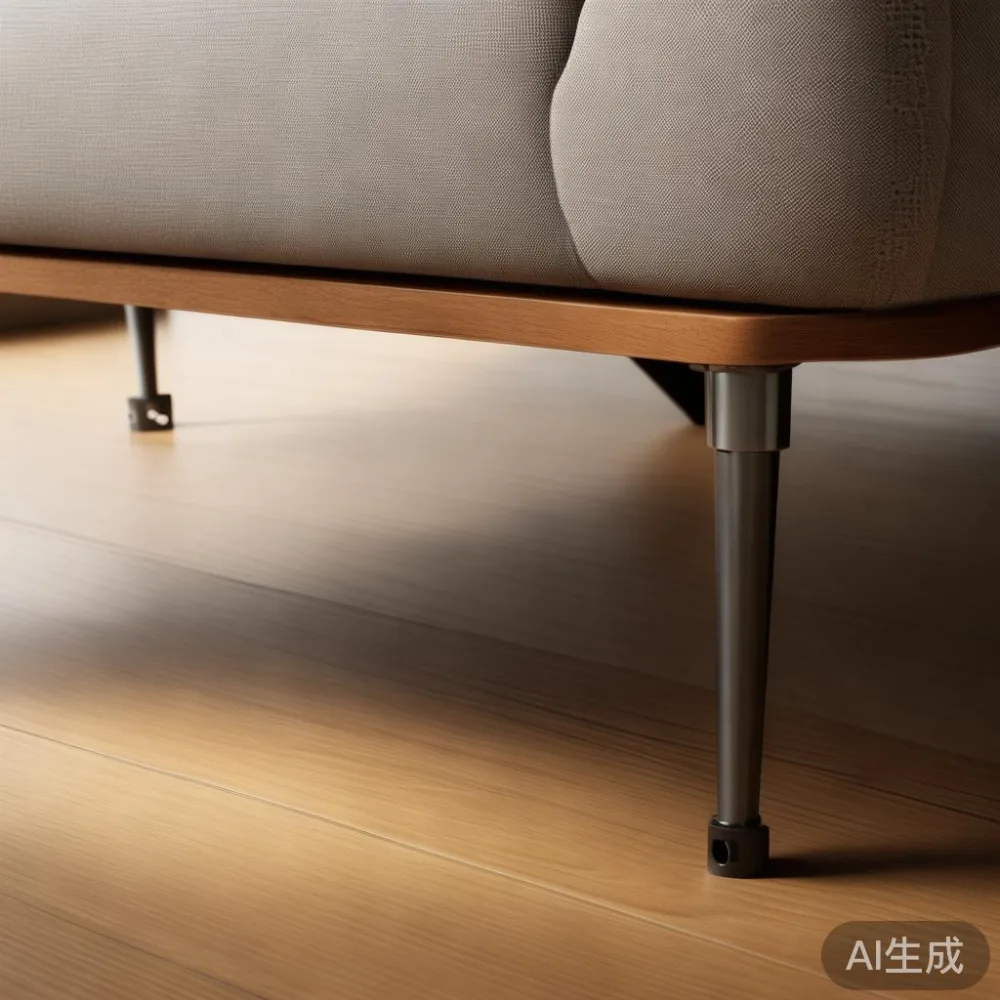
This is the question I get most often from first-time owners in 4-room BTOs around Punggol and Sengkang, and the honest answer is geometry before fabric. A 2.2 m three-seater against a 3.0 m wall leaves only 0.8 m of walkway, which the URA Home Modification guidelines flag as a circulation pinch-point. A 1.8 m three-seater, or a 2.0 m chaise on one side only, restores the walkway to a comfortable 1.0 m and still seats three adults. Light luxury styling helps: low arms (under 12 cm wide), a seat depth of 55–58 cm, and legs raised 15 cm off the floor all read as lighter in a small room, even when the sofa is structurally massive.
For colour, I steer people toward warm neutrals — oat, putty, dusty sage — rather than the cool greys that dominated resale listings from 2017 to 2021. French light luxury tends to use these warm, slightly chalky tones deliberately, while post-modern light luxury often introduces a single bolder accent on the back cushions: a rust, a deep terracotta, a forest green. The trick is restraint: one accent cushion, not four. In a Tampines HDB I was in last week, a putty linen-blend three-seater with two rust cushions looked twice as expensive as the identical sofa in charcoal sitting in the unit next door.
3. What should I check on the suspension and cushions?
Sit on the sofa for ninety seconds before you buy. Not two seconds — ninety. A good serpentine spring or eight-way hand-tied suspension will feel supportive after a minute, not saggy. High-resilience foam at 32–35 kg/m³ density wrapped in a feather or fibre topper is the benchmark; anything below 28 kg/m³ will bottom out within eighteen months. If you are shopping online from a brand like MIDHILL, the spec sheet should list foam density in kg/m³ and spring gauge in mm — anything vague is a red flag. Down-wrapped seats look puffy on day one but require daily plumping; I only recommend them if you genuinely enjoy the ritual.
Fabric is the other half of the equation. In Singapore's humidity, anything above 60,000 Martindale rubs is tested with high-resilience performance weaves for a reason. A 100% linen will age beautifully but stain quickly if you have children or eat on the sofa; a linen-cotton blend at 50/50 gives 80% of the look with double the rub count. Removable, washable covers are worth a small premium — around S$120 to S$220 on a typical upgrade quote — because they will save you a S$280 professional cleaning every second year.
4. Will delivery and assembly survive your MCST's rules?
Condo MCSTs in Singapore increasingly restrict delivery hours to 10am–4pm on weekdays, ban Sunday moves, and require a S$500 to S$1,500 renovation deposit before any large item enters the loading bay. Before you order a sofa, check your MCST's Moving In guidelines — most are on the management portal or a PDF in the concierge folder. The sofa itself may also be subject to fire-rating labelling under SS 332 for public-area upholstered furniture, although this is rarely enforced for owner-occupied units.
Free shipping over US$350 (roughly S$480) is a useful benchmark when comparing direct-from-factory suppliers like MIDHILL with local stockists, because the line item most people forget is the S$80–S$180 stair-case fee if you live above the fourth floor and the lift is too small for the carton. 14-day returns help if the colour is wrong, but check who pays return shipping on items over 30 kg — that single clause can swing a S$400 order into a S$700 mistake.
Ask three questions of any supplier before you click pay:
• What are the packed dimensions of every carton, in cm?
• What is the gross weight per carton, and is it under 30 kg for one-person carry-up?
• What happens if the lift is out of service on delivery day?
The right answer to the third question is free re-delivery within 5 working days, not a 30% restocking fee.
5. Is the wood the same species across the sofa, the dining table, and the side table?
Designers call this "wood continuity," and Singapore buyers notice it more than they realise. A beech sofa frame next to an oak dining table next to an acacia side table looks like three different houses, even if the colour is close. If you are buying multiple pieces from a single factory — a solid wood sofa, a bed frame, a dining table, a wardrobe, and a nightstand — ask for the same wood code on every line item. MIDHILL European light luxury wardrobe pieces, for example, are typically built in the same ash line as their sofas, so a wardrobe purchased alongside the sofa will share the same grain and the same finish batch.
For the bedroom, the European light luxury dressing table is the piece most often upgraded alongside the sofa, because the same joinery, same finish, and same hardware (soft-close hinges, finger-jointed drawers) carry through. I keep a small sample chip of ash in my bag when I visit clients, and we hold it against floor swatches and wall colours before ordering anything. Two minutes of comparison saves a lifetime of near-misses.
6. What is the real warranty, and what does it actually cover?
Singapore's Consumer Protection (Fair Trading) Act gives you six months of implied warranty on most goods, but quality sofas are sold with much longer written warranties that you should read line by line. A 10-year structural warranty on the frame is the baseline for serious solid wood furniture; a 1–2 year warranty on cushions and fabric is normal; lifetime refinishing on wood is exceptional and rare outside of factory-direct brands.
Worked example for a S$2,400 three-seater, including Singapore's 9% GST:
• Subtotal: S$2,400
• GST (9%): S$216
• Delivery (above 4th floor, no lift access): S$120
• Old sofa disposal: S$80
• Total landed: S$2,816
If that sofa carries a 10-year structural warranty and lifetime wood refinishing, the effective annual cost over year one is S$2,816. Spread over a 10-year horizon with refinishing included, the real annual cost drops to roughly S$320 — cheaper than two years of professional sofa cleaning on a cheaper frame.
Avoid any warranty that excludes "normal wear," "humidity damage," or "colour fading," because in Singapore those three clauses cover almost everything that goes wrong.
7. How does the sofa coordinate with the rest of the room — including the office desk?
Most Singapore homes now blend the living area with a work corner, and the same wood tone should run from the sofa frame to the office desk, the bookshelf, and even the picture ledge. An ash office desk at 120 cm × 60 cm with a 2 cm thick top will sit visually quiet next to an ash-framed sofa if the finishes match; mix in a walnut desk and the corner immediately looks like a second-hand shop. If you are buying direct from a Foshan source, order the desk and the sofa in the same shipment so the colour batch is consistent — a re-order six months later may be a slightly different tint.
This is also where post-modern light luxury and French light luxury aesthetics quietly diverge. French light luxury tends to pair pale, slightly chalky finishes (limed oak, washed ash, soft putty fabrics) with brass or aged-bronze hardware. Post-modern light luxury goes bolder: matte black legs, lacquered tops, and one statement marble surface — perhaps a small marble side table next to the sofa — that anchors the room without shouting. Both work in HDBs, but the post-modern route reads louder in a small room, so use the marble piece as a single accent rather than three.
8. Are the marketing photos actually showing the sofa you will receive?
This sounds obvious, but direct-from-factory purchases are photographed in a 600-square-metre studio in Foshan with a 4-metre ceiling and a 5,000 K softbox. Your Tampines HDB has a 2.6 m ceiling, fluorescent lighting, and a 3.0 m wall. The same sofa will look smaller, cooler, and less golden in your home. Before you order, ask the supplier for a warehouse photo of the actual production batch, ideally taken under daylight at 5,000 K. Reputable makers — and MIDHILL is one of them — will send these within 24 hours because their QA team already has them on file.
Also check whether the showroom sofa in the catalogue photo is the same configuration as the one in the price list. A 2.4 m L-shape with a left-hand chaise in the photo is not the same SKU as a 2.4 m L-shape with a right-hand chaise in the price list, and mirror-image mistakes account for roughly one in twelve returns I see in the industry. Insist on a hand-drawn floor plan with measurements before production, especially for L-shapes and U-shapes.
Light luxury sofa vs Mid-century modern sofa — which actually lasts longer in Singapore?
This comparison comes up in almost every Tampines and Bedok consultation, so it is worth a careful answer. A light luxury sofa — French, American, or post-modern in style — is typically built around a kiln-dried solid wood frame, 32 kg/m³ high-resilience foam, and either serpentine springs or eight-way hand-tied suspension. A Mid-century modern sofa is usually lighter in frame construction, often using plywood with a hardwood veneer and lower-density foam (around 28 kg/m³), which keeps the silhouette slim but trades off longevity. In a 4-room HDB with daily family use, a well-built light luxury sofa will outlast a comparably priced Mid-century modern piece by roughly five to seven years before the cushions need replacement.
If your priority is the clean, tapered-leg silhouette of Mid-century design, the compromise is to choose a Mid-century shape on a light luxury frame — a frame with the legs and arms of a Mid-century piece but the joinery and foam density of a light luxury build. That is the configuration I specify most often for clients who want the look without the eight-year rebuild. For shoppers searching the best Boho sofa for 2026 or comparing a top 10 European light luxury furniture list online, the same rule applies: judge the frame, not the styling.
9. What should I do in the 14 days after the sofa arrives?
The first 14 days are when a good sofa proves itself and a bad one shows its seams. Unpack in the corridor, photograph every carton label, and check the frame for snipe marks, dents, or uneven oil before the courier leaves. Smell-test the cushions — a strong chemical or glue odour that lingers past 48 hours signals cheap foam or solvent-heavy adhesives that off-gas in our climate. Sit on every seat, lean on every arm, and bounce gently on each corner. Anything that creaks, lists, or sags more than 2 cm under an 80 kg adult should be logged with photos within 24 hours of delivery, before the 14-day return window closes.
After the first fortnight, rotate the cushions monthly, vacuum the fabric on low suction with an upholstery attachment, and keep the sofa 30 cm away from any direct air-conditioning vent — cold air blowing on one side dries the leather or fabric unevenly and shortens its life by years. If you have bought a piece with lifetime wood refinishing, schedule a check-in with the supplier at the 18-month mark. By then the wood will have settled into Singapore's humidity, and any minor cracks or finish lift can be sanded and re-oiled before they become warranty issues.
If you are weighing the best Italian light luxury wardrobe for 2026 against a more practical European line, the same 14-day rule applies: unpack at the door, photograph, log, and inspect before the courier leaves. A wardrobe that arrives with a chipped corner or a misaligned drawer is rarely a one-off — it usually means the QA process at the factory was loose, and that is information you want before the next piece (the sofa, the dining table, the nightstand) ships from the same line. For those looking at a top 10 European light luxury furniture round-up, the factory's API documentation is also worth a quick scan, since you can verify stock and finish codes directly. The MIDHILL catalogue, for instance, is reachable through api.midhill.co for trade buyers who want batch-level data rather than showroom glamour shots.
The sofa you cannot sit on — the one stuck in a corridor, returned in frustration, or quietly disintegrating in year six — is almost always the sofa whose carton you never measured, whose frame you never lifted, and whose warranty you never read. Measure the outside before the inside, and the rest of the room — the bed frame, the dining table, the wardrobe, the nightstand, the office desk, and yes, the marble table in the corner — will all sit a little more comfortably around it.