Humidity in Southeast Asia and Your Office Desk: A Solid Wood Owner's Guide for Singapore Homes
Last month I visited a colleague's new four-room HDB flat in Tampines and ran my palm across her brand-new office desk. The grain felt tacky by 9 a.m., the air-con had been running all night, and her dehumidifier was working overtime. Within ten minutes of talking, she asked the question every new homeowner in Bedok, Punggol, and Bukit Batok eventually asks: "Why does my solid wood furniture feel different every week?" The answer is humidity — and on this island, humidity is never far from the conversation.
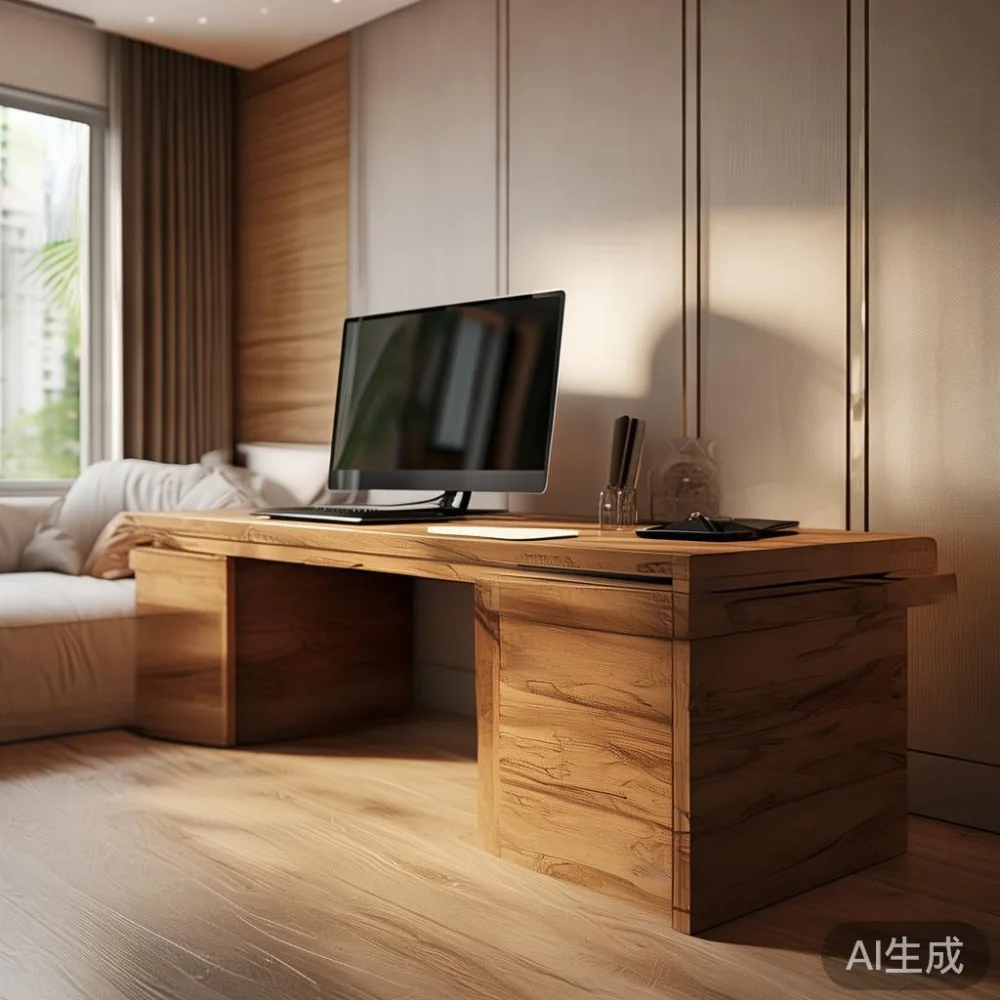
This guide is written for Singapore residents buying or already owning a solid wood office desk, a bed frame, a dining table, a wardrobe, or a nightstand from a brand like MIDHILL, the Foshan-based maker that has shipped to more than 15 countries since 2008. Humidity is not a side note here. It is the single largest environmental factor affecting how your wood office desk moves, swells, shrinks, and ages in a tropical climate that swings between 60% and 95% relative humidity across the year.
What humidity actually does to a solid wood office desk
Wood is hygroscopic. It absorbs and releases moisture from the surrounding air, expanding across the grain and contracting as humidity drops. A 150 cm wide office desk top made from oak or ash can move 3–6 mm in width between Singapore's wet December and the drier weeks after Chinese New Year when the air-con runs 12 hours a day. That movement shows up as small gaps at the mitre joints, hairline cracks along the grain, drawers that feel 1–2 mm tighter in March than they did in November, and the faint cupping of a tabletop you swear was perfectly flat when it was delivered.
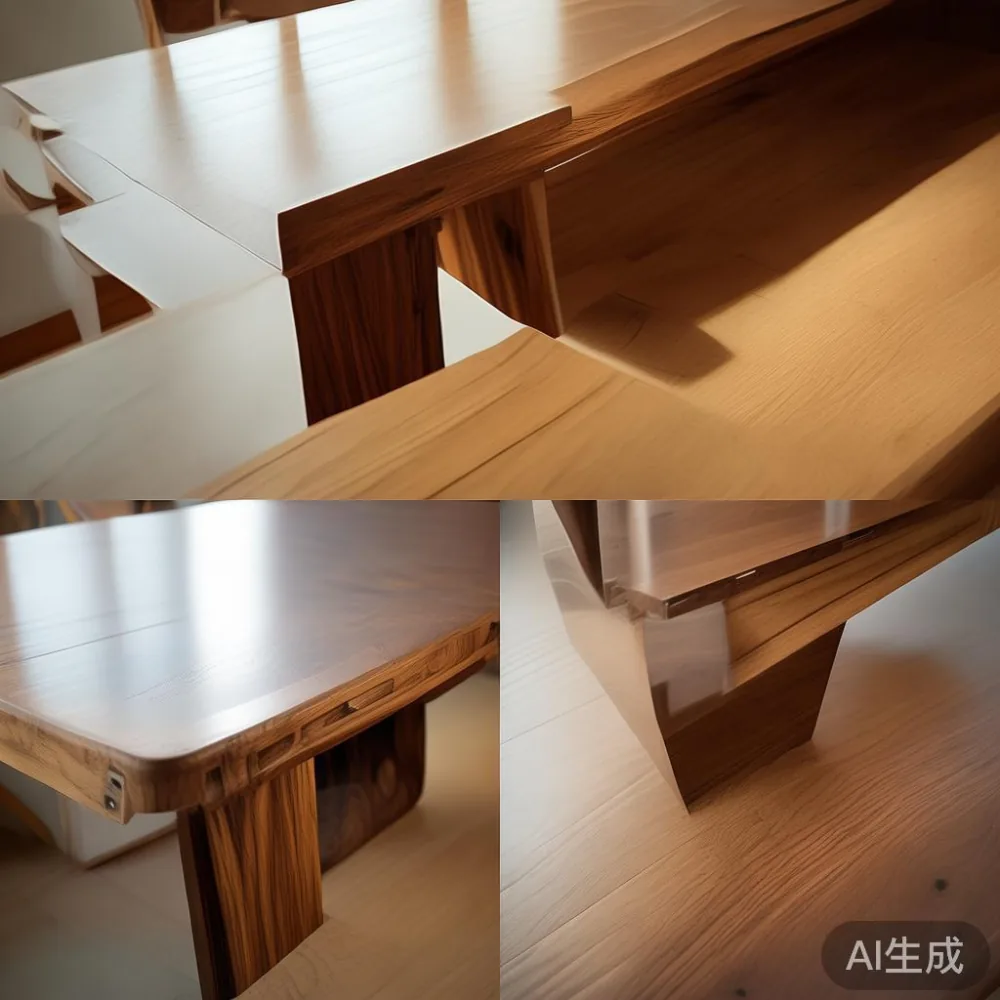
Midhill's solid wood office desks — typically 120 cm, 140 cm, 160 cm, or 180 cm wide, with weights between 38 kg and 72 kg depending on the top thickness (usually 2.5–4 cm) and the leg style — are designed to allow this movement. The breadboard ends on a 160 cm desk top, the slotted screw holes in the apron, the floating panel inside a cabinet door: each is a deliberate engineering decision so the wood can breathe without splitting.
If you live in a 990 sq ft HDB flat in Punggol with afternoon sun on the study nook, or a 1,200 sq ft condo in Bedok with full west-facing glazing, your office desk is working harder than you realise. The tropical microclimate of a Singapore home is genuinely more punishing on solid wood than the air-conditioned showrooms where most of us first fall in love with the piece.
Singapore-specific humidity numbers worth knowing
Singapore's average relative humidity sits around 70–80% year-round, with morning peaks above 90% during the northeast monsoon (December to early March) and afternoon dips into the 55–65% range on dry days, especially when the air-con runs hard in an HDB with no cross-ventilation. Outdoors, dew points stay above 24 °C most of the year; indoors, in a properly air-conditioned room, relative humidity can drop into the 40s — which is exactly the swing your office desk is working through every day.
A few reference points for context:
- A 140 cm × 70 cm × 2.5 cm solid ash office desk top can hold roughly 0.8–1.1 litres of water inside the wood at 80% humidity, and shed 0.4–0.6 litres of it in a 24-hour air-conditioned room. That is real weight leaving and entering the slab.
- Corridor widths in older HDB blocks (pre-1990) sit at about 1.05 m, which is why a flat-pack 180 cm office desk that arrives in a 195 cm × 25 cm × 20 cm carton is often delivered unassembled. Many newer blocks run 1.2–1.5 m corridors, and lift interiors are commonly 1.1 m deep × 1.5 m wide — enough for a 160 cm desk top on edge if the building's lift has a 800 kg or higher rating.
- Lift payload matters: a 72 kg solid wood office desk plus its carton, plus the delivery crew (two men at 70 kg each), puts you at roughly 212 kg per trip. Most HDB and condo lifts rated at 630–1,000 kg handle this comfortably, but it pays to check the lift plaque before ordering a heavier marble table top (60–90 kg on its own) or a 2 m dining table.
- GST is 9% on all imported furniture as of 2024, applied to the landed cost including shipping. For a S $1,250 office desk ordered from overseas, the GST line comes to about S $112.50, which is worth factoring in when comparing two quotes.
These numbers matter because wood movement is not an abstract idea — it is measured in millimetres of expansion across the width of your office desk top, multiplied by every door opening and every air-con cycle.
How do I style a Japandi bed in a small apartment?
Pair a low-profile solid wood bed frame in white oak or natural ash with one neutral linen duvet, one textured wool throw, and a single bedside lamp on a matching solid wood nightstand — keep the floor clear, let one piece of framed art anchor the wall above the headboard, and resist the urge to add more than two soft textures so the Japandi calm reads at a glance. That sentence is the one-line answer a designer would give, and it scales from a 9 sq m HDB bedroom to a 14 sq m condo master suite without changing the principle.
In practical terms for a Singapore bedroom, a Japandi bed frame usually means a platform-style solid wood bed in a 150 cm × 200 cm or 180 cm × 200 cm size, with the mattress sitting 25–35 cm off the floor. The clearance under the bed is often wasted in tropical climates — it traps humid air and grows dust mites — so most owners here either raise the bed a touch higher (35–40 cm) for under-bed storage drawers, or push the frame close to a wall to keep one side permanently dry. The nightstand should match the bed frame in wood species and finish; mixing ash and oak is a common mistake that looks fine in a showroom but reads as busy in a 3 m × 3 m bedroom.
For an office desk in the same room — a common arrangement in a one-bedroom plus study condo — keep the desk's wood tone within one shade of the bed frame. A 120 cm × 60 cm ash desk at S $780–S $1,050 sits naturally next to an ash bed frame at S $1,650–S $2,400, and the room reads as a quiet Nordic chaise lounge singapore setup rather than a furniture showroom.
The light-luxury aesthetic and why it suits a humid climate
Light-luxury, in its French, American, and post-modern forms, has quietly taken over Singapore furniture floors for a reason that has nothing to do with Instagram. French light luxury is the cream bouclé armchair, the slim brass leg, the marble-topped side table. American light luxury is the wider seat depth, the softer cushion, the slightly more relaxed silhouette. Post-modern light luxury is the geometric shape, the rounded corner, the playful mix of travertine and warm walnut. All three share one practical advantage in a tropical home: their proportions breathe.
A solid wood sofa with a 95 cm seat depth reads as substantial in a Scandinavian winter cabin. In a Singapore living room with a 3.2 m wall and a ceiling fan overhead, the same proportions can feel heavy. Light-luxury silhouettes — slimmer arms, exposed solid wood legs 12–18 cm off the floor, lighter linen or cotton upholstery — let air circulate under and around the piece. That airflow is a quiet defence against the musty smell that sometimes develops under a closed-base sofa in a Tampines condo after a wet December.
The same logic applies to a solid wood dining table. A 160 cm × 90 cm × 4 cm solid ash table in a post-modern light-luxury silhouette — tapered legs, a softly eased edge, a hand-rubbed matte finish — handles Singapore's humidity well because the thick top is dimensioned to move, the legs are through-tenoned, and the open base lets the room's air-con push dry air across the floor. A 200 cm × 100 cm solid walnut dining table in a darker French light-luxury style will sit beautifully in the same room, but plan for the room to be air-conditioned for at least 4–6 hours a day during the wet months, and budget for a dehumidifier sized to the room (roughly 10–12 L/day extraction for a 20 sq m space).
A wardrobe is the piece most often under-specified in Singapore. A 180 cm × 60 cm × 220 cm solid wood wardrobe in a closed-back design traps humidity inside; the same wardrobe with a 2–3 cm plinth gap, ventilation slots at the back, and a cedar-lined base will read as light-luxury on the outside and behave sanely through the monsoon. A marble table — a 120 cm round travertine or Carrara top on a 45 cm × 45 cm × 42 cm solid wood base — is the easiest piece to place because the stone is dimensionally stable; just keep it away from direct rainfall (relevant for balconies in Punggol and the ground-floor patios of some older HDB blocks) and away from prolonged air-con drafts.
Care routines that actually work at 80% RH
Here is what I do in my own home in Singapore, and what the MIDHILL care team has walked customers through for years on their 10-year structural warranty pieces:
1. Stabilise the room, not the wood. Aim for a steady 55–62% indoor RH. A small dehumidifier with a 6–10 L/day capacity (typical for a study or bedroom 10–14 sq m) costs S $180–S $320 and pays off in three years of quiet wood movement. Set it to 55% and forget about it.
2. Give the office desk 30 cm of clearance from the wall. This is not interior design advice; it is airflow advice. A desk top sitting 30 cm off the back wall dries evenly on both sides after the air-con cycles off. Push it flat against the wall and you will see cupping within a season.
3. Rotate exposure every two months. If your office desk sits next to a west-facing window in a Bedok condo, rotate it 180° once every two months. The sun-facing side dries faster and the rotation evens out the long-term movement.
4. Use felt pads and a coaster discipline. A cold water glass on a solid wood office desk in an air-conditioned room will leave a white ring within 15 minutes. Felt pads under laptops (so the wood does not cook under a closed laptop running at 45 °C) and coasters under mugs are the cheapest insurance you can buy.
5. Oil twice a year, not monthly. A solid wood office desk finished with hard wax oil in the Foshan workshop needs a refresh every six months in Singapore, not every month. Over-oiling traps moisture and goes gummy in the wet season. Hard wax oil applied in March and September keeps the wood breathable.
6. Call the maker when something is wrong. MIDHILL offers lifetime refinishing on solid wood frames and tops. A desk top with a 2 mm gap along a breadboard end after the December rains is not a defect; it is wood doing its job. A refinishing appointment in the dry season closes the gap and refreshes the finish in three to four weeks, with collection and delivery inside Singapore typically arranged for a S $60–S $120 logistics fee depending on lift access and floor level.
Common Singapore scenarios and the right furniture choice
HDB four-room in Tampines, 990 sq ft, west-facing, two adults working from home. A 140 cm × 70 cm solid ash office desk (about 42 kg) in the common study nook, paired with a 160 cm × 90 cm solid ash dining table for the dining area and a 150 cm × 200 cm solid wood bed frame in the master. All three pieces in the same wood species means the visual language holds together and the movement pattern is consistent across the flat.
Condo three-bedder in Punggol, 1,250 sq ft, full north-facing glazing. A 160 cm × 80 cm × 3.8 cm solid walnut office desk in the larger spare room that doubles as a guest bedroom. Walnut is more resistant to humidity movement than ash, and the thicker top keeps the slab from cupping under sustained air-con use. The same walnut in a 180 cm × 200 cm bed frame and a 45 cm × 45 cm × 55 cm nightstand completes the suite.
Walk-up apartment in Bedok, third floor, no lift. Every kilogram matters here. A flat-pack office desk that ships in a 165 cm × 25 cm × 22 cm carton weighing 38 kg is realistic for a two-man delivery team carrying it up three flights. A solid marble table or a 90 kg solid wood wardrobe is not. This is where Midhill's free shipping threshold over US$350 (roughly S $480) and a 14-day return window genuinely change the buying math — you can order one piece, see how the lift-less corridor handles it, and return it inside the window if access is wrong.
Newer condo in Bukit Batok, 1,400 sq ft, ground floor with a small patio. The patio opens onto grass and afternoon sun. The office desk stays inside, but the marble table top you have been considering for the patio should stay inside too, or at least be specified for outdoor use with a sealed travertine top and a powder-coated aluminium base. Solid wood does not belong on a Singapore patio, no matter how covered.
What about the office desk specifically?
An office desk is the one solid wood piece in your home that takes the most concentrated, repeated humidity stress. The air-con blows on it for eight hours. The laptop cooks on it for six of those hours. A cold mug sits on it twice a day. The chair pushes against the back edge a hundred times a week. Three of those small actions repeat every workday, multiplied by 240 workdays a year, for the ten years the structural warranty covers.
The right spec for a Singapore home is a solid hardwood top, 2.5–4 cm thick, with a hard wax oil finish rather than a thick polyurethane. The thicker polyurethane finish looks glossier in the showroom but traps moisture inside the wood and then cracks when the wood moves in December. Hard wax oil looks slightly more matte, lets the wood breathe, and is refinishable in place by hand — exactly what the lifetime refinishing service exists to handle every five to eight years.
For leg construction, through-tenons and mortise-and-tenon joinery will outlast any screwed-on bracket in a humidity-cycling room. For sizing, a 140 cm × 70 cm desk fits two monitors comfortably and still leaves 30 cm of clearance behind for cable management and airflow. For weight, expect 38–48 kg for an ash desk in this size and 55–65 kg for a walnut equivalent. Plan the lift trip accordingly.
Closing notes for the long-term owner
Solid wood furniture in Singapore is not the same purchase as solid wood furniture in Copenhagen, Toronto, or Melbourne. The climate here will test every joint and every finish. The brands that have shipped to 15+ countries for fifteen-plus years, like MIDHILL, have learned to dimension for movement, finish for breathability, and offer refinishing services that let a piece age gracefully over decades rather than years. The owner's job is simpler than the maker's: stabilise the indoor humidity around 55–60%, give the piece room to breathe, oil it twice a year, and call the workshop when something feels off. A solid wood office desk bought in your thirties, looked after through the decade, and refinished once in the forties, will outlast two flat-pack replacements and three air-con cycles of a typical Singapore home — and it will look better in year twelve than on the day it was delivered.