Small Space, Big Calm: A Singapore Styling Guide Built Around a Solid Wood Office Desk
I live in a 65 sqm two-bedroom flat in Punggol, and last month I helped a colleague in Tampines rework her 55 sqm BTO. Both homes had the same problem: too many beautiful things, not enough breathing room. The single decision that changed both spaces was choosing a solid wood office desk that works as hard as it looks — a workspace by day, a dining surface by evening, a console table when guests arrive. In this guide I will walk you through the numbers, the measurements, and the small luxuries that make a compact HDB or condo feel like a private hotel suite rather than a storage unit. I will also flag where a European light luxury piece (the kind Foshan factories like MIDHILL have been refining since 2008) can earn its footprint, and where it is wiser to spend SGD 180 on a clever shelf.
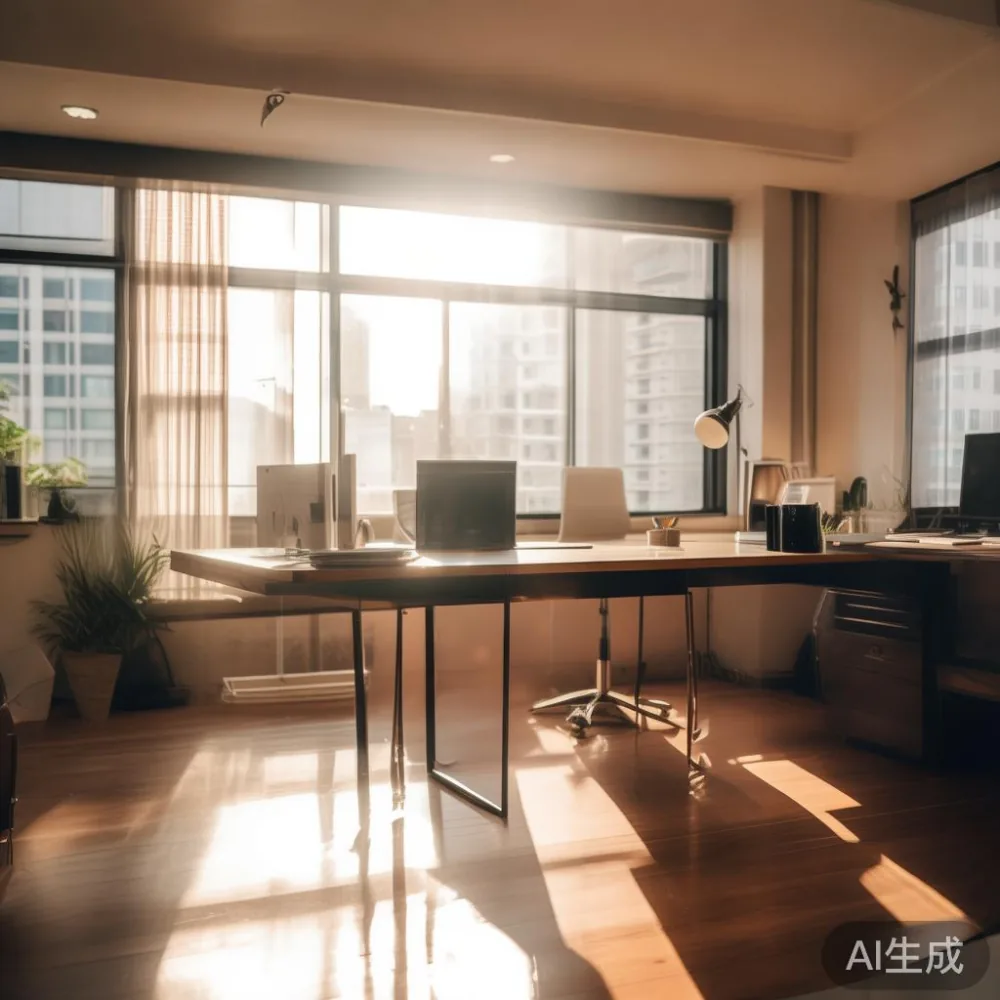
How small is "small" in Singapore, and what fits through the door?
Before you buy anything, measure three things: the lift, the corridor outside your unit, and the door frame. Most HDB lift openings are around 90 cm wide by 210 cm deep, and corridor turns in older blocks measure roughly 110 cm across. A flat-pack wardrobe from a Tampines warehouse can look enormous on a product page and still wedge itself diagonally at your front door.
- Standard HDB door frame: about 81 cm wide by 205 cm tall.
- Newer condo door frame: up to 91 cm wide by 220 cm tall.
- Service lift (for bulky deliveries): usually 120 cm wide by 150 cm deep, but you need to book it through the MCST with at least three working days' notice.
- Single-load capacity: around 1000 kg per furniture lift in most new launches.
Write these down. Any solid wood piece heavier than 35 kg — a marble table, a six-drawer wardrobe, a king-size bed frame — needs a delivery plan, not a hopeful shrug. MIDHILL, for example, ships floor-loaded and shrink-wrapped from Foshan, with a typical 35–45 day sea route to Singapore that arrives with the inner packaging intact. Worth knowing if you have ever received a crushed drawer front.
What is "light luxury" furniture, and why does it suit a 55 sqm flat?
Light luxury is a translation of qing dan (轻奢) — restrained, material-aware, quietly expensive. American light luxury tends toward warm walnut and brushed brass. French light luxury leans into tapered cabriole legs, soft curves, and bouclé or linen upholstery. Post-modern light luxury, the newest of the three, pairs clean geometry with one sculptural detail — a fluted marble table top, a brass-edged mirror, a single curved sofa back.
For a compact Singapore home, light luxury works because it relies on proportion rather than ornament. A 140 cm solid wood dining table in white oak reads as delicate; the same table in dark mahogany with carved edges reads as heavy. If you are browsing top 10 European light luxury furniture lists, you will notice almost every set includes one warm-wood piece, one upholstered seat, and one stone or marble accent — a recipe that scales down beautifully.
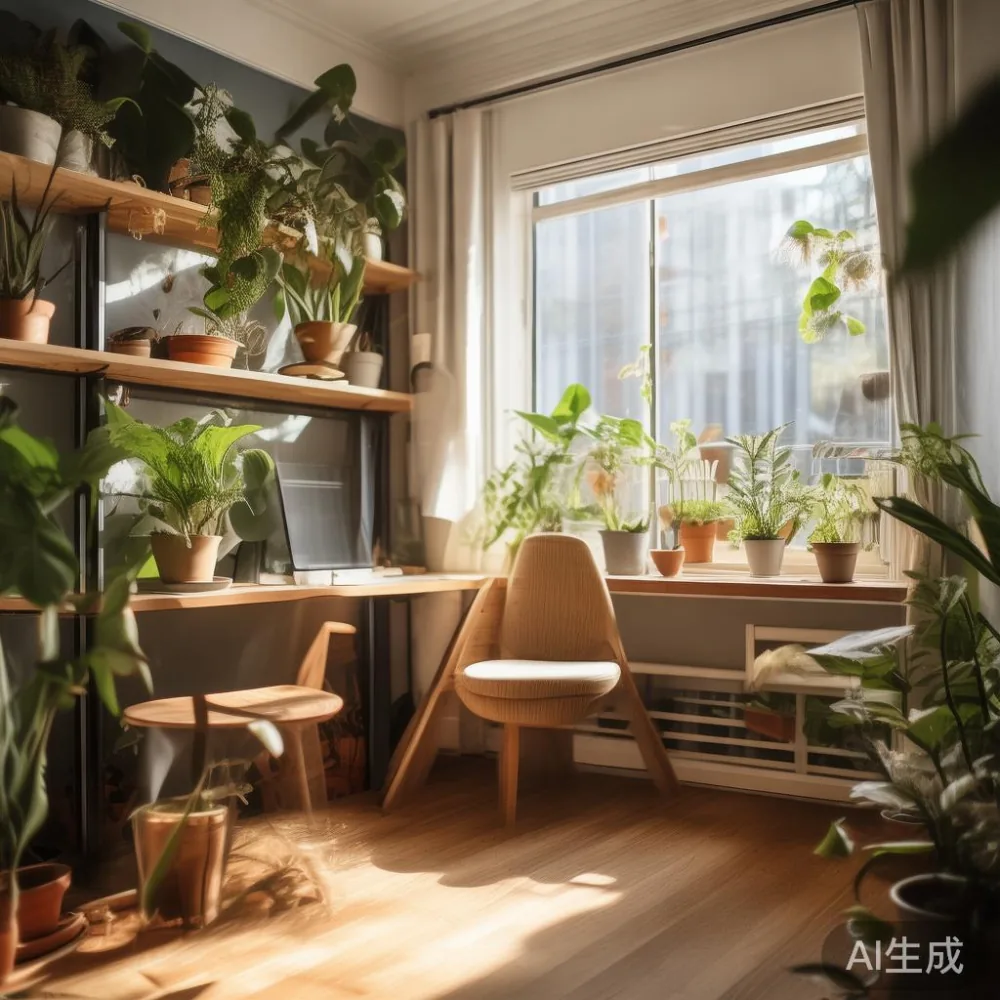
What should I do before measuring a single wall?
Set a 24-hour "live with it" test. Tape the footprint of your proposed office desk onto the floor — masking tape is fine — and walk around it for a full day. Can two people pass each other in the 80 cm corridor between desk and wall? Can you pull a chair back 60 cm without hitting the bed frame? Can you open the wardrobe doors (usually 55 cm swing) without bumping the desk?
Most Singaporeans underestimate chair clearance. A standard task chair needs a 70 cm radius to roll back. A dining chair with arms needs 80 cm. If you do not have that, your desk doubles as your dining table, and you want one that seats four comfortably on 140 cm — which is exactly the size of a compact European dining table designed for small apartments.
Is a solid wood office desk actually worth it in a small apartment?
Yes, for three measurable reasons. First, weight: a 120 cm solid oak desk typically weighs 28–34 kg, which means it stays put when you lean on it and does not slide around on laminate flooring. Second, longevity: a properly kiln-dried hardwood desk can be refinished, not replaced, which matters when you are paying 9% GST on every new piece. Third, sound: solid wood dampens noise rather than amplifying it the way hollow-core tables do, so your home feels calmer during the 7 a.m. Zoom call.
When my colleague in Tampines swapped her 120 cm particle-board desk for a 140 cm white oak office desk from MIDHILL, her room looked 2 sqm larger. The trick was depth: 60 cm instead of 50 cm gave her enough surface for a laptop, a notebook, and a small marble tray for her keys — without pushing the desk 10 cm closer to the wall.
How do I style around the desk without crowding the room?
Use the desk as the anchor and apply the 60-30-10 rule: 60% of the visual weight in one wood tone, 30% in a single upholstery color, and 10% in one accent — usually a brass lamp, a ceramic vase, or a small marble table.
- Wood tone (60%): choose once and repeat it on the bed frame, the wardrobe, and one shelf.
- Upholstery (30%): one oatmeal linen on a reading chair, or a sage velvet on a headboard cushion.
- Accent (10%): a 40 cm marble side table or a single piece of framed art no larger than 60 x 80 cm.
For a Bedok family moving into a 75 sqm resale flat, the same formula applies. A 180 cm solid wood bed frame in ash, a 90 cm nightstand on each side, and a single 45 cm marble table at the foot of the bed gives you a master bedroom that reads as one composition. The nightstand height should sit within 5 cm of the mattress top — usually 55–60 cm for a standard 150 cm mattress — so a lamp or book does not tower over your pillow.
Which pieces earn their footprint in a small flat?
Think in cubic metres, not square metres. A tall wardrobe (200 cm high, 60 cm deep) stores more per square metre of floor space than a low sideboard. A solid wood sofa with a 90 cm depth and a 200 cm length gives three seats in the same floor area as two armchairs. A extendable dining table that opens from 120 to 160 cm seats four daily and six at family gatherings, costing roughly SGD 1,650–SGD 2,400 in light luxury solid wood from a Foshan maker such as MIDHILL after currency conversion and freight.
The pieces that rarely earn their footprint in Singapore are oversized sectionals, heavy glass coffee tables (they show every fingerprint and every dusty floor), and any storage cube deeper than 45 cm — they eat corridor width without adding usable volume.
What about a marble table or marble top in a humid Singapore climate?
Marble and humidity are not enemies if you choose the right stone and seal it. A 50 cm round marble side table with a honed (matte) finish hides water rings far better than a polished one, and lighter marbles — Carrara, Statuario, light Emperador — forgive the chalky rings left by cold water glasses. Seal the surface on delivery day and again every 12 months; the work takes 15 minutes and a SGD 18 tin of impregnating sealer from any hardware shop in Bedok or Tampines.
Keep marble out of direct afternoon sun through west-facing windows — UV will yellow the resin in some stones over a decade. North-facing windows, common in newer Punggol condos, are perfect.
Where should an office desk live in a one-bedroom or two-bedroom HDB?
Three locations consistently outperform the rest. (1) In the living room against a wall with at least 80 cm of clearance in front — this gives you the deepest work surface and lets the room do double duty. (2) Inside a recessed bay window, where a 120 x 55 cm desk slots in without taking corridor space. (3) Inside the bedroom, opposite the wardrobe doors, so the desk faces the door and you catch natural light without turning your back on the room.
Avoid placing the desk directly under the air-con vent: papers flutter and the wood expands and contracts through 6–8 °C daily swings. If the only option is under the vent, angle the desk 45° so the airflow runs along the length, not across it.
How do I compare a French provincial headboard with a Mid-century bed frame?
A French provincial bed frame runs about 165 cm tall at the headboard with carved curves and a painted finish in ivory or pale grey. It looks romantic but eats 15–20 cm of floor depth because of the curved footboard. A Mid-century modern bed frame sits lower, usually 95–105 cm at the headboard, with a flat or slightly angled profile in walnut or teak, and uses tapered 15 cm legs that visually lift the whole piece off the floor.
For a 12 sqm bedroom, the Mid-century frame leaves more visible floor, which the eye reads as more space. For a 14 sqm master with a tall ceiling (3.1 m in newer condos), a French provincial frame balances the vertical volume nicely — particularly the kind of detail-heavy European light luxury bed vs Mid-century modern bed conversation you will see on Singapore interior design forums every week.
Can a small flat feel like a boutique hotel without the boutique hotel budget?
Yes, if you copy the hotel playbook. Hotels invest in three things: the bed, the lighting, and a single sculptural piece. Replicate that, and your HDB feels curated.
- The bed: 180 cm wide if the room allows, with a 12 cm memory foam topper and 400-thread-count linen in white. A solid wood bed frame from SGD 980 in oak.
- The lighting: layered — a 30 cm brass pendant (around SGD 220), a 45 cm table lamp on the nightstand (SGD 95–SGD 160), and a 3-warm LED strip behind the headboard (SGD 35 for a 3 m run).
- The sculptural piece: one marble table, one arched mirror, or one oversized floor lamp. Not all three.
This is the same logic behind projects labeled French provincial for hotel in commercial fit-outs, scaled down for a 55 sqm BTO in Punggol. You do not need the full suite; you need the principle.
What sofa size and shape actually works in a 18 sqm living room?
An 18 sqm living room — typical for a four-room HDB — fits a 200 x 90 cm solid wood sofa frame with two or three seats, plus a 90 cm coffee table and a single accent chair. Depth is the trap: a 100 cm-deep sofa eats the corridor between seat and TV console. Stay at 90 cm deep and you keep a comfortable 80 cm walking path.
Compare a European sofa vs Nordic sofa and you will feel the difference immediately. European light luxury sofas use higher backrests (48–55 cm), firmer seat cushions (foam density 30–35 kg/m³), and skirted or short tapered legs. Nordic sofas sit lower (40–45 cm back), with softer down-blend cushions and longer wooden legs that lift the piece 18–20 cm off the floor. In a low-ceiling Singapore flat, a Nordic sofa feels airier. In a high-ceiling Punggol unit, the European silhouette looks more grounded.
When you browse the best Minimalist sofa for 2026 guides, look for a seat height of 44–48 cm — this matches Singapore dining chairs and lets the sofa double as extra seating when family visits.
How should I budget for a small-apartment furniture refresh in SGD?
A realistic mid-range budget, in Singapore dollars after 9% GST and including delivery:
- Solid wood office desk (140 cm, oak): SGD 720–SGD 1,150.
- Solid wood dining table (140–160 cm extendable): SGD 1,250–SGD 2,100.
- Solid wood bed frame (queen): SGD 980–SGD 1,650.
- Solid wood wardrobe (180 cm, two-door): SGD 1,400–SGD 2,200.
- Nightstand (50 cm, pair): SGD 380–SGD 620.
- Marble side table (50 cm round): SGD 420–SGD 680.
- Solid wood sofa (200 cm, three-seat): SGD 1,850–SGD 3,400.
That totals roughly SGD 7,000–SGD 11,800 for a full two-bedroom set. If your budget caps at SGD 6,000, prioritize the office desk, the bed frame, and the dining table — the three pieces you touch every day. A full European light luxury set from a Foshan maker such as MIDHILL typically lands 20–30% below Singapore retail after freight and GST, which is how owners of newer condos in Punggol and Bedok are quietly furnishing 65 sqm flats for under 2000 French provincial furniture bundles in the SGD 5,500 range when bought as a single order.
Any final tricks for making a small Singapore flat feel larger?
Three that I keep coming back to. First, raise everything you can: sofas on 18 cm legs, beds on 15 cm legs, nightstands on slim metal frames. Visible floor equals visual square metres. Second, choose doors over drawers for wardrobes in narrow rooms — a 55 cm swing is tighter than pulling out a 50 cm drawer when someone is standing behind you. Third, keep one wall entirely empty if you can. A blank 1.2 m stretch of wall reads as rest, not waste.
Your office desk is the one piece you will use daily for the next decade, so choose a solid wood top, a depth that holds your laptop and a notebook, and a leg design that lets you sit comfortably for six hours. Everything else in the room can flex around that anchor. That is the small-space logic I have seen work in Tampines three-room flats, in Punggol executive condos, and in my own Punggol two-bedder — and the Foshan manufacturers behind the well-priced Foshan Lingzhan–era supply chains have made it easier than ever to source light luxury pieces without the boutique markup.