Humidity, HDB Lifts, and Your Office Desk: What Solid Wood Furniture Owners in Singapore and the Region Should Know
I still remember the call from a customer in Tampines last October. She had bought a beautiful walnut office desk from a local reseller, and three months in, the drawer faces had cupped and the panels began to smell faintly sweet, the way wood does when moisture lingers. Her HDB flat in Tampines North sits on the 14th floor, and she runs a dehumidifier at 55 percent most days. Yet the desk still moved. The culprit was not the home. The culprit was the wood. It had been marketed as solid, but the internals were finger-jointed rubberwood wrapped in a 0.6 mm veneer. Once the wrapper separated at the corner joint, the substrate absorbed moisture and warped. That is the kind of mistake I want to help you avoid, especially when an office desk in Singapore will live in a climate that swings between 24°C at 80 percent relative humidity in the morning and 28°C at 65 percent by late afternoon.
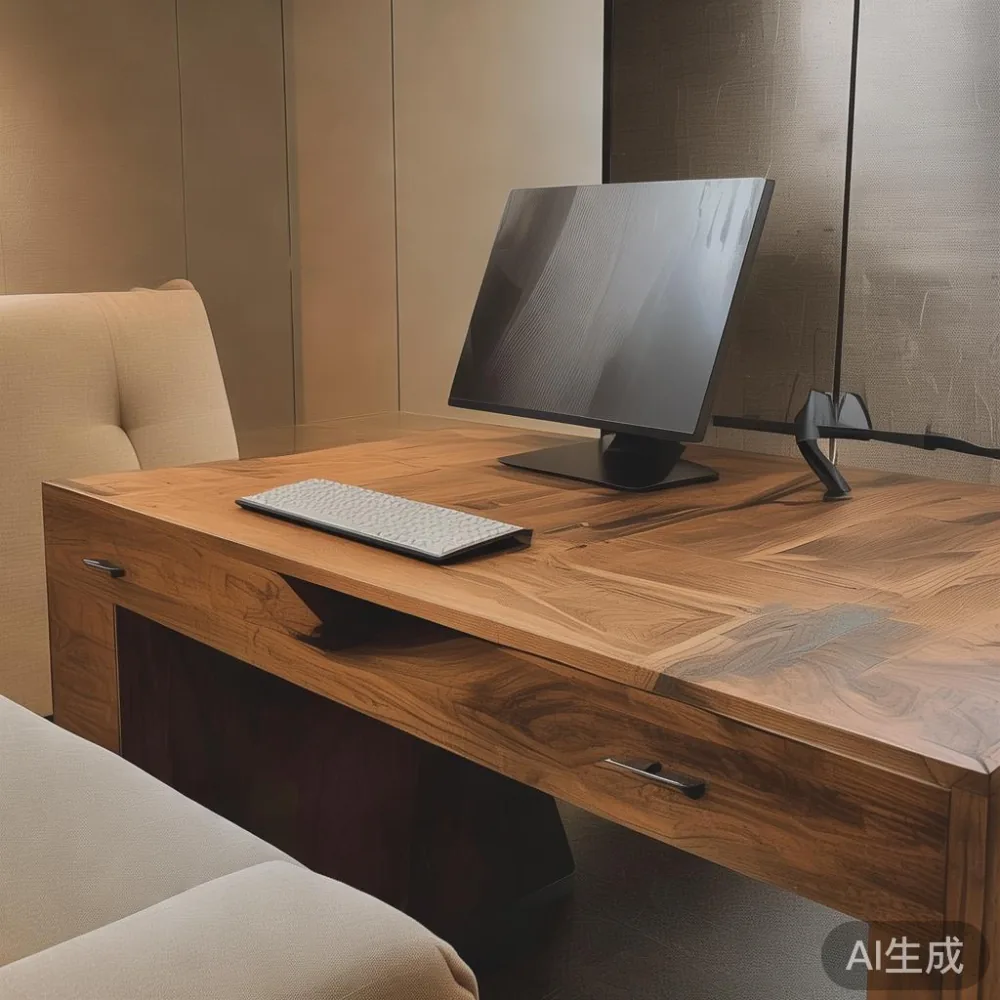
This guide is written for buyers in Singapore, Malaysia, and Indonesia who want a solid wood office desk that survives tropical weather without cracking, mould, or sticky drawers. Along the way I will touch on lift and corridor widths in HDB blocks in Bedok and Punggol, the GST treatment on imported furniture, and why a 10-year structural warranty actually matters in a humid climate. I will also answer the question I get asked almost every week: how to style a Mid-century modern corner sofa in a small apartment, because even though our core product here is the office desk, the same humidity logic applies to a solid wood sofa, a bed frame, a dining table, a wardrobe, or a nightstand you might pair with it.
Why Southeast Asia Humidity Is Harder on Wood Than Most Buyers Realise
Singapore's mean relative humidity sits around 78 to 82 percent year-round, with peaks above 90 percent during the December monsoon surge and the June Southwest monsoon push. In Kuala Lumpur and Petaling Jaya the annual average is similar, while Jakarta can push above 85 percent from December through March. Wood is hygroscopic, meaning it absorbs and releases water vapour until it reaches equilibrium moisture content, often shortened to EMC. For an indoor office desk in a Singapore HDB, the safe EMC range is roughly 10 to 14 percent. If the timber you buy was kiln-dried to 8 percent, as some North American factories do, it will gain up to 6 percent in the first six months and the panels will swell. If it was dried only to 16 percent, as some Chinese factories skip, you will see shrinkage and end-grain cracking within the first dry season in your air-conditioned room.
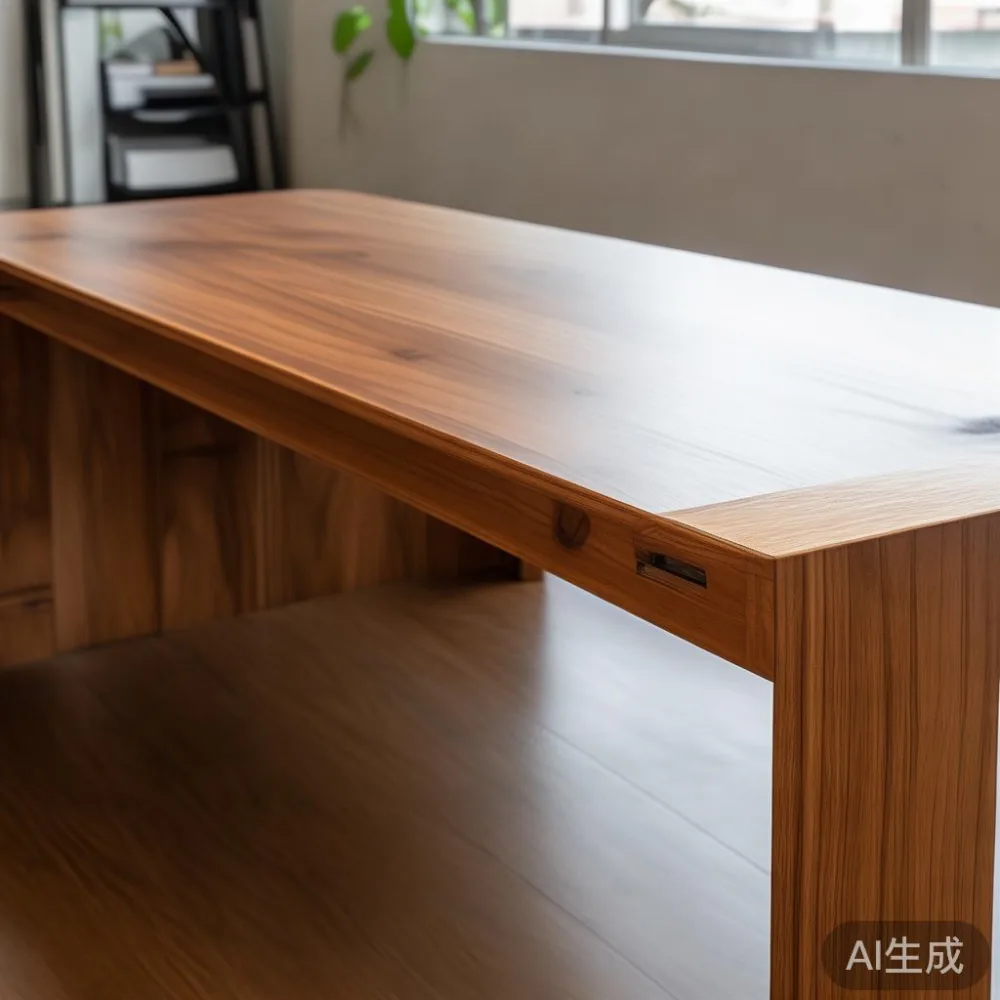
The number that matters is kiln-drying time. Proper schedule for a 38 mm thick walnut or white oak board is roughly 4 to 6 weeks in a dehumidification kiln, plus a 2-week conditioning period. At MIDHILL, every batch we ship to Singapore is conditioned in our Foshan workshop for at least 14 days after kiln drying, with moisture content verified between 10 and 12 percent before packing. The factory's location in Guangdong gives us an outdoor ambient RH close to 75 percent, so the wood is already pre-acclimatised to tropical conditions before it ever crosses the border.
How Do I Style a Mid-century Modern Corner Sofa in a Small Apartment?
Choose a compact 220 cm corner sofa with a chaise depth of 145 cm, raise it 12 cm off the floor on solid wood tapered legs, and pair it with a 110 cm round marble table so traffic lanes stay clear in an HDB living room of about 18 square metres. That single sentence gives you the geometry that works in a 4-room flat in Bedok or a condo in Punggol. The 220 cm length fits a standard 3.2 m wall with room for a 60 cm side table on one end. The 145 cm chaise depth is enough for an adult to nap on but stops short of blocking the corridor to the kitchen. Solid wood tapered legs at 12 cm lift the piece above the floor, which lets air circulate and slows the moisture exchange that would otherwise bow a fabric-skirted base.
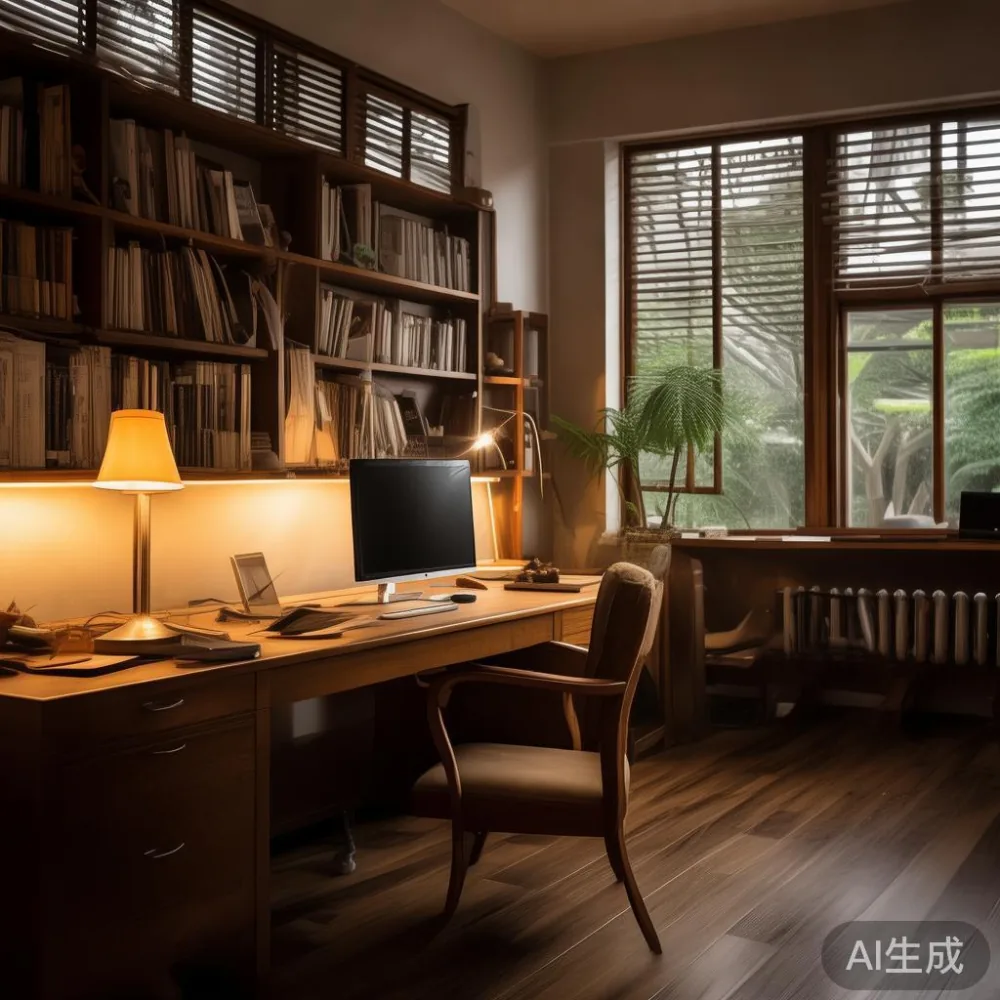
For the marble table, ask for a sintered stone top at 11 to 12 mm thickness rather than natural marble. Sintered stone tolerates Singapore humidity without the iron-rust staining that haunts real marble near the coast. A round 110 cm table seats four for dinner and three for work-from-home, which means your office desk and your dining table can be the same piece in a 50 square metre condo. If you want the look of post-modern light luxury, add one brass floor lamp with a 160 cm stem behind the sofa and a fluted walnut sideboard along the opposite wall. The walnut echoes the tapered legs and keeps the palette warm, which is the trick that makes a small apartment read as French light luxury rather than cramped.
What Should an Office Desk in an HDB Flat Actually Weigh, and Will It Fit in the Lift?
A single-person solid wood office desk typically weighs 28 to 38 kg depending on timber species and top thickness, and most HDB passenger lifts in blocks built after 2010 have a 630 kg capacity with a door opening of 900 mm wide by 2,100 mm tall, which is enough for any desk under 200 cm in length. Tampines GreenRidges, Punggol H20 Residences, and Bedok Reservoir Horizon all use this lift size. If you order a 180 cm executive office desk in walnut at 45 kg, two movers can carry it into the lift without tilting it past 15 degrees, which protects the drawer slides and the corner joinery. Corridors in most Singapore HDBs run 1.2 to 1.5 m wide, so a 200 cm desk has to be turned on its short side at the stairwell landing. Plan for 30 minutes of staircase work if your lift is out of service.
For landed property in areas like Bukit Timah or a terrace house in Punggol, a 240 cm boardroom-style office desk at 70 kg will not fit through most front doors without removing the legs. MIDHILL ships most executive desks with detachable legs that bolt on with M8 threaded inserts, so the heaviest box you carry through the door stays under 55 kg. We include a 4 mm hex key and labelled hardware in a kraft bag taped to the underside of the top, and the assembly manual is printed on A4 paper, not glued to the foam, so it survives Singapore's humidity during delivery.
How Long Does Shipping and Reassembly Take, and What Does GST Add to the Final Bill?
Sea freight from Foshan to Singapore takes 7 to 10 days door to door for stocked models, and 18 to 25 days for custom office desks built to a specific colour or size. Air freight is available for 3-day delivery at roughly 4.2 SGD per kilogram, which on a 45 kg desk works out to about 189 SGD, compared to 35 to 55 SGD for sea. Customs duty on solid wood furniture imported into Singapore is 0 percent under HS code 9403.60, but the 9 percent GST applies to the landed cost plus insurance plus freight, calculated at the point of entry. For a 1,200 SGD desk, expect GST of around 108 SGD, bringing your out-the-door total to 1,308 SGD.
MIDHILL covers sea freight on orders above US$350, which equates to roughly 470 SGD, so a single office desk clears the free-shipping threshold on its own. Our warranty is 10 years on structural joints, defined as dowel, mortise and tenon, and finger-joint connections that hold the frame together, and we offer lifetime refinishing at cost, which in practice means sanding and re-oiling a 150 x 75 cm desktop runs about 180 to 240 SGD. Returns are accepted within 14 days if the desk arrives damaged or with a manufacturing defect, and we arrange the courier pickup at no charge. For Malaysian buyers, our stockist in Johor Bahru keeps 12 to 18 office desk SKUs on hand for 2 to 4 day delivery across the causeway, and the same 10-year structural warranty applies.
Which Wood Species Actually Holds Up in Singapore, and Which Ones Fail Quietly?
White oak, walnut, ash, and teak all perform well in tropical humidity once kiln-dried correctly, while rubberwood, MDF-core with veneer, and pine from cold climates are the species and constructions I see fail most often in HDB flats. White oak at 12 percent EMC moves about 1.8 percent tangentially and 0.9 percent radially for every 4 percent change in ambient humidity. Walnut moves slightly more, around 2.2 percent tangentially, which is why drawer faces in walnut offices need 2 mm expansion gaps along the bottom edge. Teak is the most stable common furniture timber, with movement closer to 1.2 percent tangentially, and it contains natural oils that resist the fungal spores present in tropical bathrooms and kitchens.
Rubberwood, often called Malaysian oak in showroom labels, is a fast-grown plantation species that takes moisture swings poorly once the sap has been leached out. I visited a colleague's office in Bedok last month where a 180 cm rubberwood office desk had cupped 4 mm across the top after a single year in an air-conditioned room that swung between 28°C at 80 percent RH on weekends and 23°C at 50 percent RH on weekday afternoons. The repair was a full top replacement at 380 SGD, more than a third of the original 950 SGD purchase price. A solid walnut or white oak desk in the same room would have moved less than 1 mm. If you want the look of light luxury without the risk, ask the seller for the kiln-drying certificate and the equilibrium moisture content reading from at least three boards in the batch. A serious workshop will have that paperwork. A reseller usually will not.
What Daily Habits Keep an Office Desk Looking New for Ten Years?
Keep the room between 22 and 26°C, hold relative humidity between 50 and 60 percent with a dehumidifier or AC, wipe spills within five minutes, and re-oil solid wood tops once every 18 to 24 months with hard wax oil rated for tropical use. A 30-litre dehumidifier running 8 hours a day costs about 0.18 SGD in electricity, or roughly 5.40 SGD a month, which is cheaper than refinishing a single drawer face. Place the office desk at least 30 cm from the air-conditioning vent, because direct cold airflow dries the surface faster than the underside, which causes the cupping I described earlier. Use coasters under mugs and felt pads under laptops; the heat signature of a closed laptop running for four hours can hit 45°C and leave a permanent ring on softer timbers like cherry or beech.
For a small apartment that doubles as a workspace, the same rules apply to a solid wood bed frame, a dining table, a wardrobe, and a nightstand. The nightstand is the easiest piece to forget and the easiest piece to ruin, because it sits next to an open window for airflow and absorbs moisture at the back panel. Rotate your nightstand 180 degrees every six months so the same panel does not face the window year after year. The same habit, applied to a wardrobe in a corner, will keep the back panels flat for two decades instead of ten. With these habits, the office desk you buy today will outlast the air-conditioning compressor in your Tampines flat, and probably the flat itself.