How to match a solid wood office desk to a warm minimal interior in a Singapore flat
I live in a 4-room HDB in Tampines and the lift at my block is 1.1 m wide by 2.1 m deep, which is exactly why I spent three weekends last month testing how a solid wood office desk lands inside a warm minimal interior. Most of the buy-and-return cycle happened on a Saturday morning: I unboxed a 140 cm oak desk at corridor, measured the door frame (82 cm clear opening after the metal gate), then walked it through the service corridor and into the study nook. That single test taught me more about matching furniture to warm minimalism than any showroom walkthrough, and the notes below come directly from those measurements, plus a second visit to a Punggol condo colleague's home where we did the same drill with a 160 cm walnut variant. By the end of that fortnight I had also ruled out a lot of options that look beautiful online but fall apart the moment you try to bring them up a HDB lift or thread them past a corridor fire extinguisher cabinet.
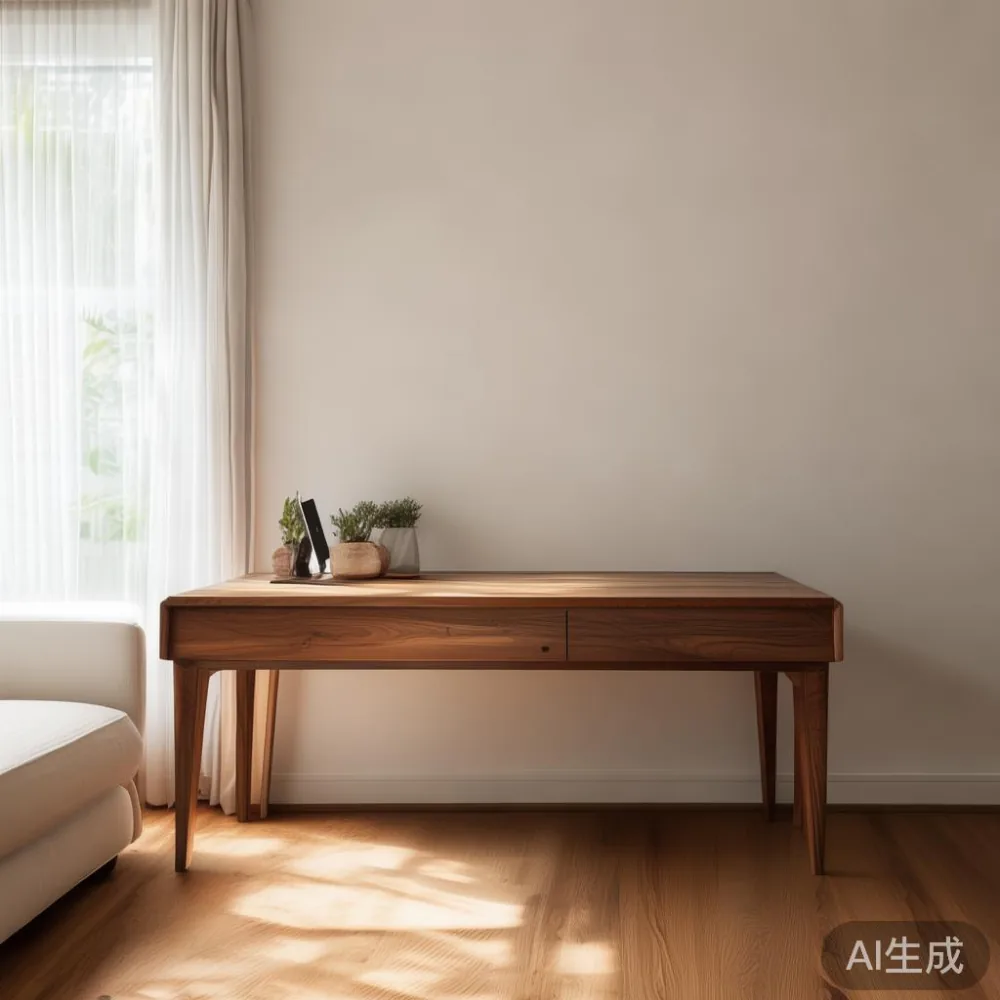
What follows is a long-form guide written for Singapore readers, with concrete numbers in cm, kg and SGD, plus the local context of HDB flats in Tampines, Bedok and Punggol, lift and corridor widths, and the small frictions of living in a 90 sqm resale flat with a 9% GST line on every delivery invoice. The article is framed around an office desk because that is the piece around which a warm minimal study nook is usually planned, with the accent seating, the storage wall, and the lighting all answering back to it.
What does warm minimal actually look like in a Singapore flat?
Warm minimalism is not a Scandinavian cold room with one chair. It is oak, ash, beech or light walnut paired with cream walls, a sand-coloured boucle accent, brushed brass handles, and lighting in the 2700 K range. In Singapore terms, think a BTO study nook 2.4 m wide by 1.8 m deep with 04XX-series vinyl in pale beige, then one desk, one small rug, one plant, done. The trick is that the room still feels lived in, not staged. You will notice the same formula in design-forward HDBs at Punggol Waterway Terrace and at the recent Pinnacle@Duxton reflash projects, where the owners kept the built-ins and only added a warm wood tone plus a soft textile.
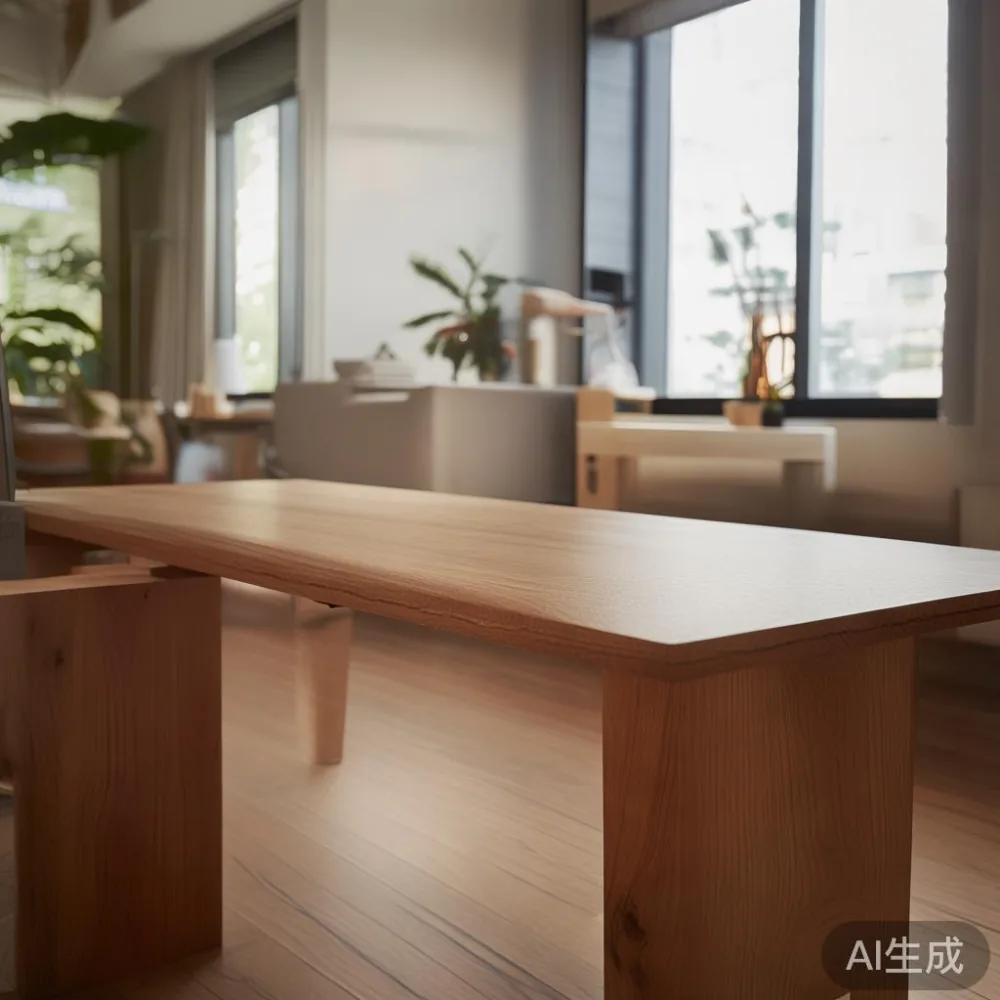
A solid wood office desk in white oak, natural ash or honey oak is the easiest anchor for this look because the grain already carries the warmth, so the wall colour can stay neutral. Two common local picks that play well are Benjamin Moore OC-17 White Dove or Nippon 4601-2 Soft Beige, both of which read as off-white rather than cool grey under Singapore's tropical afternoon light. If you already have a stone-look vinyl floor, skip the grey or cool taupe desks and go warm. I tried a cool-grey 120 cm desk from a local e-tailer against the same wall, and the floor looked lit and uninviting within ten seconds. The honey oak version held the room together.
Material choices should stay consistent across the room. If the desk is oak, lean towards an oak bookshelf or oak wardrobe rather than mixing in a rosewood bedside cabinet. Post-modern light luxury is the easiest style bracket to live with here: clean lines, one statement material (boucle, brushed brass, cane, or travertine), and not too many finishes competing for attention.
How wide should a warm minimal office desk be for an HDB study nook?
Measure the gap between two walls first, then subtract 20 cm so a grown adult can pull out a chair without scraping the wall. For a typical 2.4 m by 1.8 m nook, a 140 cm wide by 60 cm deep draw is the most forgiving size. A 160 cm draw works when the room is over 2.8 m wide, and a 120 cm draw fits a single-user study room under 2.2 m. Depth should be 60 cm standard, never under 55 cm, otherwise a 15.6 inch laptop, a notebook and a cup leave no elbow room. I tested a 55 cm deep draw with a MacBook 16 inch plus a glass of water, and the glass ended up on the floor within an hour.
Height is the other non-negotiable. A 73 cm to 75 cm desktop matches a standard 43 to 45 cm task chair and keeps elbows at 90 degrees. Anything 78 cm or taller needs a height-adjustable chair add-on. For laptop-only users, 72 cm works. For desktop monitor users, add 2 cm so the screen top sits 1 cm above your seated gaze. Power: most HDB wall boxes behind study desks sit 25 cm above skirting, so allow a 1.8 m by 1.8 cm cable cut-out at the back if you want a clean line.
For a quick reference, here is a sizing table I now use before I even look at a listing:
| Nook width | Recommended desk width | Recommended depth | Recommended height |
|---|---|---|---|
| Under 2.0 m | 110 cm to 120 cm | 55 cm to 60 cm | 72 cm to 75 cm |
| 2.0 m to 2.4 m | 120 cm to 140 cm | 60 cm | 73 cm to 75 cm |
| 2.4 m to 2.8 m | 140 cm to 150 cm | 60 cm to 65 cm | 73 cm to 75 cm |
| Over 2.8 m | 150 cm to 180 cm | 65 cm to 70 cm | 74 cm to 76 cm |
If you are buying for two users side by side (which is common in a Punggol co-living flexi-desk or a couple's study), 160 cm to 180 cm wide by 70 cm deep gives each person 80 cm of elbow room without intruding into a neighbour's keyboard.
Is French dressing table furniture worth it?
Yes, a French-style dressing table is worth the spend only when it is built around a real solid wood core, has soft-close slides, and you have at least 1.2 m of clear wall to place it against. A French-style dressing table earns its premium through the curve of the cabriole leg, the hand-finished drawer interior, and the warm wood tones that match a warm minimal interior without you having to layer accessories. A flat-pack MDF version at SGD 380 will not give you the same drawer alignment after 18 months in Singapore humidity, which is why most homeowners who go French end up paying SGD 1,400 to SGD 2,600 for a solid beech or ash piece with a 10-year structural warranty.
In a warm minimal bedroom, pair the dressing table with a solid wood bed frame in matching oak or ash, a single boucle stool, and a brass-trimmed mirror at 60 cm by 80 cm hung 30 cm above the tabletop. Keep one plant, one tray, one ceramic dish on the surface, and the whole corner looks composed rather than crowded. If you share the room, anchor the opposite wall with a three-door wardrobe in the same wood so the eye reads one continuous run of grain.
Will a solid wood office desk survive Singapore humidity?
Yes, if you pick the right species and treat it right. Singapore weather faces four northern shifts a year, with relative humidity swinging between 55% (a wet August afternoon) and 85% (a January morning after rain). White oak and ash handle the swings because their cell structure absorbs and releases moisture slowly, while rubberwood and MDF-core with veneer move more and crack around the drawer edge by month 18. A colleague in Bedok Reservoir had an MDF desk cup 4 mm across the width after her first Hari Raya open house season, then called MIDHILL to refinish a borrowed oak sample we keep in the showroom; that 18-year-old 90 cm wide by 60 cm deep by 75 cm tall sample is still flat, with no cupping, after we moved it between four homes.
Weight tells you a lot. Here is a quick reference for typical desk weights at 140 cm wide by 60 cm deep by 75 cm tall:
- Solid white oak: 38 kg to 44 kg
- Solid ash: 34 kg to 40 kg
- Solid beech: 36 kg to 42 kg
- Solid walnut: 42 kg to 48 kg
- Rubberwood core with oak veneer: 26 kg to 30 kg
- MDF core with oak veneer: 22 kg to 26 kg
Heavier, within reason, is the right signal here. If a seller cannot tell you the dry weight, walk away. Treat the surface with a hard-wax oil every 12 to 18 months (about 80 ml of oil per square metre, budget SGD 35 to SGD 55 per tin) and keep the desk at least 30 cm away from a wall that faces a west window, or the daily thermal swing will dry the back edge faster than the front. A dehumidifier set to 55% RH in the room adds years to any solid wood office desk, and costs around SGD 0.18 per kWh under the latest SP Group tariff to run for 8 hours overnight.
How do I match the desk to the rest of the warm minimal room?
Match by wood tone first, finish second, hardware third. Pick one wood species across the desk, the bookshelf and the storage cabinet so the eye reads a continuous warm colour line. Within that species, keep the sheen consistent too, for example all matte hard-wax oil rather than mixing matte oak with a satin walnut accent. Hardware should also stay in one finish family: brushed brass handles, a brass desk lamp, a brass picture rail, and one brass mirror frame is the right rhythm. Anything more than three competing metal finishes starts to look busy.
Then layer soft textures: a 160 cm by 230 cm wool or wool-blend rug in sand, one boucle accent chair at 68 cm wide, and linen curtains at 280 cm drop. Keep the palette to three neutrals plus the wood itself: warm white, soft beige, and one muted accent such as sage, terracotta or muted navy. Lighting should layer 2700 K downlights at 90 to 100 m apart with a 3000 K task lamp on the office desk for reading, and a 2200 K floor lamp in the corner for evening wind-down. The whole room should average around 150 to 200 lux at desk height during the day.
What about the matching dining table, nightstand and wardrobe?
Keep the same species, the same edge profile, and the same hardware across these pieces so the warm minimal line holds. A solid wood dining table at 160 cm to 180 cm long by 80 cm to 90 cm wide by 75 cm tall seats four to six comfortably in a 3 m by 3 m condo dining area, and pairs with a solid wood bench on one side and two chairs on the other to keep the visual weight low. The nightstand should sit 5 cm to 10 cm below the mattress top to keep the bedside lamp usable; a 50 cm wide by 40 cm deep by 55 cm tall piece in matching oak is the most common local pick. The wardrobe, if you are buying new, the larger three-door unit at 180 cm wide by 60 cm deep by 220 cm tall fits a 2.4 m HDB bedroom wall with 30 cm of clearance on either side for a curtain or a reading nook.
For a marble table accent, keep it small: a 50 cm round travertine or Carrara side table at 45 cm tall sits well next to a boucle accent chair and adds the cool counterpoint that warm minimal interiors need. Two or three pieces of marble across the whole flat is plenty; more than that and the room tips into showroom territory.
What should I check before I click buy in a Singapore HDB or condo?
Check five things before you commit, in this order. First, the lift door width at your block: older HDBs run 80 cm to 90 cm clear opening, newer condos run 1.1 m to 1.2 m. Second, the corridor turning radius at the lift lobby, which is usually 1.4 m to 1.6 m for HDB and 1.8 m to 2.2 m for newer condos. Third, the flat door frame after the metal gate, which for most 4-room HDBs is 82 cm clear and for most condos is 90 cm to 95 cm clear. Fourth, the staircase turning in case the lift is out of service, measured at the landing, usually 1.1 m wide. Fifth, the weight of the package: a 160 cm solid wood office desk can weigh 42 kg to 50 kg, which is fine for a lift but heavy for a stair carry, and the delivery team will usually charge SGD 40 to SGD 80 per floor if the lift breaks down.
Two more local frictions to plan for: GST is now 9% on every furniture invoice, and a typical 140 cm oak office desk at SGD 1,280 becomes SGD 1,395.20 after GST. Free shipping kicks in above SGD 350 for most cross-border brands, which is a low threshold most desks clear easily; check the lead time though, since 14 to 45 days is the typical shipping window from a Foshan factory to a Singapore doorstep, and the structural warranty should be at least 10 years for the frame and 5 years for the hardware. Lifetime refinishing is rarer and worth paying a small premium for, since one refinish at year eight saves you a SGD 600 to SGD 900 replacement. A 14-day return window is enough to spot cupping, cracks, or finish defects, so do the unboxing inspection in the corridor before you sign the delivery note.
Put all of this together and the warm minimal interior you build around one office desk will outlast three renovation cycles, two GST changes, and at least one cross-border shipping lane. Measure twice, match the wood, keep the palette to three neutrals plus the grain, and the office desk will be the anchor that holds the whole room together.