How Southeast Asian Humidity Affects Solid Wood Furniture
Singapore’s tropical climate can change the dimensions, movement and surface finish of solid wood furniture. For residents of HDB flats and private condominiums in Tampines, Bedok and Punggol, that effect is more than a seasonal detail: it directly affects how an office desk, dining table, wardrobe or bed frame behaves inside the home.
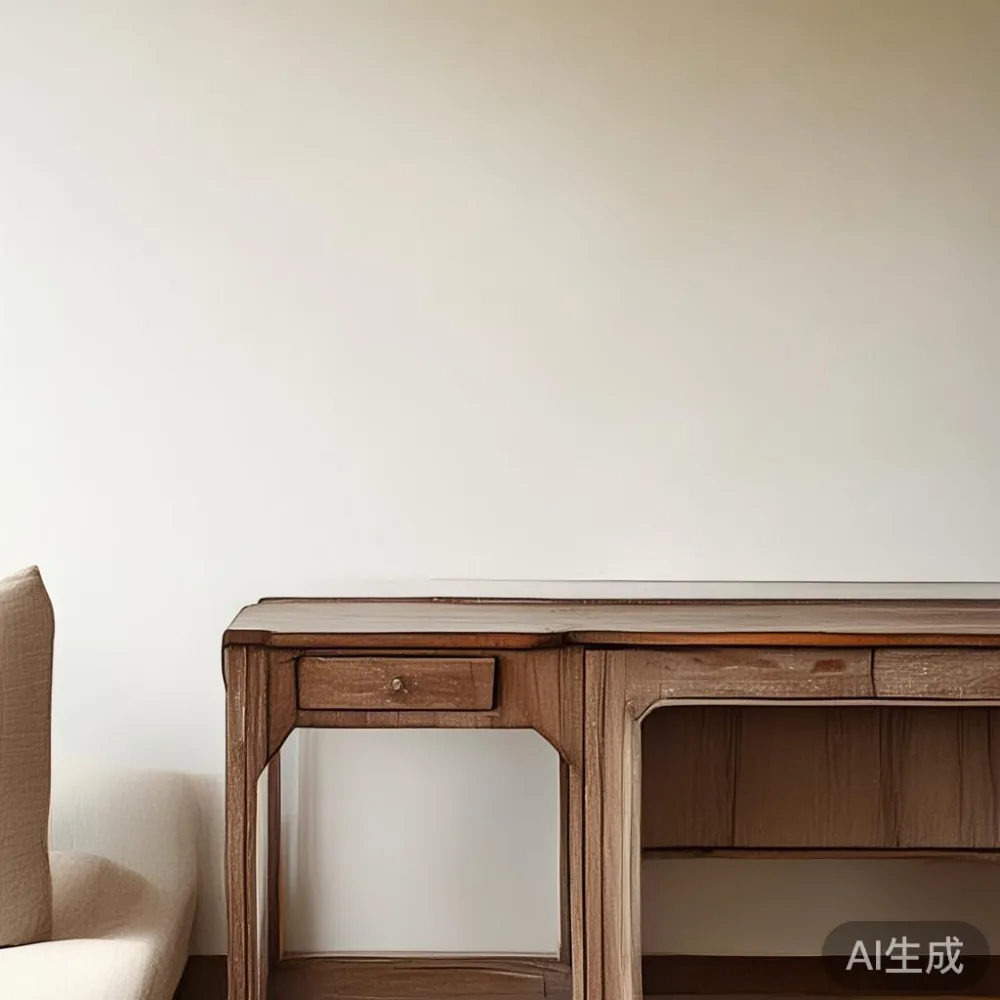
Relative humidity commonly ranges from about 65% to 85% in Singapore, while air-conditioned rooms may fall to 45% to 60%. Solid wood is hygroscopic, meaning it absorbs moisture when the surrounding air is humid and releases it when the air becomes drier. Over time, repeated changes can cause a desktop to expand by several millimetres, joints to loosen, veneer to lift or lacquer to develop fine surface marks.
Good furniture design acknowledges this movement instead of treating wood as an inert material. At MIDHILL, our approach to Southeast Asian conditions combines stable joinery, appropriate finishes, practical care guidance and a 10-year structural warranty. The result is furniture suited to local homes, including compact spaces, frequent lift deliveries and the daily use of work-from-home rooms.
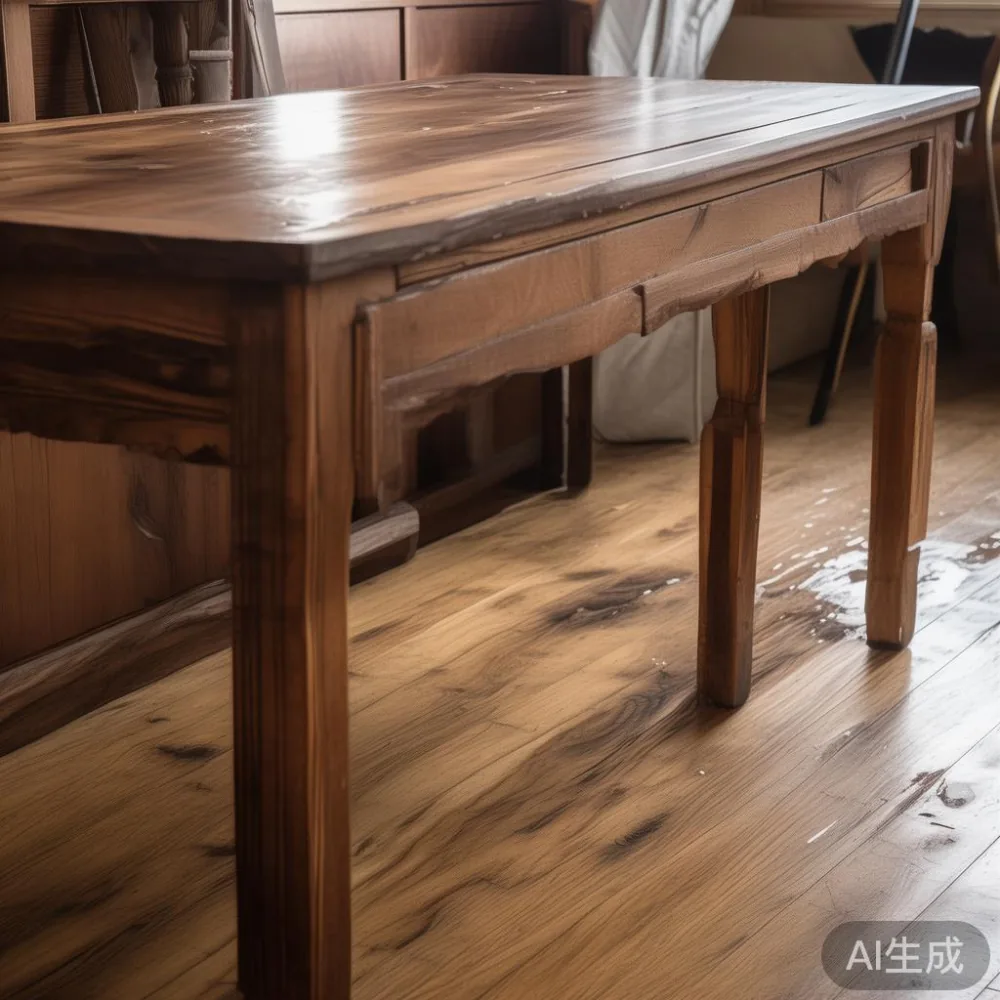
What Singapore humidity does to solid wood furniture
Wood responds to relative humidity by changing dimensions. The movement is greatest across the grain, which means the width of a desktop or the side panel of a wardrobe may change more than its thickness. In our experience, a solid oak or ash office desk can move by roughly 2-4 mm across its width when exposed to a large change in moisture content, especially if it is new, unsealed on all sides or placed against a cool wall.
Singapore’s humidity is often described as high, but the real challenge is fluctuation. A room beside a west-facing window may reach 80% relative humidity before afternoon rain, then drop to 55% when the air conditioner runs. A console near a Punggol balcony may also alternate between humid evening air and the dry, mechanically cooled air inside. Repeated swelling and shrinkage create stresses that can loosen screws, distort drawer runners and make doors sit unevenly.
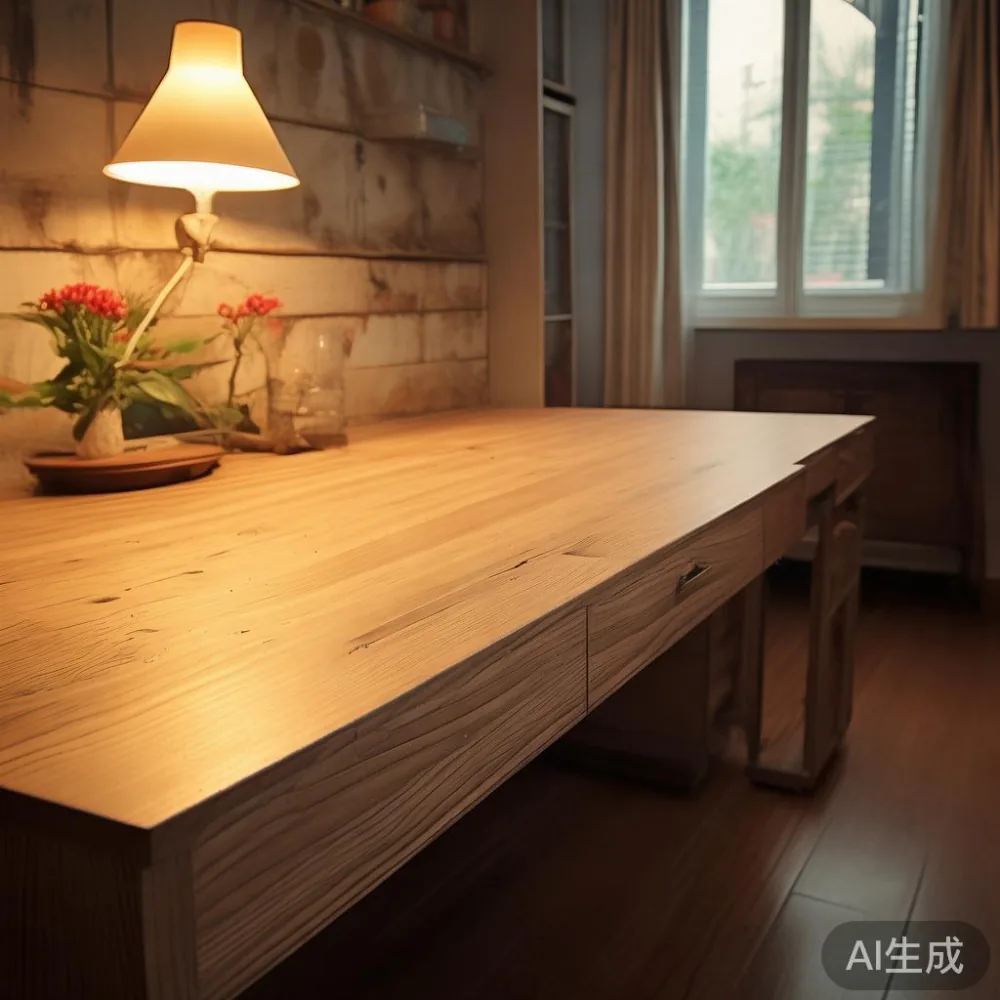
The risk increases when furniture is delivered from a different climate. Solid wood arriving from a drier region may initially absorb moisture and expand. That is not automatically a manufacturing defect, but it makes acclimatisation and finish selection important. A desk should be kept away from standing water, bathroom splashes and direct air-conditioning outlets, ideally with a clear gap of at least 30 cm from a wall or radiator.
Engineered wood is not immune either. MDF, plywood and laminated boards can swell at exposed edges, while particleboard is particularly sensitive to prolonged moisture contact. However, a well-sealed engineered board may perform predictably if its edges are protected. The practical question is whether the customer values the character and repairability of solid timber or prefers the dimensional consistency of a panel product in a frequently changing environment.
How humid is a Tampines, Bedok or Punggol home?
You do not need a laboratory to estimate the conditions around your furniture. Place a inexpensive hygrometer on the desk, not against a wall or near a window, and check it at about 8 a.m., 2 p.m. and 10 p.m. If readings remain between 45% and 65%, most quality solid wood furniture can be maintained comfortably. Sustained readings above 70% call for closer attention to airflow, cleaning and possible moisture sources.
Air conditioning can conceal humidity rather than remove it permanently. A room that feels comfortable at 24°C may still sit above 70% relative humidity before the cooling system begins operating. Running the system for 30-60 minutes, using a dehumidifier where practical and closing windows during heavy rain can help stabilise the environment.
Local building conditions also matter. New HDB flats in Tampines and Punggol may undergo drying as the concrete and finishes settle, while older Bedok units can have less predictable ventilation. Condominiums often benefit from stronger air conditioning and managed common areas, but balcony doors and large glazing can still create local humidity pockets. Avoid placing a wardrobe or office desk directly beside a sliding balcony door where damp air enters.
Use a 2-in-1 hygrometer and thermometer if available, and record the readings for 7 days. That simple baseline can reveal whether a problem comes from seasonal weather, an over-ventilated room, a damp building zone or the location of a single appliance. It also gives your furniture retailer useful information if you later need advice.
Which wood and finishes handle tropical humidity more comfortably?
No solid wood species is completely unaffected by moisture. Teak is naturally more resistant, while oak, ash, walnut and other commonly used timbers remain workable when protected correctly. The important variables are wood stability, grain orientation, panel width, edge treatment, joinery and finish quality—not simply a species label.
For a wide office desk, a maker should use a stable construction that allows controlled movement. Long tops may be built from multiple boards joined with tongue-and-groove or finger-jointed construction rather than one unusually wide slab. Solid wood sofa frames should be similarly stable, with connections that do not rely on a rigid glue joint alone. A well-made dining table needs even moisture exposure on the top, underside and edges; sealing only the visible surface can lead to uneven expansion.
Oiled finishes generally preserve the wood’s tactile character and can be renewed, although they require more frequent care than a heavy film-forming lacquer. Water-based matt polyurethanes and conversion varnishes offer stronger barrier protection and easier wipe-clean care. The best system for Singapore is usually a complete finish on all faces, including the underside and edges, paired with sensible indoor placement.
The phrase light luxury bed vs Modern bed often appears in design conversations, but construction matters as much as appearance. A French light luxury bed with an open timber frame, a solid wood sofa with loose cushions and a Modern light luxury accent chair may all look restrained and refined, yet their exposure to humidity differs. Upholstered pieces need breathable covers and careful spill management; open wood frames need finish checks; a marble table needs attention to its moisture-resistant support system rather than a wood-sealant treatment alone.
How should I choose an office desk for a humid apartment?
Begin with the room, not the photograph. Measure the desk area and allow at least 90 cm of comfortable clearance behind the chair in a principal work position. For a condominium study, confirm the route from the car park to the unit: entrance doors may be around 90 cm wide, while lift cars and internal corridors can be narrower. A desk that is attractive at the showroom but difficult to manoeuvre through a 75-80 cm corridor is not a practical purchase.
Measure the lift car’s internal height, width and depth, including the door opening. Allow an extra 5 cm in each tight direction for packaging and hand clearance. MIDHILL can prepare furniture for delivery with protective packaging, and qualifying orders receive free shipping over US$350, or approximately SGD 465 before GST. Delivery timing is normally checked against the Singapore address and stock position, with typical delivery windows communicated in writing. GST adds 9% to the invoice, and the 14-day return policy provides another layer of confidence.
For the desk itself, inspect the underside, corners and connection points. Look for a finish that covers the edges as well as the top, drawers that slide without binding, and cable openings that do not weaken vulnerable points. A 140 x 70 cm office desk suits many HDB bedrooms and study corners, while a 120 x 60 cm model may be better for a narrower alcove. Check that your chair fits behind the desk without the desk edge pressing against the knees.
Compact models may also need practical wall anchoring. If a child or an adult pushes on the desktop, a 120 cm or 160 cm unit should be fixed where appropriate. This improves safety and reduces racking, which can loosen joints over time. Do not drill into a product without checking its construction, and ask the supplier about anchoring options.
How to choose American wardrobe for Singapore conditions
If you are comparing how to choose American wardrobe options for a humid Southeast Asian home, measure the installation space twice. Leave 5-10 cm for ventilation at the back if the unit is not fitted tightly against a wall. Avoid the baseboard area if the space shows salt-like deposits, peeling paint or repeated dampness; these are signs of a moisture source that should be investigated.
Look for durable runners, adjustable feet and doors engineered to tolerate normal seasonal movement. A wardrobe containing solid wood elements should allow the timber to expand without forcing the carcass out of square. Drawer boxes should be protected at their lower edges, and any pegs should enter sound timber rather than thin decorative panels.
Leave tall wardrobes in place for 24-72 hours before loading them heavily, particularly if the climate inside differs from the delivery vehicle or storage area. Keep at least 15 cm between the side and a humid wall where possible. For ventilation, open the doors briefly every few weeks and use a dehumidifier if the room remains above 65% humidity.
Local deliveries require access planning. A flat-pack wardrobe may fit a narrower corridor but can be assembled in the unit, whereas a finished side-by-side wardrobe needs careful turning angles. Check the internal landing dimensions and lift capacity before ordering. For HDB moves, the relevant obstacles include the void, staircase, corridor and lift rather than only the final bedroom.
Can humidity damage a dining table, bed frame or nightstand?
Yes, if the furniture is exposed to persistent dampness, poor finishing or sudden climate changes. A dining table placed beside an open window can develop condensation on cool evenings. A bed frame near an air-conditioning vent may dry unevenly, while a nightstand close to a bathroom can absorb small spills. A marble table can be durable, but its base, fixings and surrounding cabinetry must remain stable and dry.
My colleague tested a solid ash office desk in Singapore last month by alternating its environment between 60% and 85% relative humidity. After 6 weeks, the top showed a measured width change of about 3 mm, with no structural cracking because the finish covered all faces and the top used a stable jointed construction. A second desk with a partially sealed underside showed edge movement roughly twice as large. The test reinforced how much placement and finishing matter in local conditions.
For a solid wood bed frame, inspect the slat supports, centre rail and bolts every 6 months. For a solid wood sofa, vacuum the frame and keep cushions dry; avoid steam-cleaning the timber. A nightstand should have a stable top, protected edges and enough separation from a wall to permit inspection. If you want Boho for guest room styling, pair woven or textured accessories with a solid timber nightstand that can be wiped and maintained easily, without placing it directly against a cool, damp exterior wall.
One of my own experiences involved moving a solid wood dining table from an air-conditioned bedroom to a humid living room during a Singapore downpour. Its top expanded about 2 mm and one leaf became slightly tight. After the room was ventilated for 48 hours and the table surface was checked with a moisture meter, the movement settled. No repair was needed, but the episode showed why the dining table should not be treated as a decorative object and left exposed.
What care routine protects solid wood furniture?
Use coasters, placemats and felt pads. Wipe spills within 5 minutes with a soft, slightly damp cloth, then dry the surface immediately. Do not leave paper, plastic folders or wet towels resting against wood for days. Keep office desk cables organised so they do not trap moisture or interfere with ventilation.
For oiled furniture, apply a thin coat when the surface begins to look pale or dry, following the product instructions. Test an inconspicuous area first and allow the finish to cure fully. For lacquered pieces, use a pH-neutral cleaner diluted according to the instructions. Avoid silicone sprays, abrasive pads and household bleach.
Check humidity rather than relying on touch. Aim for an indoor range near 45-65%, especially around a large office desk or wardrobe. If condensation appears on a window but the furniture is dry, improve ventilation and monitor the area. If the wood itself feels cold and damp, move it away from the source and consult the building owner or an air-conditioning specialist where necessary.
Inspect moving parts, fixings and table leaves every 6 months. Tighten hardware only if needed; excessive tightening can strip timber. For lacquered surfaces, renew the protective finish as required. MIDHILL’s lifetime refinishing service reflects the long-term value of maintaining furniture rather than replacing it after a few humid seasons.
How can light-luxury furniture fit a Singapore interior?
French light luxury, American light luxury and post-modern light luxury can all work in Southeast Asian interiors when material performance is handled properly. Pale woods, clean profiles and soft upholstery create a calm atmosphere, while darker grain and slender metal details provide contrast. The category should not be used to excuse weak construction or unsuitable finishes.
A Mid-century modern dining table with a rounded edge can work well in an open-plan condominium, provided its dimensions leave a practical 90 cm behind each seated place. In an HDB dining area, a compact table may be more useful than an oversized model. Pair it with a solid wood sofa in a nearby living zone and allow ventilation around all furniture rather than pushing every piece against walls.
Choose restrained colours that do not visually crowd a small flat. French light luxury sofa styles often suit neutral upholstery, but each cushion should be removable for humidity control. A Modern light luxury accent chair should have a stable hardwood frame and breathable fabric, particularly near a balcony. A marble table should be selected for its surface hardness, weight and support design; a solid wood dining table may be more repairable, while a marble table may suit a humid room if its base and fixings remain properly protected.
Serviceability supports the light-luxury proposition. A solid wood bed frame that can be sanded and refinished, drawers with replaceable runners and an office desk with replaceable hardware are better long-term choices than disposable assemblies. With a 10-year structural warranty and lifetime refinishing, MIDHILL treats furniture as something intended to remain in use for many years, with replacement parts and careful care available when local humidity takes its toll.
What should I check before ordering humid-climate furniture?
Ask the supplier three specific questions: How is every face and edge sealed? What happens if the timber moves 2-3 mm? Who provides repairs after delivery? Answers should address the construction rather than only the species name.
Then check the Singapore-specific details. Measure the lift, corridor, doorway and final placement. Confirm the delivery date in writing, normally allowing several days after order confirmation depending on production and stock. Add 9% GST when comparing landed costs, and check whether assembly is included. The purchase should also fit the 14-day returns framework where eligible.
Finally, monitor the furniture after it enters the home. Leave a hygrometer beside the office desk for the first 7 days, note the highest and lowest readings, and inspect edges and fixings after the first 2 weeks. If the relative humidity stays below 65% and the furniture has suitable protection, no dramatic intervention is needed. If readings remain above 75%, address ventilation and moisture sources before they affect the finish or joints.
Humidity in Singapore does not make solid wood furniture impractical. It does demand stable construction, complete finishing, realistic maintenance and respect for the way wood moves. A carefully specified office desk, wardrobe, dining table, bed frame or nightstand can remain attractive and serviceable for many years when it is placed, delivered and cared for with local conditions in mind.