What Actually Drives the Price of Solid Wood Furniture
I learned this lesson the hard way. Last month I visited a client in a 680 sq ft Punggol HDB to spec out an office desk, and she pulled out two catalogues side by side: one quoting SGD 1,290 for a 140 x 60 cm solid wood office desk, another quoting SGD 3,460 for what looked like the same piece. The difference was not the wood. The difference was everything the catalogues did not list. After measuring her corridor (94 cm wide), checking her lift opening (90 cm), and adding 9% GST into the budget, I realised that price tags on solid wood furniture are almost always a compressed story — and the office desk is the single best category for unpacking it.
1. The wood species — and why “solid” is doing more work than you think
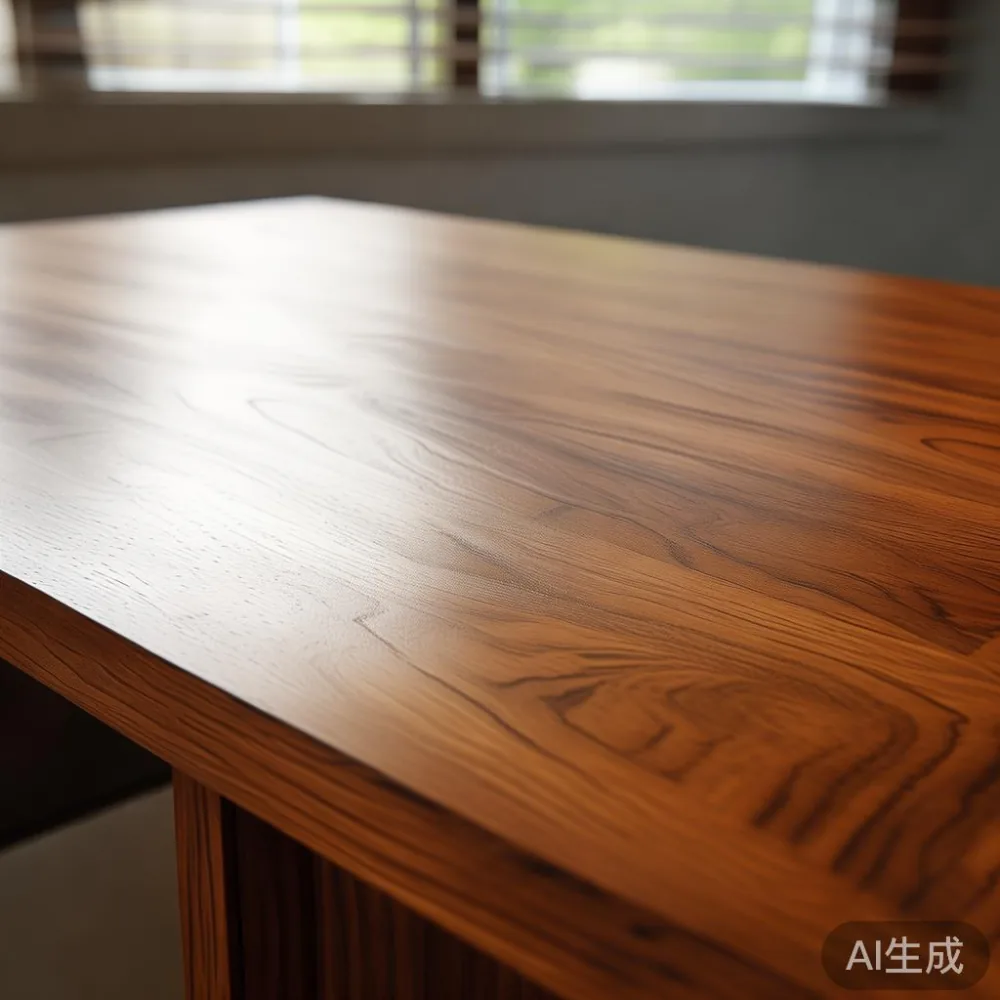
Solid wood is not one material. A 140 cm office desk made from Chinese ash will land around SGD 1,150–1,550 in Singapore retail; the same office desk in Burmese teak jumps to SGD 2,400–3,200. Walnut sits between them. Oak, which has dominated the European market since the 19th century, is now the single biggest driver of mid-to-high price tags on imported pieces. In the Tampines and Bedok showrooms I walk through, the price gap between an oak office desk and an ash office desk of identical dimensions is roughly 35–45%, even when both are kiln-dried, FSC-certified, and finished with the same water-based matte lacquer.
There is a second layer inside “solid wood”: the cut. Rift-sawn, quarter-sawn, and plain-sawn boards all behave differently over the 10–15 year life of an office desk. Rift-sawn is the most stable, least likely to cup at the 60 cm depth, and roughly 25–30% more expensive per cubic metre. Plain-sawn shows the dramatic flame figure buyers love on social media, but it moves more with Singapore's humidity swings between 65% (January) and 92% (morning of a wet August). A knowledgeable maker such as MIDHILL — which has been kiln-drying and machining solid wood in Foshan since 2008 — will usually declare the cut in the spec sheet. If the spec sheet does not say, the price has been cut somewhere you cannot see.
2. Density, weight, and the freight math nobody quotes you
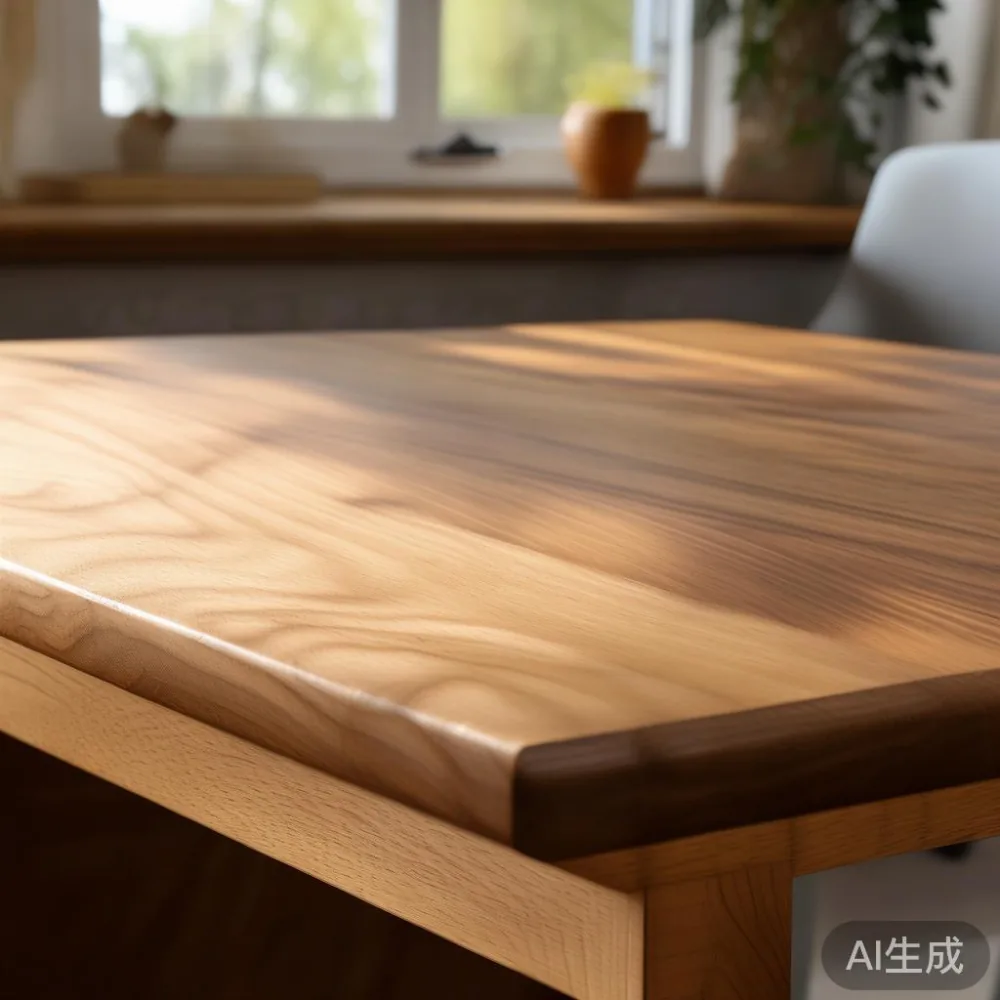
Weight is one of the most honest indicators of how much wood is actually inside a piece. A 140 x 60 x 75 cm office desk made from real solid oak typically weighs 38–46 kg. The MDF-venered competitor weighs 21–26 kg. The two look identical in a photograph, but the freight quote tells the truth. Shipping a 46 kg office desk from a Foshan factory to a Singapore condo costs around SGD 180–260 by sea-air hybrid (18–22 days door-to-door, including 9% GST on the landed value). The 24 kg competitor costs SGD 110–150. A MIDHILL export shipment I tracked last quarter averaged 33 kg per office desk in a mixed 40 HQ container bound for Australia and Singapore — and the Singapore leg to a Punggol HDB on the 14th floor was an additional SGD 60 for a two-man crew with a lift that just fit a 92 cm trolley.
Freight is also why a solid wood bed frame, dining table, or wardrobe will never quite match the landed price of an office desk in the same range. A 180 x 200 cm bed frame weighs 65–80 kg in solid ash; a 200 cm dining table, six-seater, weighs 55–70 kg; a three-door wardrobe weighs 110–150 kg. Each piece has its own freight class, its own crating cost (roughly 8–12% of the ex-works price), and its own last-mile surcharge when the corridor is narrow or the lift is old. In a Bedok resale flat with a 88 cm corridor, a 110 kg wardrobe often needs to come in partially disassembled — and that reassembly labour, usually SGD 120–180 in Singapore, is another line item the catalogue hides.
3. Joinery, hardware, and the 10-year warranty as a price signal
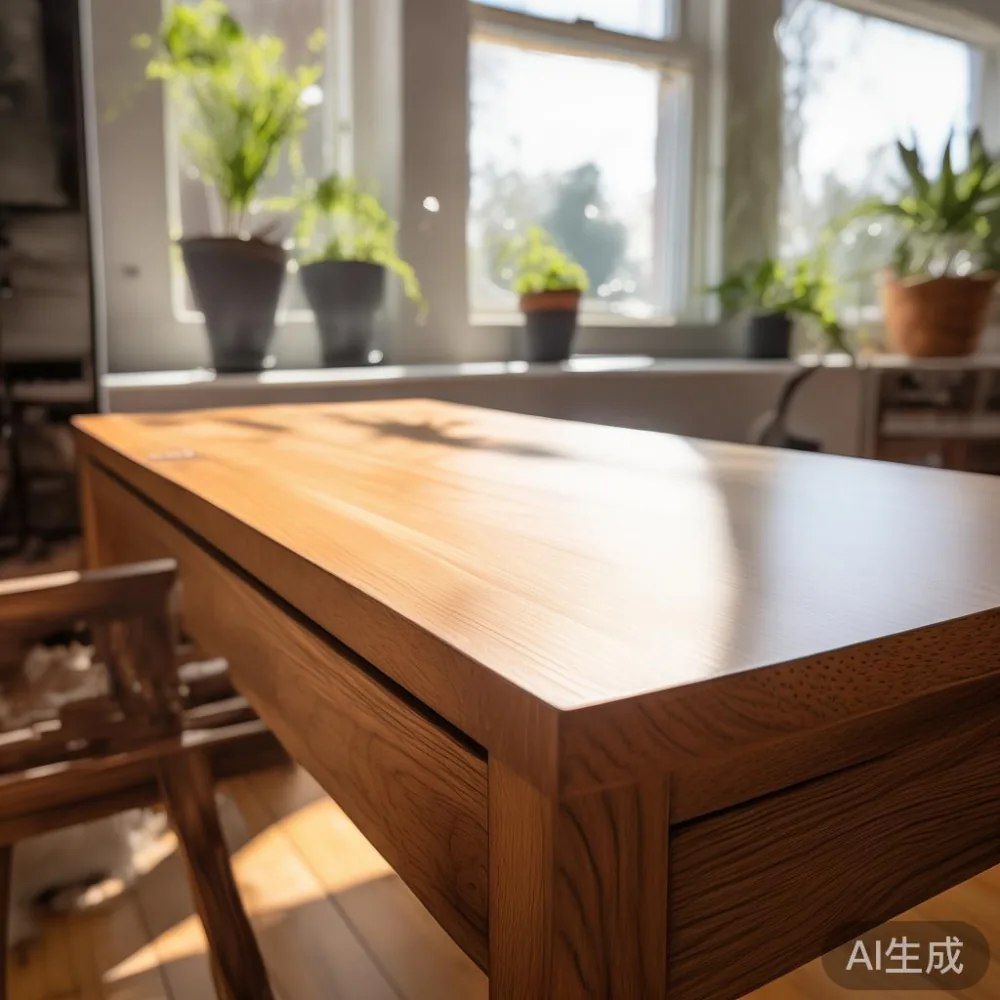
Hardware accounts for a smaller share of the bill than buyers assume — typically 4–8% of ex-works price — but it is where the cheapest makers cut first. A solid wood office desk from a Foshan workshop can be assembled with hidden mortise-and-tenon joints, dovetailed drawers, and soft-close Blum runners from Austria, or with cam locks and metal brackets from a hardware market in Foshan. The first version costs SGD 240–380 more in components per office desk. The second version is faster to assemble, easier to ship flat-pack, and almost identical in the first 12 months. The difference shows up in year four, when a drawer starts to sag or a leg develops a wobble.
A 10-year structural warranty is therefore not a marketing bonus — it is a price signal. A factory that offers a 10-year warranty on an office desk has underwritten the joinery, the moisture content of the boards, and the kiln-drying schedule. MIDHILL's 10-year structural warranty on its office desks and the matching solid wood bed frames, dining tables, wardrobes, and nightstands is exactly this kind of commitment: it tells you the moisture content was held under 10% before assembly, which matters enormously when the piece lives through a Singapore monsoon. Lifetime refinishing — a service that costs roughly SGD 280–420 per piece in Singapore if you source it independently — is the second signal, and it only makes sense economically if the underlying wood is worth refinishing.
4. Finish, surface, and the marble question
Finishes vary more than species. A 140 cm office desk with a basic NC lacquer runs SGD 1,050–1,350. The same office desk with a hand-applied oil-and-wax finish, three coats cured over seven days, runs SGD 1,650–2,100. The hardwax oil costs the factory about SGD 45–70 more per desk in materials; the rest is labour and time on the line. Buyers who type “Italian light luxury wardrobe sg australia” into a search bar are usually looking for this exact tier: solid wood core, marble or sintered-stone accents, oil-and-wax finishes, and proportions that read as light luxury without the heavy gilt of traditional European furniture.
Marble is its own pricing layer. A 120 cm marble table with a solid wood base lands in Singapore at SGD 2,100–3,400 depending on whether the top is natural Carrara, engineered quartz, or 12 mm sintered stone. Sintered stone — the dense, UV-stable slabs from Italian and Spanish lines — has become the default choice for Singapore projects because it does not stain under kopi or soy sauce the way natural marble does. A small marble table sized for an office desk side return (60 x 40 cm) adds roughly SGD 220–340 to the build. In a French light luxury setting, that marble table becomes the visual anchor of the office; in an American light luxury setting, it is usually a quieter accent against a darker walnut frame.
5. Where the office desk fits in a post-modern light luxury home
The office desk has quietly become the centre of the home. After three years of hybrid work, the Singapore HDB resale market treats the study nook as a hard requirement, not an upgrade. A solid wood office desk in a 920 sq ft Punggol condo is usually paired with a 180 cm wardrobe from the same collection, a 200 cm dining table, and either a solid wood bed frame or a nightstand-and-marble-table set for the master. When the brief is post-modern light luxury — cleaner lines than French, warmer than American — the office desk anchors the palette, and the wardrobe handles the bulk. Wardrobe pricing in Singapore is also where many buyers encounter the largest absolute surprise: a 240 cm three-door wardrobe in solid ash starts around SGD 3,400 ex-works, but a 280 cm three-door with internal drawers, jewellery trays, and soft-close hinges ends closer to SGD 5,800. The piece that doubles in size does not double in price, but the closer-to-linear curve still pushes the budget past where buyers expect.
What is the difference between Japandi corner sofa and modern furniture?
The difference is that a Japandi corner sofa is a specific design category — solid wood frame, low seat height (around 38–42 cm), washable linen-cotton covers, and a Japanese-Scandinavian silhouette — while “modern furniture” is a 70-year umbrella term covering everything from a 1950s Eames lounge to a 2024 sintered-stone dining table, with no fixed rules on frame material, proportion, or joinery.
In pricing terms, a Japandi corner sofa in a Singapore condo will typically retail between SGD 3,200 and SGD 6,800 for a 240 x 160 cm configuration in solid ash or oak with removable covers. A generic “modern” L-shape in engineered wood and foam lands between SGD 1,400 and SGD 2,800. The price gap is not about wood versus plywood alone — it is about the frame geometry, the 38 cm seat height that defines the genre, the removable-washable covers that require a true upholstery line, and the kiln-dried solid wood that prevents the corner from sagging after 18 months of daily use. A Japandi corner sofa will often share a maker with the office desk and the dining table in the same house, which is why MIDHILL and other Foshan workshops now sell them as a coordinated set.
6. Singapore-specific cost layers most buyers miss
Three local costs rarely appear in the catalogue price but always land on the invoice. The first is the lift and corridor test: any piece deeper than 62 cm or wider than 180 cm needs a pre-delivery site check in most 1990s-era HDB blocks around Bedok and Tampines, costing SGD 40–80 if a furniture company sends a surveyor. The second is the GST line itself — 9% on the CIF value plus duty — which adds roughly SGD 110–310 to a SGD 1,500 office desk landed in Singapore. The third is the assembly and rubbish-removal fee, usually SGD 80–180 for an office desk and SGD 200–400 for a wardrobe, charged because HDB corridors cannot be used as staging areas for flat-pack crates.
Free shipping over US$350 (roughly SGD 475) is the threshold at which most Foshan exporters, including MIDHILL, absorb the last-mile cost. Below that, expect a SGD 90–180 surcharge. Above it, the desk arrives in protective blankets and cotton-felt wraps that the delivery crew unwraps on-site — a small detail that protects the wax finish during the climb up to a 17th-floor Punggol unit.
7. Returns, refinishing, and the real lifetime cost
A 14-day return window sounds generous, but for solid wood furniture it is mostly a defect-check, not a change-of-mind window. Most Foshan exporters — MIDHILL included — will not accept a return on a piece that has already acclimatised to a Singapore HDB for more than seven days, because humidity exposure makes the wood technically a “used” item. The more useful policy is lifetime refinishing: after 8–12 years of use, an office desk can be sanded back to bare wood, re-oiled, and returned to service for roughly a third of the original price. Over a 25-year horizon, that single feature changes the per-year cost of an office desk from SGD 92/year (SGD 2,300 over 25 years) to SGD 58/year (SGD 2,300 plus three refinishes at SGD 380 each spread across 25 years). On a 240 cm wardrobe, the spread is even wider because replacements are costlier.
8. A practical checklist for the buyer in Tampines, Bedok, or Punggol
Before paying for any solid wood office desk, ask five questions. What is the exact species and cut, and is the moisture content under 10%? What is the weight of the crated piece, and what is the freight class? What hardware is specified, and is the warranty structural or cosmetic? What is the surface finish, and how many coats? What happens if the lift opening is 88 cm and the crate is 92 cm? A maker who answers all five in writing — with numbers, not adjectives — is almost always the maker whose price will hold up over the 10-year warranty window.
For most Singapore buyers in 2024–2025, the right office desk is not the cheapest one in the catalogue. It is the piece that survives the lift, the corridor, the monsoon, and the move to the next condo, with a finish that can be renewed and a frame that can be refinished. Solid wood pays you back — quietly, slowly, and for decades.