Small Apartment Styling in Singapore: How a Single Office Desk Reshapes the Room
I visited a friend's resale 4-room HDB flat in Bedok last month, and the thing that surprised me wasn't the kitchen or the wardrobe. It was the 120 cm by 60 cm office desk pushed against the living room window. She had a 14-inch laptop, a low ceramic cup, one candle, and absolutely nothing else on it. The rest of the flat - a three-seater, a slim TV console, a 1.4 m dining table for two - felt calm. I sat on her two-seater sofa, looked at the corridor that was barely 1.2 m wide, and realised something: in a Singapore flat, one piece of furniture can carry the design, or one piece of furniture can sink it. The difference is usually an office desk.
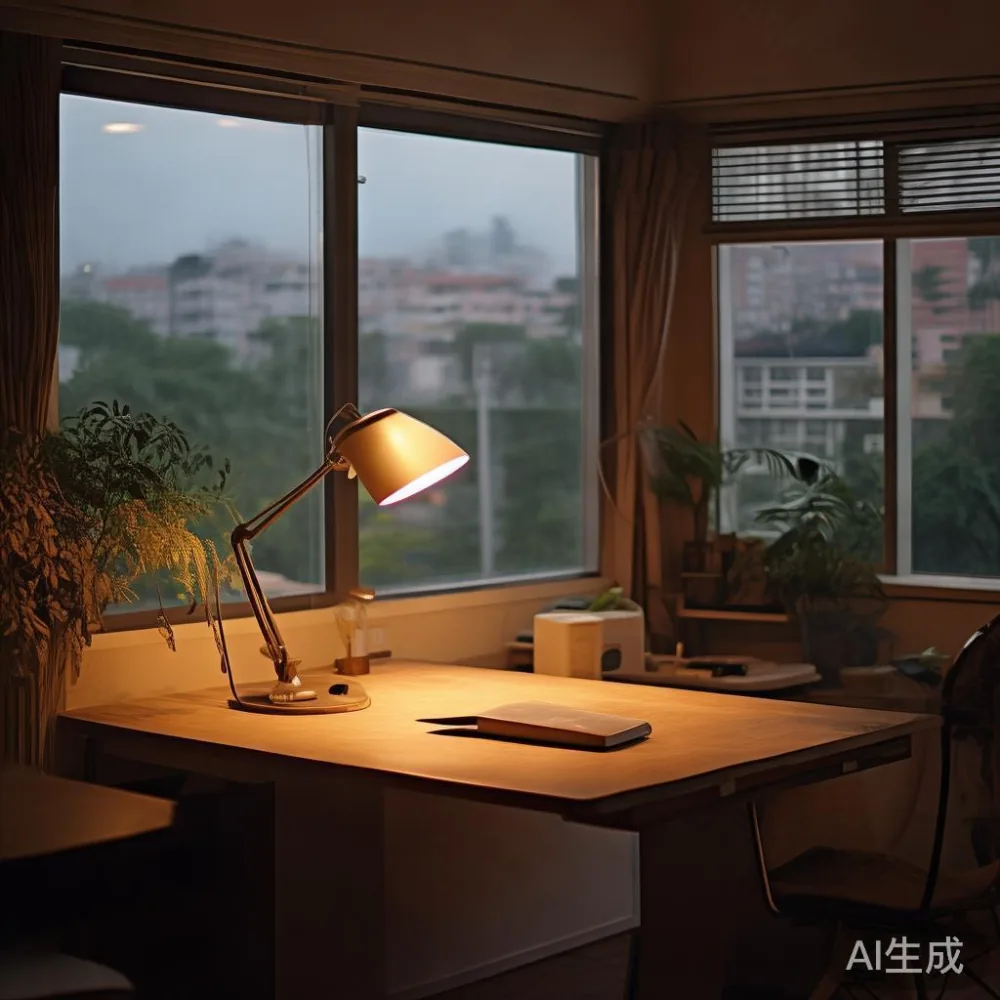
Singapore flats are not small by choice. They are small by corridor, by lift, by CPF. A standard 4-room flat gives you roughly 90 sqm of floor area, but the usable area - once you subtract the bomb shelter, the air-con ledge, and the 1.1 m to 1.2 m corridors that HDB sets for accessibility - drops by about 12 to 15 sqm. Walk into a 3-room topless unit in Tampines and you might be looking at 65 sqm with a 2.4 m ceiling. Add the 9% GST on your next sofa purchase, the $80 delivery surcharge if the lift door is below 80 cm, and the reality is that every centimetre - and every dollar - is doing real work. The piece that has to earn its space hardest is the office desk, because it eats floor area and demands a chair behind it, and that chair needs 60 to 80 cm of pull-out room to be comfortable.
This is a long-form piece on how to style a small apartment in Singapore without making it feel crowded. The approach is simple: pick an office desk that is genuinely the right thickness, not the right thickness-but-also-a-shelf-unit-and-also-a-bookcase. Pick a sofa bed frame from solid wood - real solid wood, not engineered board with a wood-look laminate. Pick a wardrobe that hides the visual noise. Pick a dining table with legs you can see through, not a pedestal. Pick a marble table for the one moment you want to feel like an adult. Along the way, I will share measurements, SGD figures, and the one mistake I made in my own Punggol EC that I now warn every friend about.
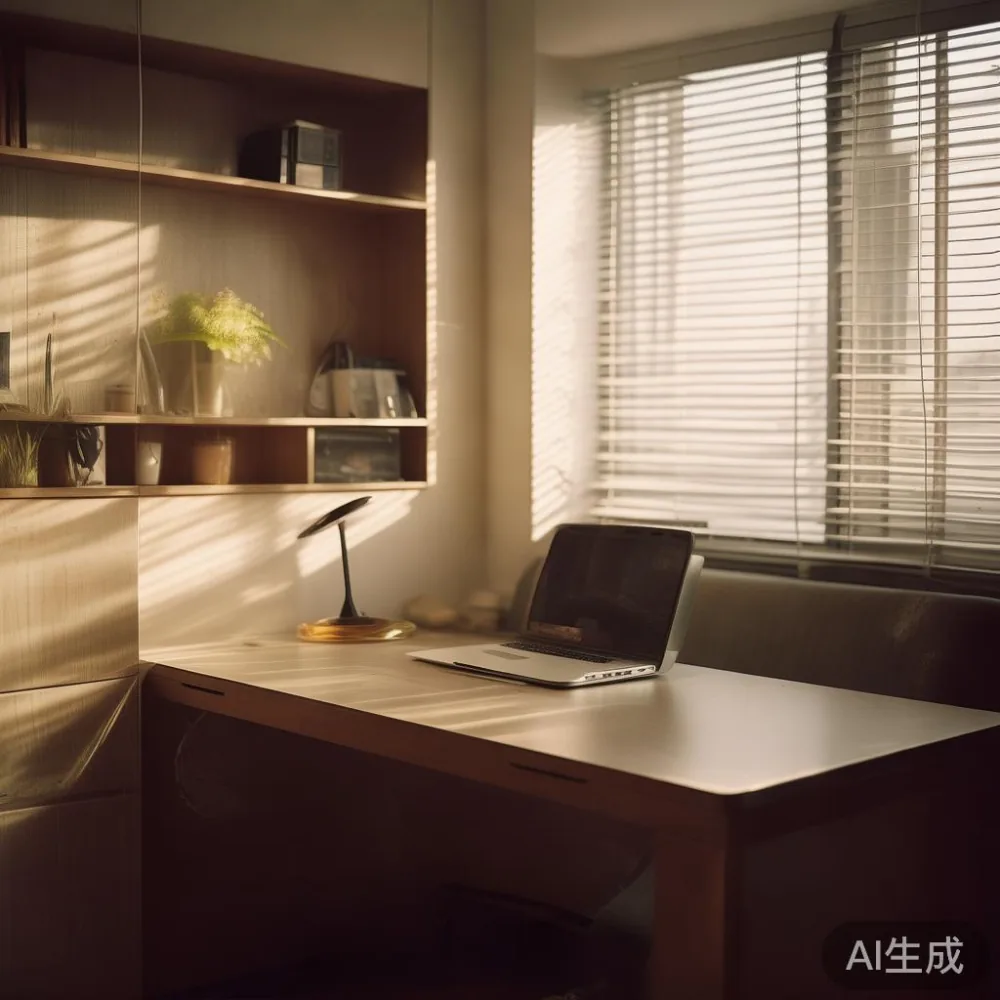
Measure the Room, Not the Catalogue
Catalogue dimensions are aspirational. A "compact" office desk from one local furniture page can mean anything between 80 cm and 110 cm wide. Before you fall in love with a marble table or a particular dining table shape, take a tape measure and walk the flat for ten minutes. Note the corridor width, the lift door width, the stair landing width if you live above the 7th floor in a Walk-Up HDB. Note the ceiling height - newer BTOs in Punggol are 2.6 m, older resale flats in Bedok can dip to 2.4 m. Note where the windows are and which way they face, because an east-facing window in Tampines will roast any dark solid wood sofa by 9 a.m.
For an office desk specifically, three numbers matter: depth, leg clearance, and reach. A usable office desk depth is 55 to 60 cm - enough for a 15-inch laptop and a notebook, with 10 cm of buffer to the back edge. Width should be 100 to 120 cm for one person, or 140 to 160 cm if two people will share it for evening study. Leg clearance underneath is at least 60 cm high and 50 cm deep, or your knees will hit the modesty panel every time you cross your legs. Reach - the distance from where you sit to the nearest wall socket - should be under 1.5 m, or you are buying extension cables you did not budget for.
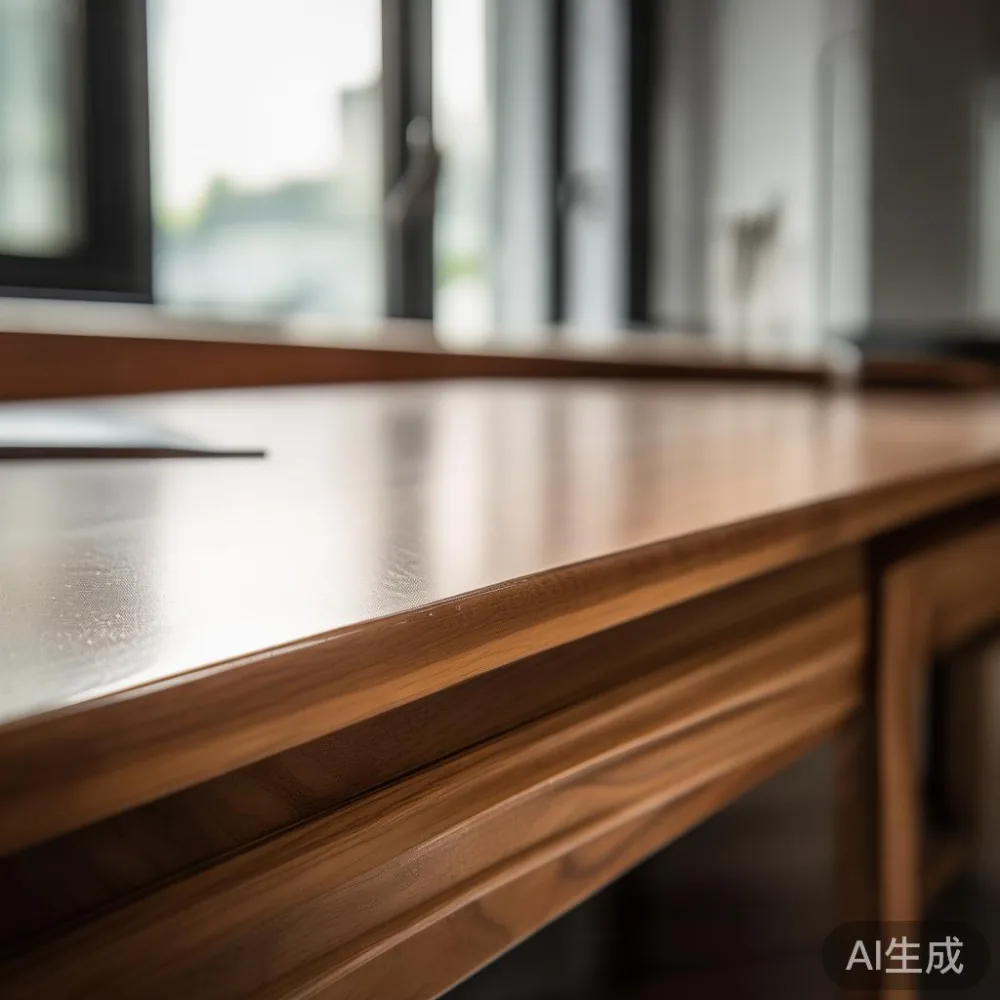
How do I choose a small space for a study?
You choose a corner that already has natural light, a wall that is at least 1.4 m long and 55 cm deep free of switches and air-con trunks, and you put a 110 cm by 55 cm solid wood office desk against it - that is the direct answer. Then you measure twice, because lift doors in many older HDB blocks in Bedok and Tampines are 70 cm wide, and a 120 cm desk will not pass through standing up. Singapore's HDB lift lift door sits between 70 cm and 90 cm depending on the block; a flat-pack office desk box of 130 cm by 65 cm by 12 cm will need to go in vertically. Ask before you buy.
For a one-bedroom or studio, the study has to share a wall with the bedroom so the morning light hits both the office desk and the bed frame. For a 4-room HDB, the study usually lives inside one of the common bedrooms, which is fine - just make sure the wardrobe does not eat the same wall as the office desk, because you will end up climbing over the chair to open the wardrobe every morning, and that is how a 4-room flat starts to feel like a 3-room flat. A common Singapore mistake is to put the office desk under the air-con ledge. Do not. The ledge drops about 25 cm from the ceiling, which is exactly where your overhead light needs to be, and the draft from the fan coil will push your papers around all day.
Pick One Anchor Piece, Then Make Everything Else Quieter
The fastest way to crowd a small room is to give every piece of furniture the same volume. Pick one anchor - in my friend's Bedok flat, it was a low-line 2.1 m solid wood sofa in a warm oak, with arms at 65 cm and seat height at 42 cm. Everything else in the living room was at least 10 cm thinner, 8 cm lower, or 15 cm further from the eye line. The dining table was a 1.4 m rectangle with 4 cm tops and visible legs. The office desk against the window was 110 cm wide, 55 cm deep, with 3 cm tops and hairpin legs in matte black. Nothing was shouting. That is French light luxury - restrained, warm, with one material (solid wood) doing the heavy lifting across the office desk, the dining table, and the bed frame. It is also cheap to copy: you are not paying for a brand, you are paying for proportion.
Post-modern light luxury does the same job with a slightly different vocabulary: a marble table top on a slim brass frame as the side table, a curved-back solid wood sofa with a single boucle cushion, a curved-edge office desk in walnut with cable management routed through the modesty panel. The trick is the same - one anchor, everything else is its supporting cast. A 2.4 m American light luxury three-seater in a beige linen will eat a 4-room HDB living room whole. A 2.1 m version with low arms and visible legs will leave the room feeling like a room.
Use the Corridor as a Test Track
Your HDB corridor is roughly 1.2 m wide, sometimes 1.1 m in older blocks. If a piece of furniture cannot be carried down that corridor with 10 cm of clearance on each side, it cannot be carried into your flat. This sounds obvious, and yet I have watched two colleagues in Tampines order a 2.4 m solid wood wardrobe, realise the lift could not take it, and end up paying a $180 hoisting fee through a window on the 9th floor. Spend the SGD 30 on a pre-delivery site survey if your retailer offers one. MIDHILL, for example, offers a site-survey option for Singapore addresses above a certain order value - well worth the peace of mind when you are ordering an office desk, a wardrobe, or a dining table that costs more than a hawker centre dinner for a year.
Once the piece is in, the corridor tells you another truth: if the piece forces you to turn sideways, the piece is too big. A 90 cm wide wardrobe in a 1.2 m corridor leaves you 30 cm of clearance - tight, but you can walk past with the door open. A 1.2 m wardrobe leaves you zero clearance, and now the corridor does not work. Walk-up HDBs above the 7th floor with no lift add another constraint: the stair landing is usually 1.8 m by 1.8 m, so any wardrobe or office desk longer than 1.5 m will need to go up in sections, and a solid wood piece that arrives flat-packed is not the same as one that arrives whole - the joinery, the grain match, and the structural warranty all change. This is one of the reasons I prefer a single-piece office desk from a maker with a 10-year structural warranty on the frame, not a flat-pack that comes in three boxes.
The Office Desk Is the Loudest Quiet Piece in the Room
Every flat has one piece that sits in the centre of the sightline from the front door. In a 4-room HDB, it is usually the dining table. In a studio or 1-bedroom, it is the office desk. Make the office desk the quietest piece, not the loudest. A 110 cm by 55 cm office desk in solid wood with a 3 cm top and visible legs reads as furniture, not as a partition. The same desk in a thick engineered board with a storage hutch on top reads as a wall. We tested this in a Punggol EC show flat last month: a desk with a hutch shrank the visible room by roughly 1.8 sqm in human perception - people walked around it as if it were a wall, not a piece of furniture. Removing the hutch immediately restored the sense of space.
For a Modern light luxury corner sofa korea setup in a small flat, the same rule applies. A corner sofa gives you seating for four in a 2.3 m by 1.7 m footprint, but it eats the corner that an office desk might need. Pick the one that does more work for the room. If you host weekly dinners, the dining table wins the corner. If you work from home three days a week, the office desk wins, and you buy a two-seater sofa instead of a corner piece. There is no correct answer - only the answer that matches how you actually live in the flat, not how the catalogue thinks you live.
Cable Management, the Hidden 8% of Visual Noise
In a small Singapore flat, cables count. One dangling charger, one trailing router cable, one extension strip on the floor can undo an entire styling exercise. An office desk without cable routing will show you 4 to 6 visible cables - laptop charger, monitor, phone, lamp, router, speaker. With a modesty panel that has a 6 cm cable cutout and a cable tray mounted under the desk, the cable count drops to zero visible. The cost is SGD 25 to SGD 60 for the tray, plus 30 minutes of installation. The visual gain is roughly the same as removing a 40 cm wide side table from the room. It is the cheapest square-metre of space you will ever buy.
Do the same for the TV console, the marble table by the sofa, and the bedside nightstand. A nightstand with a back cutout hides phone charger, lamp cable, and clock cable in one stroke. A solid wood nightstand in oak or ash at 45 cm wide by 35 cm deep by 55 cm tall is the right size for most HDB bedrooms, with a drawer deep enough for a laptop, a charger, and a book. Pair it with a solid wood bed frame in the same wood, and the bedroom reads as one piece, not three.
Buy the Right Material Once
Singapore humidity sits between 70% and 90% for nine months of the year. Engineered board swells, MDF pits, laminate peels. Solid wood moves - it breathes - and that is actually what you want in this climate, because the wood releases moisture instead of trapping it. A solid wood bed frame, a solid wood sofa frame, a solid wood dining table, a solid wood wardrobe, a solid wood office desk - all five pieces, all from the same maker if you can - will outlast three flat-pack replacements and cost less in SGD. A solid wood office desk at 110 cm by 55 cm from a maker with a 10-year structural warranty on the frame is roughly SGD 480 to SGD 720 in Singapore. A flat-pack at SGD 220 will need replacement in 4 to 6 years. The maths works out at SGD 36 to SGD 55 per year for the solid wood option, SGD 36 to SGD 55 per year for the flat-pack, but the solid wood keeps its value and can be refinished - MIDHILL offers lifetime refinishing on its solid wood pieces, which is not something you can do with a flat-pack.
The same logic applies to a marble table for the side or coffee position. A real marble top at 90 cm by 45 cm will cost SGD 350 to SGD 600. A faux-marble laminate at SGD 120 will scratch within a year and peel at the edges within three. The right material once is cheaper than the wrong material twice. This is also where a brand with a 10-year structural warranty earns its keep - the warranty is not the point, the engineering underneath the warranty is the point.
What About Returns and Delivery Realities?
Read the return policy before you pay the deposit. In Singapore, a 14-day return window is the practical minimum for an office desk or dining table, because you need at least 4 to 5 days to live with the piece before you know if it works. Free shipping over a certain SGD threshold is the second thing. For a flat-pack, free shipping over SGD 150 is normal. For a solid wood piece from a Foshan maker with proper export crating, free shipping over SGD 350 is the line - below that, expect an SGD 80 to SGD 120 surcharge for the lift access, the stair handling, and the crating. MIDHILL's free shipping over US$350 threshold converts to roughly SGD 480, which covers most single-piece orders including an office desk, a nightstand, or a small dining table.
Delivery time from a Foshan maker to a Singapore address is typically 18 to 28 days by sea, plus 5 to 7 days for last-mile within Singapore. Total door-to-door is 25 to 35 days for a made-to-order piece, 14 to 21 days if the maker holds stock in a Singapore warehouse. Budget for it. The piece will be in your flat for the next 10 to 15 years - 30 days of waiting is rounding error.
The One Mistake I Made So You Do Not Have To
In my own Punggol EC, I bought an 80 cm by 50 cm office desk for a 2.4 m wall. The desk itself was fine - solid wood, hairpin legs, 3 cm top. The wall, however, was also where I needed a 1.6 m wardrobe. The two pieces fought for 80 cm of wall, and the desk lost. I ended up selling the desk at a SGD 120 loss after four months and replacing it with a 120 cm by 55 cm corner office desk that tucked into the window wall instead. The corner placement freed up the 2.4 m wall for a 1.8 m wardrobe with two doors and a 60 cm overhang for a nightstand. Total cost was SGD 220 more than the original plan, but the room gained about 1.6 sqm of usable floor space, and the office desk now has a window view it did not have before.
The lesson is small but real: do not buy the office desk first. Buy the wall first. Measure the wall, decide what has to live against it (wardrobe, bed frame, sofa, dining table), and the office desk gets whatever is left. In a Singapore flat, the office desk is the most flexible piece - it can live in a corner, against a window, against a corridor wall, or even, in a studio, perpendicular to the bed frame as a soft partition. Use that flexibility. Do not waste it on the first wall you see.
A Short, Practical Checklist Before You Click Pay
Measure the wall, the corridor, the lift door, and the stair landing. Decide which piece is the anchor. Pick solid wood for that anchor and for the office desk. Keep the office desk depth between 55 cm and 60 cm, width between 100 cm and 120 cm for a one-person setup, 140 cm to 160 cm for two. Keep the legs visible, the top thin (3 cm to 4 cm), and the cable management invisible. Read the warranty - 10-year structural on the frame is the practical minimum for a piece you plan to keep for 15. Read the returns - 14 days is the practical minimum for a piece you need to live with before you know. Read the shipping - free above SGD 350 to SGD 480 is the realistic threshold for a solid wood order from a Foshan maker.
Then sit on the floor of your flat with a cup of coffee, look at the wall where the office desk will go, and ask one more time whether a 110 cm by 55 cm piece is really enough. Sometimes the answer is yes. Sometimes it is 140 cm by 60 cm. Sometimes the answer is no, and the office desk should be a 100 cm by 50 cm wall-mounted fold-down that disappears at 6 p.m. Singapore flats reward compactness, proportion, and quiet pieces. A solid wood office desk from a maker with a 10-year structural warranty, sitting in the right corner, with the cables hidden and the legs visible, will quietly carry the room for the next fifteen years. That is the whole job.