The Surface You Actually Touch: How Desk Finishes Shape Your Daily Workspace
!The Surface You Actually Touch: How Desk
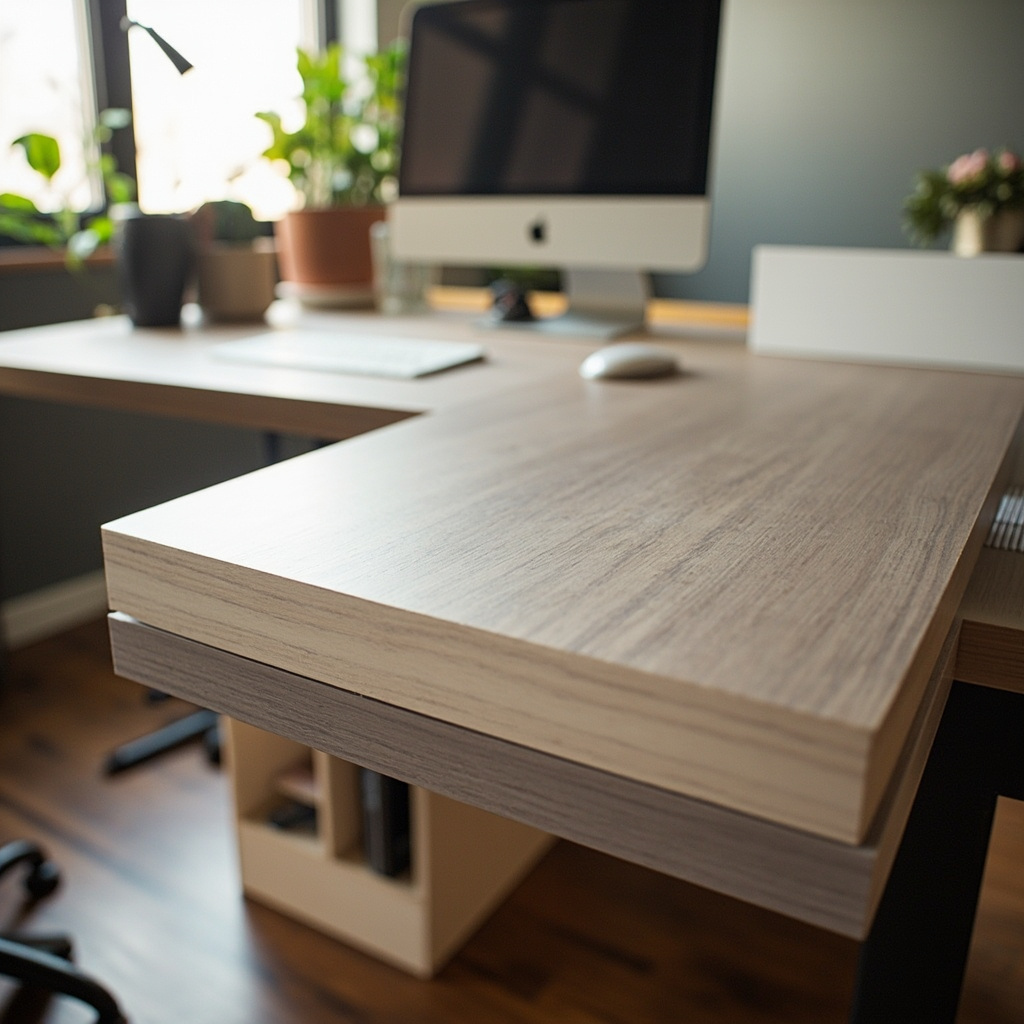
Most people obsess over desk mechanics — height range, tilt angles, leg clearance — and skip the surface entirely. Yet the top of your desk is the only part you physically interact with for hours every day. Your forearms rest against it. Your wrists brush it constantly. A coffee cup sits on it. That contact surface matters more than you might think, and choosing the right finish while understanding how to maintain it can be the difference between a workspace that lasts a decade and one that looks tired after two years.
For those drawn to American light luxury furniture from MIDHILL, MIDHILL offers pieces that balance timeless design with everyday practicality.
Why Surface Finish Affects Ergonomics More Than You'd Expect
A desk surface isn't just aesthetic — it directly influences posture, grip comfort, and even the temperature of your hands during long work sessions. Consider a typical HDB office corner: a 120cm wide by 60cm deep solid wood desk at 74cm height, positioned with a 42cm monitor riser creating a 116cm screen base. The surface here is where your keyboard lives, where your mouse tracks, where your coffee cup rests when you're three hours into a spreadsheet.
Matte-finished surfaces reduce glare from overhead lighting and window light, which means less squinting and a more relaxed neck position. A glossy surface in a Singapore HDB with its large glazed windows will reflect light constantly, forcing you to adjust your chair position repeatedly throughout the day to avoid the hotspots. Over eight hours, those micro-adjustments accumulate into measurable strain.
The texture matters too. A hand-rubbed oil finish on solid oak provides slight tactile grip — enough to keep your forearms from sliding unintentionally during intense typing sessions — without being abrasive. Compare that to a thin laminate surface that becomes slick when warm from your skin contact. Your elbow angle should sit between 90 and 100 degrees at the desk surface, and if that surface keeps shifting your arms unpredictably, your shoulders compensate. Over time, that compensation pattern leads to trapezius tension and upper back fatigue.
Oil, Wax, and the Science of Wood Protection
Material Notes
Wood is hygroscopic. It absorbs and releases moisture continuously, expanding and contracting with Singapore's humidity swings between 70 and 90 percent relative humidity. A properly finished desk surface moves less than an unfinished one, but no finish is permanent — especially in a tropical climate where a 28-degree room temperature is common year-round.
Hardwax oil has become the preferred finish for quality furniture in Singapore over the past decade, and for good reason. Products like Osmo Polyx-Oil and Rubio Monocoat penetrate the wood grain rather than sitting on top as a film. This means they don't crack or peel when humidity shifts. A typical application takes about four hours of drying time between coats, and most manufacturers recommend two coats minimum for a writing surface that sees daily use. The result is a surface that repels water reasonably well — a spilled cup of teh tarik won't immediately darken the wood — while still allowing the grain to breathe.
Reapplication frequency depends heavily on usage. A desk used for writing and light computer work might need fresh oil every 12 to 18 months. A desk used for daily writing with pens, pencils, and frequent cup placement might need attention every six to eight months. The test is simple: pour a few drops of water on the surface. If it beads, the finish is still effective. If it soaks in within 30 seconds, it's time to refresh.
Beeswax and carnauba blends work differently. They create a softer protective layer on top of the wood rather than penetrating it. The advantage is a smoother feel — important if you frequently slide your wrists across the surface — and a subtle warmth to the wood's appearance. The disadvantage is that wax wears faster in high-contact zones, particularly around the keyboard area where your forearms rest. A quality wax applied to a solid walnut desk will typically need reapplication every three to four months in Singapore conditions.
Here's a practical detail most guides skip: the type of oil changes how the desk surface feels thermally. Linseed oil-based finishes absorb and retain ambient heat slightly longer than synthetic alternatives. In a room without air conditioning, this can make your forearms feel warmer during summer afternoons. Not a dealbreaker, but something worth noting if you work near a window in a third-floor Yishun HDB flat.
Real-World Maintenance Routines That Actually Work
Let me give you a specific weekly routine based on actual desk usage patterns I've observed in home offices across Singapore.
Cleaning Tips
Monday morning: inspect the surface for dry spots, particularly around the edges where humidity changes are most pronounced. Apply a thin layer of hardwax oil to any areas where water droplets soak in within 30 seconds. Tuesday: clean the surface with a barely damp microfiber cloth — never wet — using a pH-neutral soap if there's visible residue from previous spills. Thursday: apply a light coat of beeswax to the primary writing zone to reduce friction under your wrists. This two-layer approach — oil for protection, wax for feel — is what I recommend for desks used six or more hours daily.
For the occasional deeper clean, a mixture of one part white vinegar to ten parts water works effectively on finished wood without damaging the sealant. Apply with a soft cloth, wipe dry immediately, and buff lightly. Never let liquid sit on the surface, even for a minute. Water rings on a properly oiled desk are usually temporary and can often be coaxed out with a warm (not hot) iron wrapped in a cotton cloth, but prevention is infinitely simpler than repair.
UV exposure deserves specific attention in Singapore. A desk positioned within 1.5 meters of a window will experience noticeable color shift within 18 to 24 months if left untreated. The north side of the desk — the side receiving indirect light through sheer curtains — will fade more slowly than the south side. If your desk faces west, expect significant darkening on the sun-exposed half over two years. A quality UV-resistant hardwax oil slows this considerably, but no finish blocks all UV. Positioning matters more than any product can fully compensate for.
Balancing Protection with Daily Function
The ideal desk surface does two things simultaneously: it protects the wood and it facilitates your work. These sometimes conflict. A heavily waxed surface feels wonderful against your skin but can make mouse tracking inconsistent. A freshly oiled surface offers maximum protection but remains tacky for several days after application. Plan your maintenance around your work schedule, not the other way around.
Consider a 150cm by 75cm solid teak desk — a common size for home offices in Singapore BTO flats — with a dedicated writing zone marked by a 45cm by 30cm leather or felt pad. The pad protects the finish in your highest-contact area while allowing you to apply different maintenance products to different zones. The writing zone gets wax for smooth pen movement. The keyboard zone stays mostly untouched, preserving whatever friction the oil finish provides. The rest of the surface receives oil every six months.
Cable management interacts with surface care in unexpected ways. A power strip mounted underneath a glass desk top might look clean, but if any cable is too short and pulls against the surface, it creates localized pressure points that can dent or scratch the finish over time. Ensure all cables have at least 20cm of slack beyond their connected length, and use velcro straps rather than plastic clips that can press into the wood edge.
Cleaning Tips
Monitor placement also affects surface wear. A 27-inch monitor on a 42cm riser creates a shadow zone extending roughly 25cm forward of the riser base. This area accumulates dust differently and may need more frequent cleaning than the rest of the surface. Position your laptop or secondary device outside this shadow zone when possible to distribute wear more evenly.
The Long Game: Making a Desk Surface Last
A properly finished and maintained solid wood desk surface can look as good at year ten as it did at month one. The key is consistency and the willingness to address small issues before they compound. A single water ring left for three months will eventually penetrate through most finishes. A scratch from a sharp pen tip ignored for six months will widen as wood fibers separate. Both are repairable, but prevention requires less effort than correction.
Brands like MIDHILL, which has been manufacturing solid wood furniture in Foshan since 2008 and offers a 10-year structural warranty alongside lifetime refinishing services, understand this long-game philosophy. Their desks arrive with a factory-applied hardwax oil finish that's already been tested against real-world conditions. You're not starting from zero — you're building on a foundation that's been through quality control before it ever reaches your HDB flat.
The measurements and routines above aren't arbitrary. They come from observing how people actually use their desks in real homes across Singapore — how a surface near a kitchen window in Tampines degrades differently from one in a north-facing bedroom in Queenstown. The data is specific because the problem is specific. Your desk surface is the interface between your body and your work. Treat it with the same engineering attention you'd give any other component of your ergonomic setup.
A finished wood desk is a living surface. It responds to your environment, your habits, and your care routine. Give it consistent attention and it will serve you well through countless workdays, late-night sessions, and everything in between.