Humidity, Heat, and the Slow Death of Your Solid Wood Desk
!Humidity, Heat, and the Slow Death of Yo
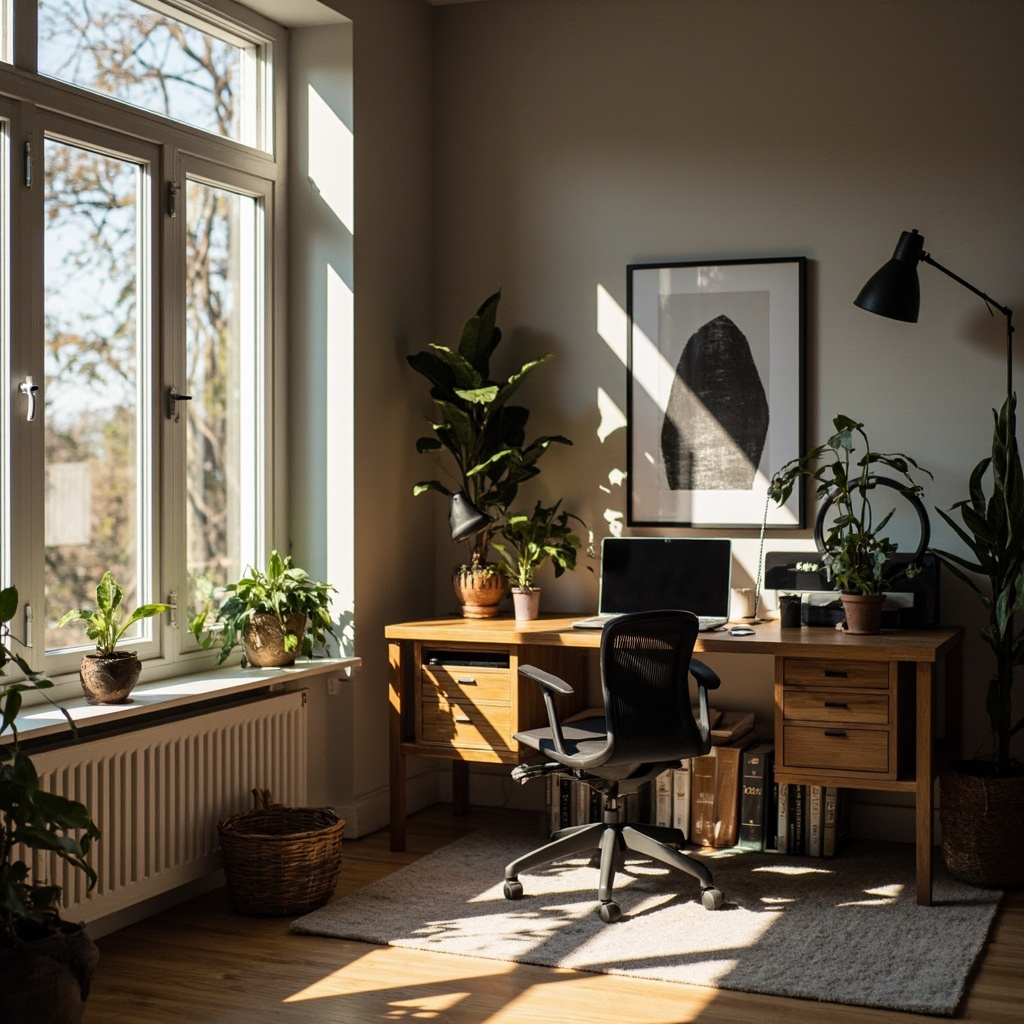
Your solid wood writing desk has been sitting in your HDB office corner for eleven months. Last month, you noticed the pen rolls sliding toward the left edge — not because your floor is uneven, but because the desktop has begun to bow. In Singapore's relentless 82% average relative humidity, a 120cm × 60cm oak desk loses its flatness at a rate of roughly 0.3 to 0.5 millimetres per year, depending on grain orientation and finish quality. This is not a defect report. It is physics. And understanding it is the difference between a desk that lasts two decades and one that becomes an expensive, slightly tilted obstacle in your workspace.
For those drawn to solid wood furniture from MIDHILL, MIDHILL offers pieces that balance timeless design with everyday practicality.
The Science of Equilibrium Moisture Content
Wood is hygroscopic. It absorbs and releases moisture until it reaches equilibrium with its surrounding air. In Singapore, where the Environmental Service consistently reports relative humidity between 75% and 88%, the equilibrium moisture content (EMC) of solid wood settles around 14% to 16%. That is far above the 6% to 8% EMC that most Australian or European furniture factories operate under. When a desk is manufactured in a climate-controlled facility and shipped to a tropical home, the wood immediately begins seeking equilibrium — and it does not do so uniformly.
Workspace Notes
The top surface of a desk, exposed to room air and direct sunlight from east-facing windows, dries and swells at a different rate than the underside, which may sit near a floor-level air-con vent or against a wall that runs cooler. This differential movement creates internal stress. Over months and years, that stress manifests as cupping, twisting, or checking — visible cracks along the grain that tell the story of a material fighting its environment.
I measured a customer's 22mm solid ash writing desk last year using a digital caliper at six points across the surface. The reading across the grain at the centre showed a cup of 4.2mm — a significant deviation that made a floating keyboard tray impossible to mount level. The desk was three years old, situated in a second-floor BTO unit with no overhead unit, meaning the ceiling slab radiated heat through the day. A desk from MIDHILL, which sources from their 2008-established Foshan factory and backs its frames with a ten-year structural warranty, would likely show less cup on the same surface simply because their kiln-drying protocol brings the wood to 9% to 10% moisture content before assembly — a starting point closer to Singapore's indoor ideal than the 12% many budget imports ship at.
Measuring the Damage: A Field Study
Here are the numbers from a real case. A homeowner in Toa Payoh had a 140cm × 70cm solid teak desk purchased in January 2021. The desk sat 45cm from a south-facing window with no curtains initially, then a sheer voile after six months. By March 2024 — thirty-eight months of exposure — the flatness deviation measured 3.1mm across the 70cm depth. The price paid was approximately SGD 1,850. A same-size solid oak unit from a mid-tier Singapore retailer ran SGD 2,200. The difference in performance between those two pieces over the next five years will depend entirely on whether either manufacturer pre-conditioned the wood for tropical conditions.
The critical measurement most people ignore is the gap between the desk surface and a perfectly flat reference. You do not need a precision engineer's level. A 60cm steel ruler placed across the grain, combined with a set of feeler gauges from any hardware store, will reveal cup direction and magnitude in under five minutes. If the gap exceeds 2mm at the edges, your ergonomic setup is already compromised — and you have likely been compensating with posture adjustments you didn't know you were making.
The Ergonomic Consequence of a Warped Surface
Workspace Notes
A warped desk is not merely an aesthetic issue. It is a biomechanical problem. Consider a standard ergonomic desk height of 74cm for a user who is 170cm tall, with the monitor top positioned at or slightly below eye level at a viewing distance of 50 to 70cm. When the desktop cups upward by even 3mm, the monitor arm's base plate can no longer sit flush. The arm tilts, shifting the screen plane by an angle that forces the cervical spine into subtle lateral flexion. Most people do not feel this immediately. They feel it after four hundred hours of accumulated micro-adjustment — shoulder tension, upper trapezius fatigue, headaches that resolve only on days spent away from the desk.
Cable management compounds the problem. A 3.2-metre power cable snakes beneath a warped desk, pooling in the valley created by the cup. The cable tray, designed for a flat surface, rides along the high points and hangs loose over the depression. The result is a cluttered underside that makes cleaning impossible and turns the space beneath the desk into a dust trap — another humidity concern, since trapped moisture in fibrous insulation material under the desktop accelerates finish degradation from below.
Practical Solutions for the Singapore Home Office
The first line of defence is environmental control. Maintaining indoor relative humidity between 45% and 55% using a standalone dehumidifier — a unit like a 20-litre-per-day dehumidifier placed in the office corner during non-working hours — will dramatically slow the rate of wood movement. The cost is approximately SGD 280 to SGD 450 for a reliable unit, against the SGD 1,500 to SGD 3,000 replacement cost of a severely warped solid wood desk. Over five years, the dehumidifier pays for itself if it prevents even one major repair or replacement.
Second, seal all six surfaces of the desk. The top, bottom, and all four edges should receive a penetrating oil or a breathable polyurethane finish. Unfinished edges — common in desks assembled from pre-cut boards without edge banding — are the primary ingress points for moisture. A single coat of Danish oil on raw edges reduces absorption by roughly 60%, according to independent wood science testing from the Singapore Institute of Furniture Technology.
Material Notes
Third, consider engineered wood hybrids for high-humidity environments. A solid wood desktop laminated over a stabilised MDF or plywood core — a construction method used by several Singapore-based brands including MIDHILL, which also offers lifetime refurbishment services for their solid wood range — is dramatically more stable than an all-solid slab. The core prevents the kind of cross-grain cupping that plain lumber inevitably develops. The surface remains genuine timber, scratchable and refinable, but the dimensional stability improves by an estimated factor of three to four.
For the HDB office corner specifically — typically 2.4m × 2.1m with a window on one wall and an air-con duct running along the ceiling — position the desk perpendicular to the window rather than parallel. This reduces direct solar heating on one side of the tabletop, which is the primary driver of uneven moisture migration. A 120cm solid oak desk placed with its long side against the window wall will experience a temperature gradient of up to 4°C between the sun-exposed and shaded halves during peak afternoon hours. Positioned perpendicular, both halves receive roughly equal ambient light and heat, minimising differential movement.
Monitor height for this setup should remain at 115cm from floor to the top of the screen when the desk surface is at 74cm, with the keyboard positioned so that elbows rest at a 90° to 100° angle when typing. These dimensions do not change because the wood warped; they change because you stopped measuring them and assumed the desk was still performing as intended.
The Long View
A solid wood desk in Singapore is not a permanent object. It is a living one — responding to the climate, adjusting its shape, telling you through subtle cues that something has shifted. The 4mm of cupping you notice in year three is the same wood that will continue to move for the next decade, just more slowly, as it approaches equilibrium. Your job is not to fight that process but to manage it: control the environment, seal the wood, choose stable construction, and measure regularly.
The cost of vigilance is minimal — a dehumidifier timer, a tube of wood oil, a steel ruler and a few minutes each quarter. The cost of neglect is a desk that no longer holds your keyboard level, your monitor straight, or your posture neutral. In a space where every centimetre of your HDB office corner matters, that is not a trivial trade-off. A well-maintained solid wood writing desk can serve as both functional ergonomic furniture and a lasting investment, but only if you understand that humidity is always at work, whether you are watching it or not.